Starting or growing a small business is exciting, but it can also be very stressful, especially when money is involved. Many business owners have great ideas, strong skills, and a clear plan, but they do not have enough cash to move forward. Banks often say no to small businesses, new businesses, or owners with limited credit history. Because of this, many people give up before they even start. This is where SBA loan programs become very important.
SBA loan programs are designed to help small businesses get access to funding when traditional loans are hard to get. These programs have helped millions of businesses open, survive, and grow across the United States. However, many people do not understand how SBA loans work. Some think the government gives free money. Others think SBA loans are only for large companies. Some believe the process is too complicated or impossible to qualify for. These ideas stop business owners from applying, even when SBA loans could be the best option for them.
What Does SBA Mean?
SBA stands for Small Business Administration. It is a U.S. government agency created to support small businesses. The SBA does not usually lend money directly to business owners. Instead, it works with banks and lenders to make loans safer and easier for small businesses to get.
The SBA helps by guaranteeing a portion of the loan. This means that if a business cannot repay the loan, the SBA agrees to cover part of the loss. Because of this guarantee, banks are more willing to lend money to small businesses that they might normally reject.
What Are SBA Loan Programs?
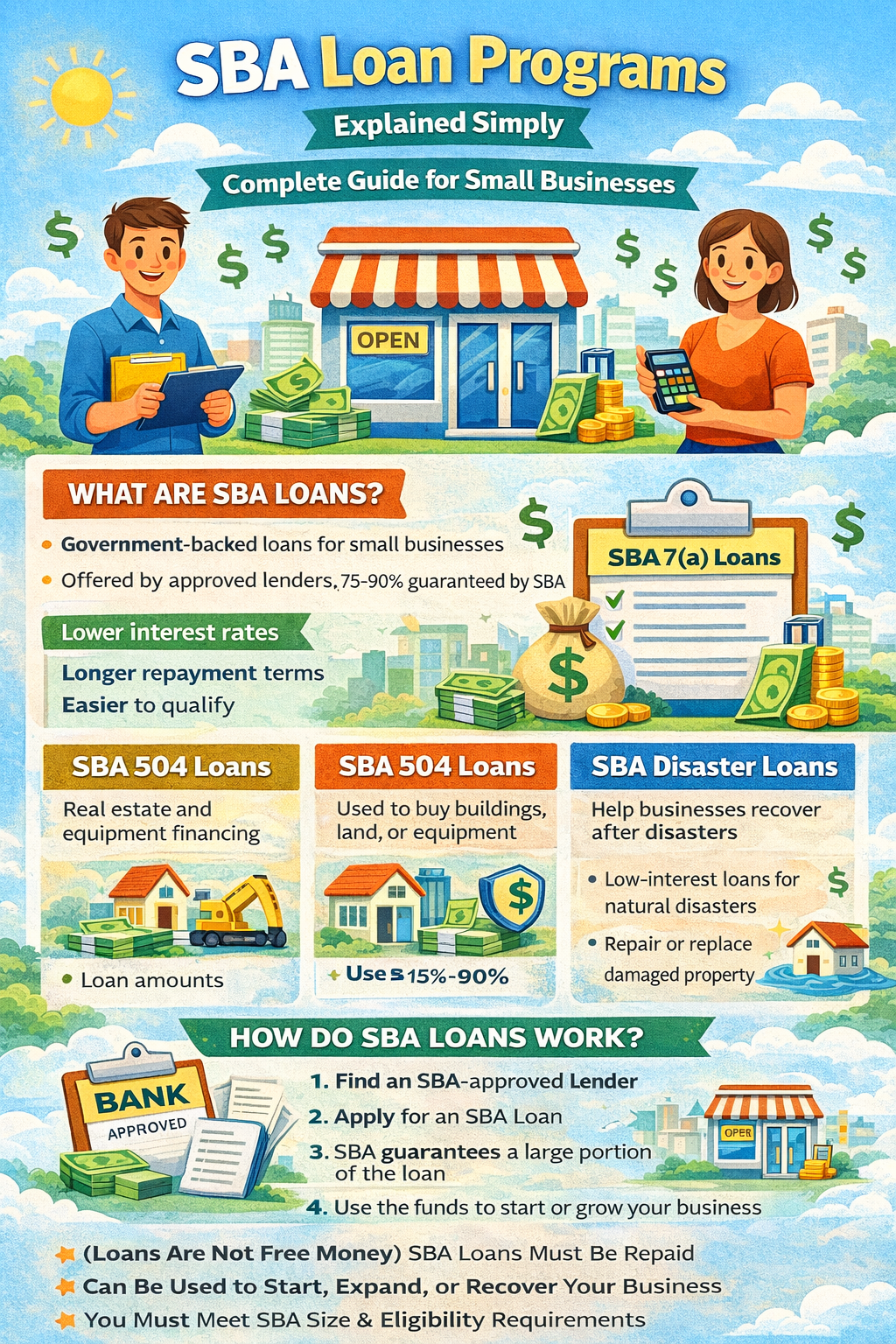
SBA loan programs are special loan options backed by the government to help small businesses get funding. These loans are offered by approved lenders, such as banks, credit unions, and online lenders, but they follow SBA rules and guidelines.
SBA loans usually have lower interest rates, longer repayment terms, and more flexible requirements compared to regular business loans. This makes them more affordable and easier to manage, especially for small or growing businesses.
Why SBA Loans Are Important for Small Businesses
Many small businesses struggle to get funding because they are considered risky by traditional banks. New businesses may not have enough financial history. Some owners may have average credit. Others may not have enough collateral. SBA loans help solve these problems.
Because the SBA guarantees part of the loan, lenders feel more confident lending money. This gives business owners access to funding they might not otherwise receive. SBA loans also offer longer repayment periods, which means lower monthly payments. This helps businesses manage cash flow and focus on growth instead of debt stress.
How SBA Loan Programs Work
The SBA does not usually give money directly to business owners. Instead, you apply through an SBA-approved lender. The lender reviews your application, checks your business plan, credit, and finances, and decides whether to approve the loan. If approved, the SBA guarantees a portion of the loan, reducing the lender’s risk.
You repay the loan to the lender, not the SBA. The SBA only steps in if the loan goes into default. This system allows the government to help many businesses without directly lending all the money.
Main Types of SBA Loan Programs
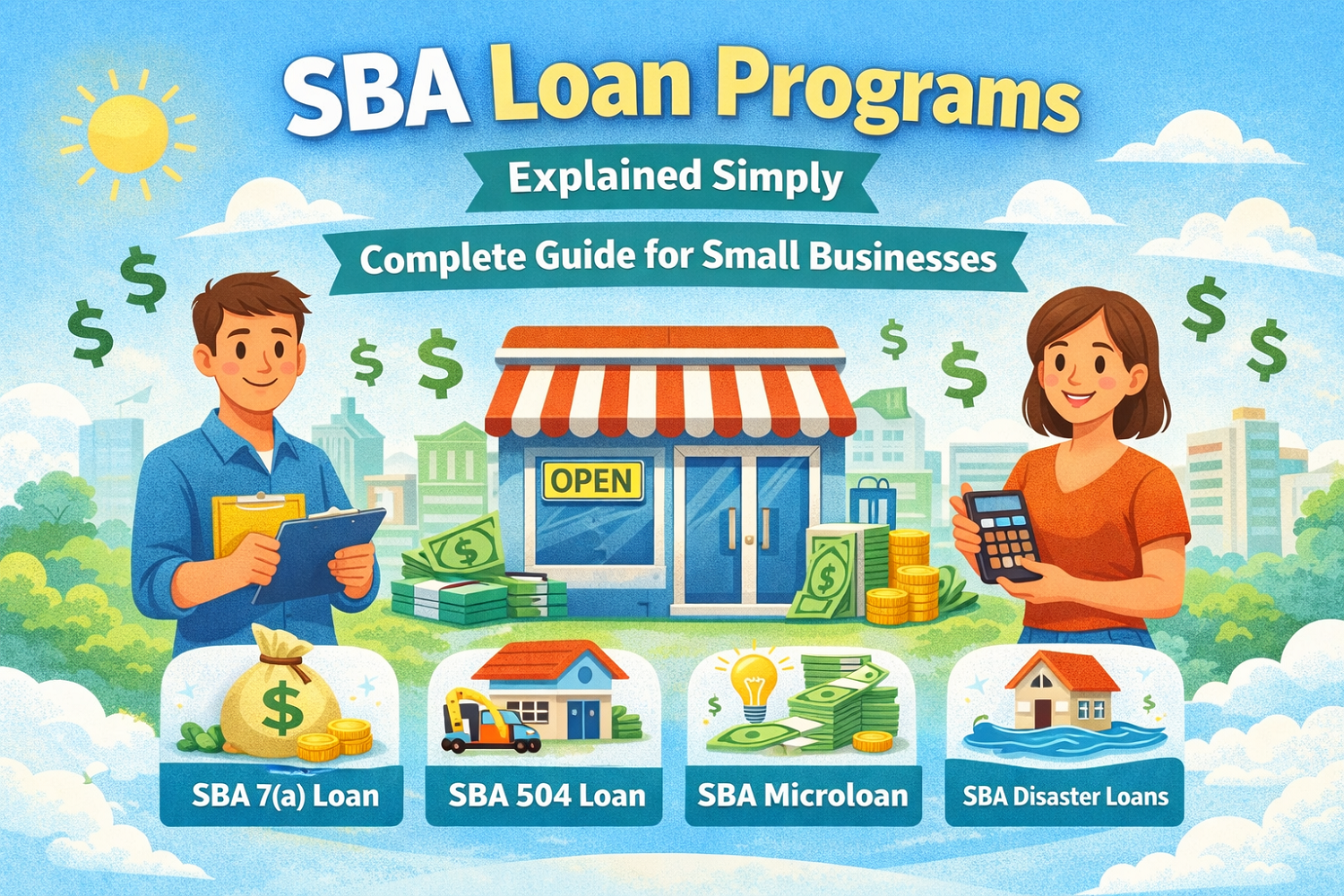
There are several SBA loan programs, but a few are the most common and widely used. Each program is designed for different business needs.
SBA 7(a) Loan Program
The SBA 7(a) loan program is the most popular and flexible SBA loan. It is often the first option business owners consider. These loans can be used for many purposes, including working capital, equipment, inventory, refinancing debt, and even buying another business.
SBA 7(a) loans typically have competitive interest rates and repayment terms that can go up to 10 years for working capital and up to 25 years for real estate. Loan amounts can be large, making this program suitable for both small and growing businesses.
SBA 504 Loan Program
The SBA 504 loan program is designed mainly for buying major fixed assets, such as commercial real estate or large equipment. This program helps businesses invest in long-term assets that support growth and job creation.
SBA 504 loans usually involve three parts: a bank loan, an SBA-backed loan, and a down payment from the business owner. This structure allows businesses to purchase expensive assets with lower upfront costs.
SBA Microloan Program
The SBA Microloan program is designed for very small businesses, startups, and entrepreneurs who need smaller amounts of money. These loans are usually offered through nonprofit lenders and community organizations.
Microloans can be used for working capital, supplies, inventory, equipment, and other small business needs. While the loan amounts are smaller, the program is very helpful for new business owners who may not qualify for larger loans.
SBA Disaster Loan Program
The SBA Disaster Loan program helps businesses recover from declared disasters, such as hurricanes, floods, fires, or other emergencies. These loans help businesses repair or replace damaged property, equipment, and inventory.
Disaster loans are available to businesses of all sizes, as well as homeowners and renters in affected areas. The interest rates are usually low, and repayment terms can be long, making recovery more manageable.
Who Can Apply for SBA Loan Programs?
SBA loans are designed for small businesses operating in the United States. To qualify, a business must meet SBA size standards, operate for profit, and show a reasonable ability to repay the loan.
Business owners usually need to have invested their own time or money into the business. They must also show that they cannot get similar funding on reasonable terms without SBA assistance.
Credit requirements vary by lender and program, but SBA loans are often more flexible than traditional loans.
What SBA Loans Can Be Used For
SBA loan programs can be used for many business purposes. These include starting a new business, expanding operations, buying equipment, purchasing real estate, refinancing existing business debt, covering payroll, and managing day-to-day expenses.
However, SBA loans cannot be used for personal expenses, paying off personal debt, or illegal activities. The funds must be used strictly for business purposes.
SBA Loan Program Application Process
Applying for an SBA loan takes time and preparation. Business owners usually need to provide a business plan, financial statements, tax returns, credit history, and details about how the loan will be used.
While the process may seem long, many lenders and SBA resources are available to help. Preparing documents carefully and being honest about finances can improve approval chances.
SBA Loans vs Traditional Business Loans
Compared to traditional business loans, SBA loans often have lower interest rates, longer repayment terms, and more flexible qualification standards. However, they may take longer to approve due to additional paperwork and review.
Traditional loans may be faster, but they often require stronger credit, more collateral, and higher interest rates. For many small businesses, SBA loans offer a better balance between affordability and accessibility.
Frequently Asked Questions
What Is an SBA Loan Program in Simple Words?
An SBA loan is a business loan offered by a bank but backed by the government to make it easier for small businesses to get funding.
Does the SBA Give Free Money?
No. SBA loans must be repaid. The SBA helps by guaranteeing part of the loan, not by giving free money.
Are SBA Loans Hard to Get?
SBA loans require paperwork, but they are often easier to qualify for than traditional business loans, especially for small businesses.
How Long Does It Take to Get an SBA Loan?
Approval times vary. Some loans take a few weeks, while others may take longer depending on the lender and loan type.
Can Startups Get SBA Loans?
Yes, some SBA loan programs, such as microloans and certain 7(a) loans, are available to startups.
Do SBA Loans Require Collateral?
Some SBA loans require collateral, but the requirements are often more flexible than traditional loans.
What Credit Score Is Needed for SBA Loans?
There is no single required score, but higher credit improves approval chances. Many lenders consider scores in the mid-600s or higher.
Can SBA Loans Be Used to Buy a Business?
Yes, SBA 7(a) loans are commonly used to buy existing businesses.
Are SBA Loans Only for U.S. Citizens?
Business owners generally need legal status to operate in the U.S., but requirements vary. Lenders can provide guidance.
Is an SBA Loan Worth It?
For many small businesses, SBA loans are one of the most affordable and flexible financing options available.
Reference Links
-
U.S. Small Business Administration Official Site: https://www.sba.gov
-
SBA Loan Programs Overview: https://www.sba.gov/funding-programs/loans
-
SBA 7(a) Loan Program: https://www.sba.gov/funding-programs/loans/7a-loans
-
SBA 504 Loan Program: https://www.sba.gov/funding-programs/loans/504-loans
-
SBA Microloan Program: https://www.sba.gov/funding-programs/loans/microloans
Disclaimer
Program Clarity is an independent informational website and is not affiliated with any government agency. This article is for educational purposes only. Program rules and availability may change. Always verify details with official housing authorities.