Running a small business is not easy. Many business owners have strong ideas and the desire to grow, but money often becomes the biggest problem. Banks may say no because the business is too new, credit is not perfect, or there is not enough collateral. This is one of the most common reasons small businesses struggle or fail. To help solve this problem, the U.S. government supports a special loan program called the SBA 7(a) loan program.
The SBA 7(a) loan program is the most popular and widely used SBA loan program in the United States. It is designed to help small businesses get funding when traditional loans are hard to qualify for. However, many business owners feel confused by the name, the process, and the rules. Some think the SBA gives free money. Others think the process is impossible or only for large companies. These misunderstandings stop many people from applying.
What Is the SBA 7(a) Loan Program?
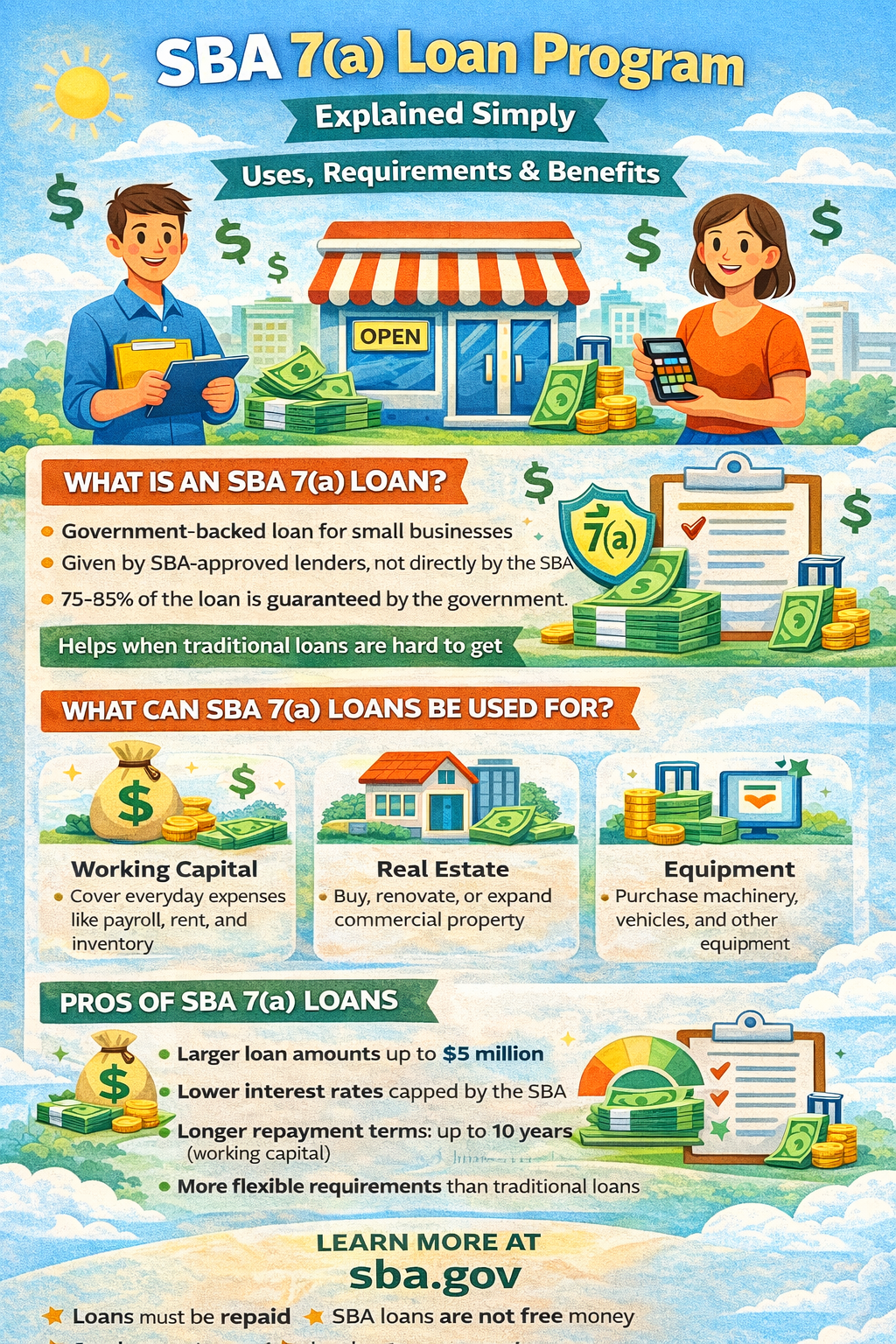
The SBA 7(a) loan program is a small business loan program backed by the U.S. government. The loan itself is not given directly by the government. Instead, the loan is provided by a bank, credit union, or approved lender. The government helps by guaranteeing a large portion of the loan. This guarantee reduces the risk for the lender and makes it easier for small businesses to get approved.
The program is managed by the U.S. Small Business Administration, which was created to support and protect small businesses across the country. The number “7(a)” refers to a section of the law that authorizes this loan program. While the name sounds technical, the goal is very simple. The goal is to help small businesses access affordable funding.
The SBA 7(a) loan program is known for being flexible. Unlike many business loans that can only be used for one purpose, SBA 7(a) loans can be used for many different business needs. This flexibility is one of the main reasons the program is so popular.
How the SBA 7(a) Loan Program Works
Understanding how the SBA 7(a) loan works is easier when explained step by step. First, a business owner applies for a loan through an SBA-approved lender. This lender could be a traditional bank, a credit union, or an online lender that works with the SBA. The lender reviews the business application, credit history, financial records, and the purpose of the loan.
If the lender believes the business is a good candidate but still carries some risk, the SBA steps in to guarantee a portion of the loan. This guarantee usually covers a large percentage of the loan amount. Because the lender knows part of the loan is protected, they are more likely to approve the application.
Once approved, the business owner receives the funds and repays the loan directly to the lender, not the SBA. The SBA only becomes involved if the loan goes into default. This system allows many businesses to receive funding without the government lending money directly.
What Can an SBA 7(a) Loan Be Used For?
One of the biggest advantages of the SBA 7(a) loan program is how flexible it is. These loans can be used for many business purposes, making them useful for both new and established businesses.
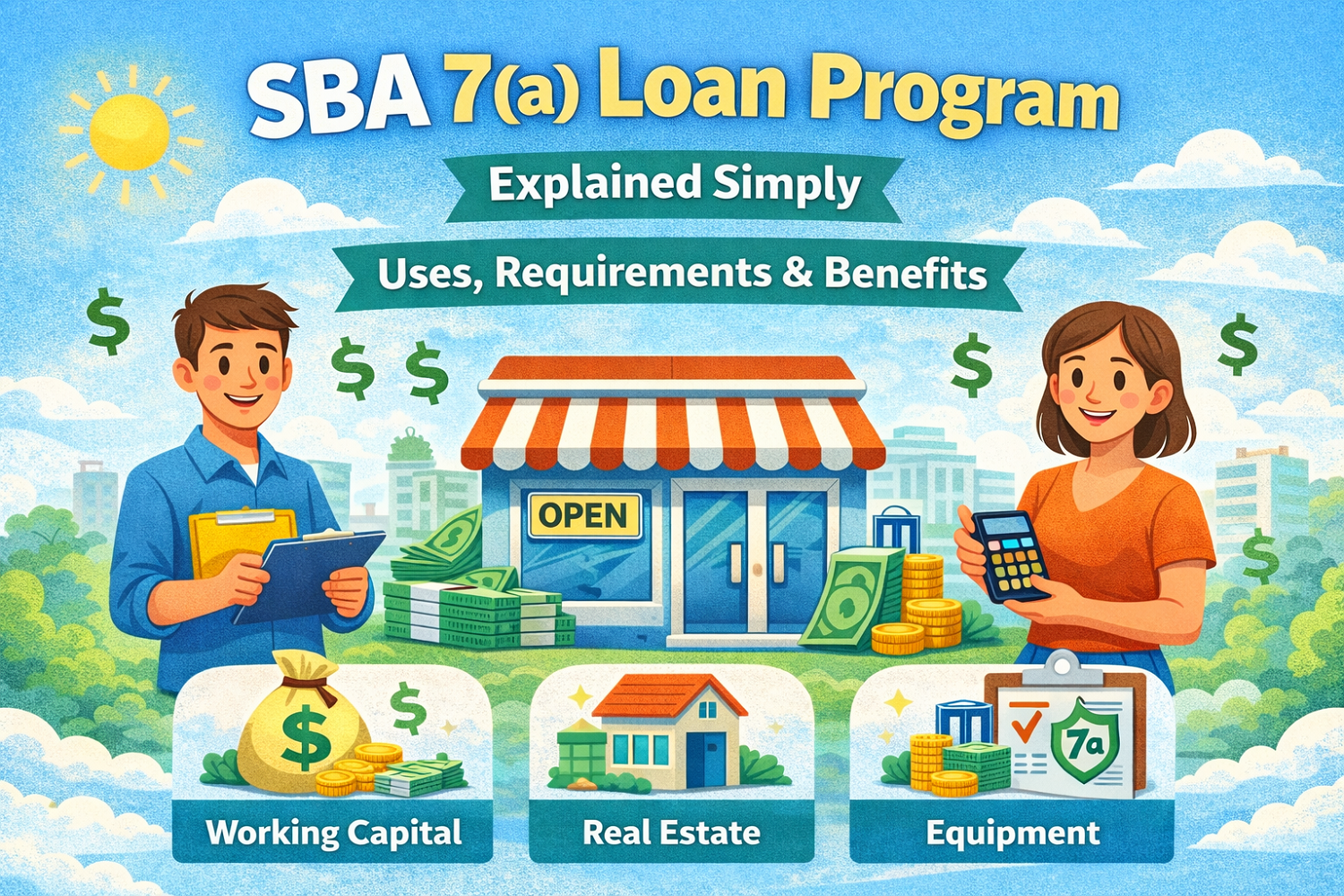
SBA 7(a) loans can be used for working capital, which includes everyday business expenses such as payroll, rent, utilities, inventory, and supplies. Many businesses use this type of loan to improve cash flow and cover gaps during slow seasons.
These loans can also be used to buy equipment, machinery, furniture, and technology needed to operate or expand a business. Business owners can use SBA 7(a) loans to purchase vehicles used for business operations as well.
Another common use of SBA 7(a) loans is buying or expanding commercial real estate. Businesses can use the funds to purchase buildings, renovate existing property, or even construct new facilities. The loan terms for real estate are longer, which helps keep monthly payments affordable.
SBA 7(a) loans are also commonly used to refinance existing business debt. This allows business owners to replace high-interest loans with a more affordable option, improving cash flow and reducing financial stress.
How Much Can You Borrow With an SBA 7(a) Loan?
The SBA 7(a) loan program allows businesses to borrow a wide range of amounts. The maximum loan amount is usually quite high compared to many other small business loan options. This makes the program suitable for both small funding needs and large growth projects.
The exact amount a business can borrow depends on factors such as the purpose of the loan, business revenue, credit history, and repayment ability. Lenders evaluate each application individually. While not every business will qualify for the maximum amount, many are approved for funding that meets their needs.
SBA 7(a) Interest Rates Explained Simply
Interest rates for SBA 7(a) loans are usually competitive and lower than many alternative business loans. The rates are typically based on a standard benchmark rate, plus a small additional percentage set by the lender. The SBA limits how high interest rates can be, which helps protect borrowers from excessive costs.
Interest rates may be fixed or variable depending on the loan agreement. Fixed rates stay the same over time, while variable rates can change based on market conditions. The lender will explain which type applies to the loan.
SBA 7(a) Repayment Terms
Repayment terms for SBA 7(a) loans are longer than most traditional business loans. This is one of the biggest benefits of the program. Longer repayment periods mean lower monthly payments, which helps businesses manage cash flow.
For working capital and general business use, repayment terms can go up to 10 years. For real estate purchases or major construction projects, repayment terms can go up to 25 years. These long terms make SBA 7(a) loans more manageable, especially for growing businesses.
Monthly payments depend on the loan amount, interest rate, and repayment term. Lenders will provide a clear repayment schedule before the loan is finalized.
SBA 7(a) Loan Requirements
To qualify for an SBA 7(a) loan, a business must meet certain requirements. These requirements are designed to ensure that the business is legitimate and has the ability to repay the loan.
The business must operate for profit and be located in the United States. It must meet the SBA’s definition of a small business, which varies by industry. The business owner must also show that they have invested time or money into the business.
Applicants must demonstrate that they cannot obtain similar funding on reasonable terms without SBA assistance. This does not mean the business must be failing. It simply means traditional loans are not easily available.
Credit history is important, but SBA loans are more forgiving than many traditional loans. While higher credit scores improve approval chances, many lenders consider borrowers with average credit if the overall application is strong.
Collateral and Personal Guarantees
Some SBA 7(a) loans require collateral, but the rules are flexible. Collateral may include business assets such as equipment, inventory, or real estate. In some cases, personal assets may also be considered.
Most SBA 7(a) loans require a personal guarantee from the business owner. This means the owner agrees to repay the loan if the business cannot. While this may sound intimidating, it is very common for business loans and shows commitment to the lender.
Benefits of the SBA 7(a) Loan Program
The SBA 7(a) loan program offers many benefits that make it attractive to small business owners. One of the biggest benefits is access to funding when traditional loans are difficult to obtain. The SBA guarantee helps reduce lender risk and increase approval chances.
Another major benefit is flexibility. SBA 7(a) loans can be used for many purposes, making them useful in many business situations. The longer repayment terms also help businesses keep monthly payments low and manageable.
SBA 7(a) Loan Program FAQs
What Is an SBA 7(a) Loan in Simple Words?
An SBA 7(a) loan is a business loan from a bank that is partially guaranteed by the government to help small businesses get funding more easily.
Is the SBA 7(a) Loan Free Money?
No. SBA 7(a) loans must be repaid. The SBA helps by guaranteeing part of the loan, not by giving free money.
Can Startups Apply for SBA 7(a) Loans?
Yes, some startups qualify, especially if the owner has experience, a strong business plan, and the ability to repay the loan.
How Long Does SBA 7(a) Loan Approval Take?
Approval times vary, but it can take several weeks to a few months depending on the lender and application completeness.
What Credit Score Is Needed for an SBA 7(a) Loan?
There is no official minimum score, but many lenders prefer fair to good credit. Strong business finances can help offset lower credit.
Can SBA 7(a) Loans Be Used to Buy a Business?
Yes. SBA 7(a) loans are commonly used to purchase existing businesses.
Are SBA 7(a) Loans Worth It?
For many small businesses, SBA 7(a) loans are one of the best financing options due to flexibility, long terms, and lower costs.
Reference Links
-
SBA 7(a) Loan Program Official Page: https://www.sba.gov/funding-programs/loans/7a-loans
-
U.S. Small Business Administration: https://www.sba.gov
-
SBA Loan Eligibility Requirements: https://www.sba.gov/funding-programs/loans/eligibility
-
SBA Loan Application Process: https://www.sba.gov/funding-programs/loans/how-apply
Disclaimer
Program Clarity is an independent informational website and is not affiliated with any government agency. This article is for educational purposes only. Program rules and availability may change. Always verify details with official housing authorities.