The United States immigration system is one of the most talked about systems in the world, but it is also one of the most confusing. Many people dream of coming to the United States to work, study, join family, or build a better future. However, once they begin researching immigration, they quickly feel overwhelmed. There are many visa types, strict rules, long wait times, and complicated government processes. Because of this confusion, many people make mistakes, miss deadlines, or believe incorrect information.
The truth is that the US immigration system is complex, but it can be understood when explained clearly and simply. It is built on laws, categories, and processes that control who can enter the country, how long they can stay, and whether they can become permanent residents or citizens. The system is managed by different government agencies, each with its own role. When people understand how the system works, they can make better decisions and avoid serious problems.
What Is the US Immigration System?
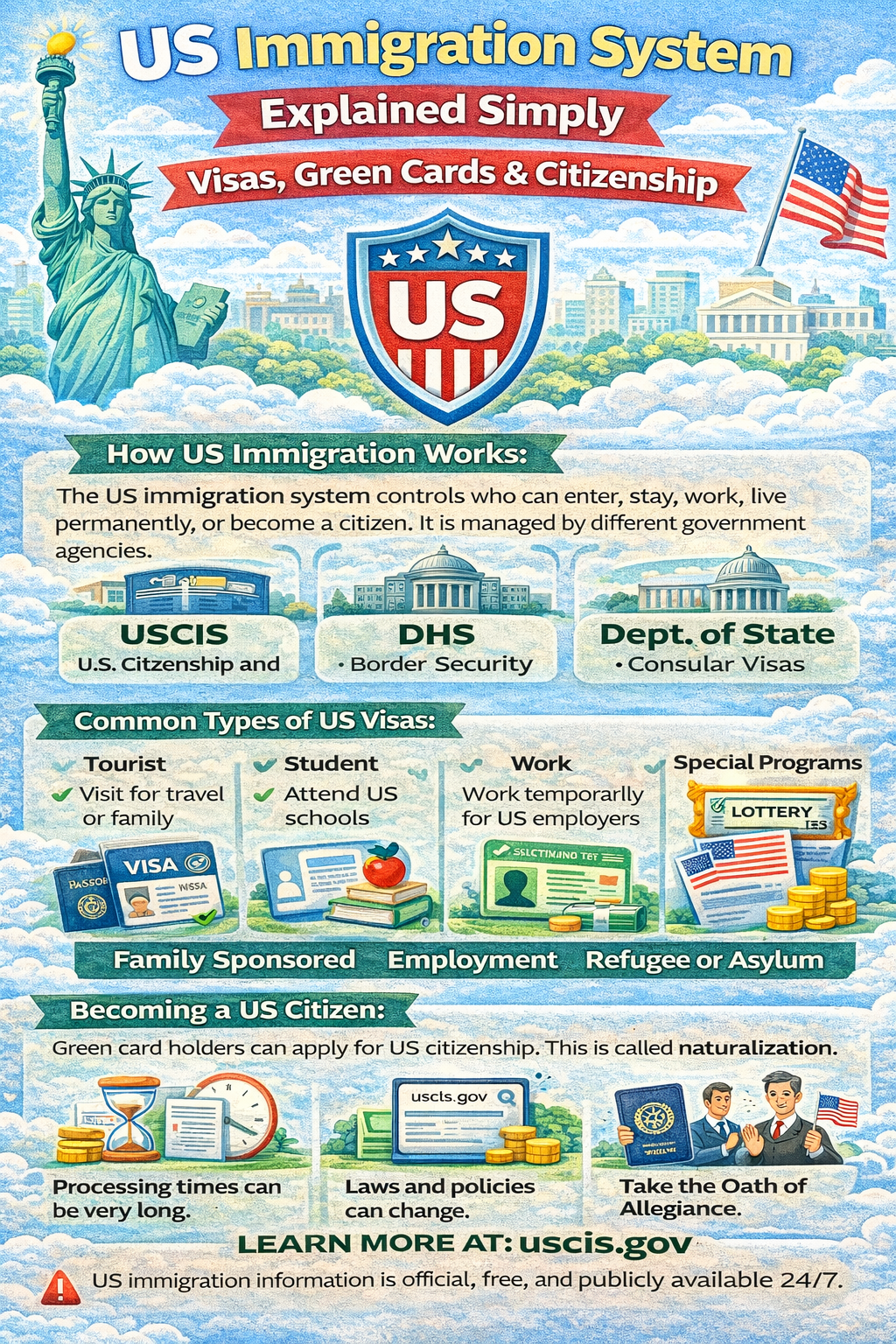
The US immigration system is the set of laws, rules, and government processes that control immigration to the United States. It decides who can enter the country, who can stay temporarily, who can live permanently, and who can become a citizen. The system also explains what happens when people break immigration rules.
The immigration system is not a single office or form. It is a large system made up of laws passed by Congress and rules enforced by government agencies. These laws decide how many people can immigrate each year, what categories they must fit into, and what rights they have once they arrive.
The goal of the system is to balance many things at the same time. These include national security, economic needs, family reunification, humanitarian protection, and fairness. Because the system tries to meet many goals, it becomes complicated.
Who Manages US Immigration?
Several government agencies manage the US immigration system. Each agency has a specific role, and they work together to enforce immigration laws.
The main agency that handles immigration benefits is U.S. Citizenship and Immigration Services. This agency processes applications for visas, green cards, work permits, asylum, and citizenship. When someone applies for an immigration benefit, this is usually the agency reviewing the application.
Immigration enforcement and border control are handled by agencies under the Department of Homeland Security. These agencies manage border security, deportation, and immigration enforcement inside the country.
Temporary Visas
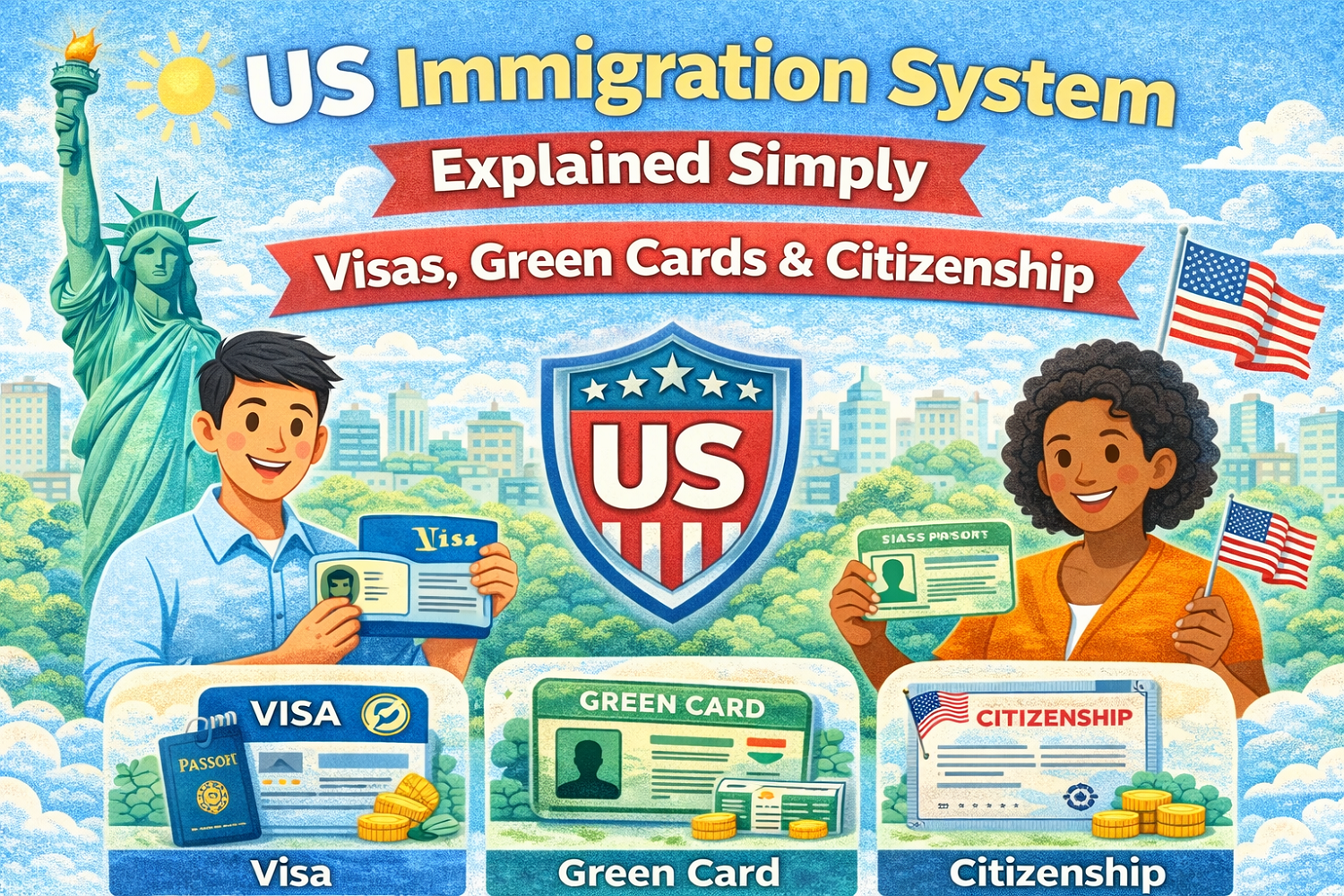
Temporary visas allow people to come to the United States for a limited time and specific purpose. These visas do not usually lead directly to permanent residence, although some people later apply for green cards.
There are many types of temporary visas. Tourist visas allow people to visit for travel or family visits. Student visas allow people to study at US schools and universities. Work visas allow people to work for US employers in certain jobs. Each visa type has its own rules, limits, and time periods..
Work Visas in the US Immigration System
Work visas are a major part of the US immigration system. These visas allow foreign workers to work legally in the United States for approved employers. Some work visas are for skilled professionals, while others are for seasonal or temporary labor.
Many work visas require employer sponsorship. This means a US employer must offer a job and often prove that no qualified US worker is available. Some work visas are limited by annual caps, which means only a certain number are issued each year..
Family-Based Immigration
Family-based immigration is one of the most important parts of the US immigration system. It allows US citizens and lawful permanent residents to sponsor certain family members for immigration benefits.
Immediate relatives of US citizens, such as spouses, unmarried children under 21, and parents, often receive priority and do not face yearly limits. Other family categories have long waiting periods because they are limited by annual quotas.
What Is a Green Card?
A green card is official proof of lawful permanent residence in the United States. People with green cards are allowed to live and work permanently in the country. They are protected by US laws and have many rights, but they are not citizens.
Green cards can be obtained through family sponsorship, employment, refugee or asylum status, and certain special programs. Each category has its own requirements and waiting times.
Green card holders must follow certain rules to keep their status. Long trips outside the US or criminal activity can cause problems. After holding a green card for a certain number of years, many people become eligible to apply for US citizenship.
Refugees and Asylum Seekers
The US immigration system also includes humanitarian protection for people fleeing danger. Refugees apply for protection from outside the United States, while asylum seekers apply from inside the country or at the border.
These programs are designed to protect people who face persecution because of race, religion, nationality, political opinion, or membership in a particular social group. Humanitarian immigration is carefully reviewed, and approval is not automatic.
Path to US Citizenship
US citizenship is the final step for many immigrants. Most people become citizens through a process called naturalization. To qualify, a person usually must have held a green card for several years, maintained good moral character, and met residency requirements.
Applicants must pass a citizenship test that includes English language skills and knowledge of US history and government. They must also take an oath of allegiance to the United States.
Common Problems in the US Immigration System
Many people struggle with the US immigration system because it is slow, complex, and strict. Processing delays are common, and policies can change based on government leadership. Small mistakes on forms can cause serious delays or denials.
Another major challenge is misinformation. Many people rely on rumors, social media, or unlicensed advisors who give incorrect advice. This leads to wasted money and damaged immigration cases.
US Immigration System FAQs
What Is the US Immigration System in Simple Words?
It is the set of laws and rules that decide who can come to the United States, stay, work, live permanently, or become a citizen.
Is It Easy to Immigrate to the United States?
No. The process can be long and difficult, depending on the category and country of origin.
What Is the Difference Between a Visa and a Green Card?
A visa is usually temporary permission to enter the US, while a green card allows permanent residence.
Can Temporary Visa Holders Apply for Green Cards?
Some can, depending on their visa type and eligibility.
How Long Does US Immigration Take?
Processing times vary widely. Some cases take months, while others take many years.
Can Immigration Laws Change?
Yes. Immigration laws and policies can change through new laws, court decisions, or government actions.
Reference Links
U.S. Citizenship and Immigration Services (USCIS) Official Website: https://www.uscis.gov
U.S. Department of Homeland Security (Immigration & Border Security): https://www.dhs.gov/immigration-statistics
U.S. Department of State – Visas and Immigration: https://travel.state.gov/content/travel/en/us-visas.html
USCIS Green Card (Permanent Residence) Information: https://www.uscis.gov/green-card
USCIS Family-Based Immigration Overview: https://www.uscis.gov/family
USCIS Employment-Based Immigration Overview: https://www.uscis.gov/working-in-the-united-states/permanent-workers
Refugees and Asylum Information (USCIS): https://www.uscis.gov/humanitarian/refugees-and-asylum
US Citizenship and Naturalization Process:https://www.uscis.gov/citizenship
USCIS Forms and Filing Information:https://www.uscis.gov/forms
Immigration Court and Removal Proceedings (EOIR):https://www.justice.gov/eoir
Disclaimer
Program Clarity is an independent informational website and is not affiliated with any government agency. This article is for educational purposes only. Program rules and availability may change. Always verify details with official housing authorities.