
Many people depend on their ability to work to survive. When a serious illness, injury, or disability suddenly makes working impossible, life can change very quickly. Bills continue to come, but income may stop. This situation can feel frightening and overwhelming. To help workers who become disabled and cannot work anymore, the U.S. government provides a program called SSDI.
SSDI is often confused with SSI, Social Security retirement, or other government assistance programs. Some people believe SSDI is free money for anyone who is sick. Others think SSDI is the same as SSI or that it is impossible to qualify. These misunderstandings cause stress and prevent people from applying for benefits they may have earned through years of work.
What Does SSDI Mean?
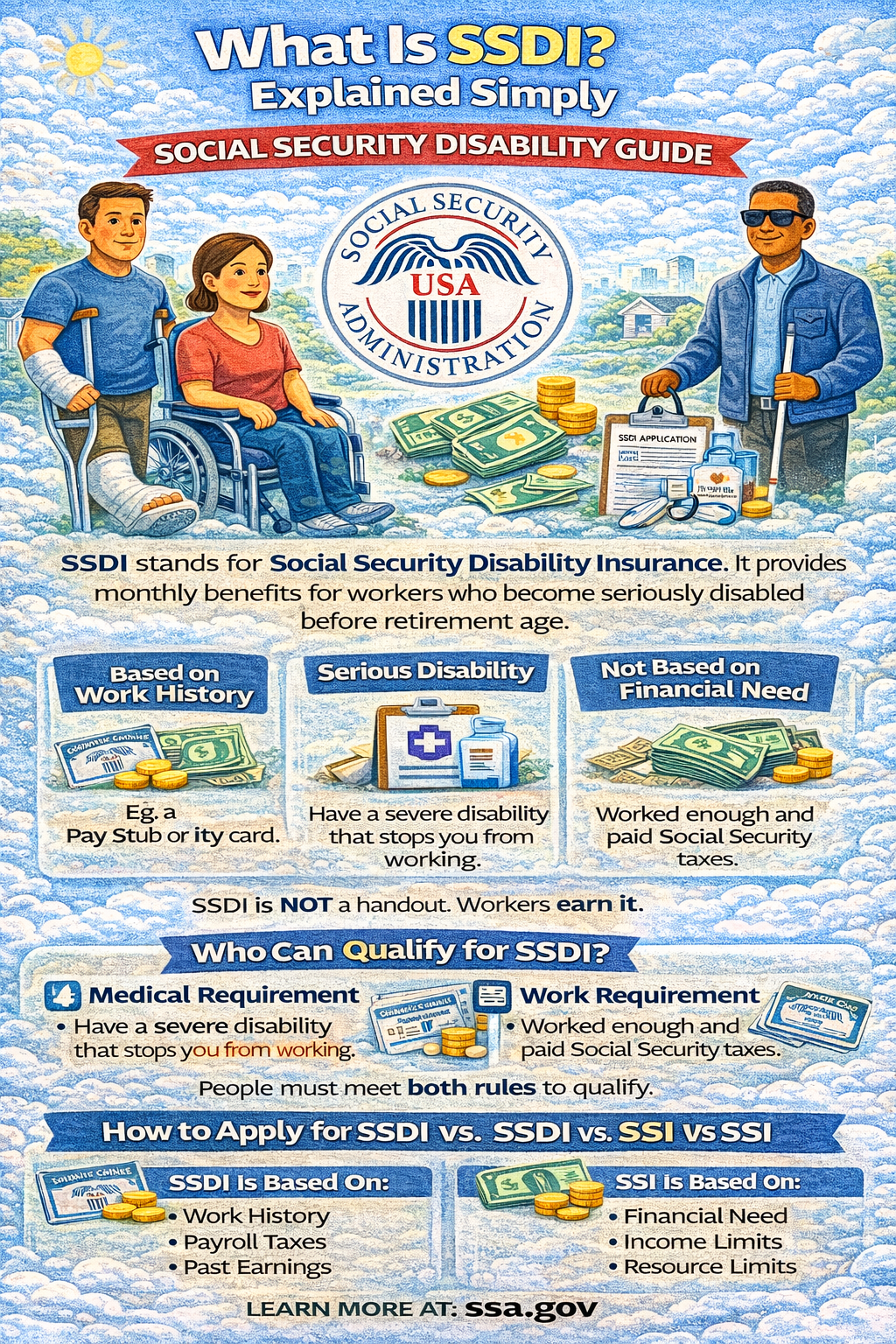
SSDI stands for Social Security Disability Insurance. It is a federal benefit program that provides monthly payments to people who are unable to work because of a serious disability. SSDI is part of the Social Security system and is based on a person’s work history.
Unlike SSI, SSDI is not based on financial need. Instead, it is based on whether a person has worked long enough and paid Social Security taxes. In simple words, SSDI is like insurance that workers earn by paying into the Social Security system through their paychecks.
Who Runs the SSDI Program?
The SSDI program is managed by the Social Security Administration. This agency is responsible for reviewing applications, deciding who qualifies, and paying monthly benefits.
Even though SSDI is run by the same agency as SSI and Social Security retirement, it follows different rules. SSDI is funded by payroll taxes that workers pay during their working years.
Who Can Qualify for SSDI?
To qualify for SSDI, a person must meet two main requirements: a medical requirement and a work requirement.
The medical requirement means the person must have a disability that is severe. The condition must prevent the person from doing substantial work and must be expected to last at least one year or result in death. Short-term or partial disabilities usually do not qualify.
The work requirement means the person must have earned enough work credits. Work credits are earned by working and paying Social Security taxes. The number of credits required depends on the person’s age at the time they became disabled. In general, people who worked recently and consistently are more likely to qualify.
What Disabilities Qualify for SSDI?
SSDI does not approve benefits based on diagnosis alone. The Social Security Administration looks at how a medical condition affects a person’s ability to work.
Qualifying conditions may include serious physical disabilities, mental health conditions, neurological disorders, heart disease, cancer, autoimmune diseases, and many others. The condition must significantly limit daily activities and work ability.
The Social Security Administration maintains a medical guide called the Blue Book, which helps explain which conditions may qualify and what medical evidence is required.
How Much Money Does SSDI Pay?
SSDI pays a monthly benefit, but the amount is different for each person. The payment is based on the person’s past earnings before becoming disabled.
People who earned more and paid more into Social Security usually receive higher SSDI payments. People with lower earnings receive smaller payments. There is no single standard SSDI amount for everyone.
How Long Does SSDI Last?
SSDI continues as long as the person remains disabled under Social Security rules. The Social Security Administration reviews cases periodically to confirm eligibility.
When a person reaches full retirement age, SSDI automatically converts to Social Security retirement benefits. The payment amount usually stays the same.
Can You Work While Receiving SSDI?
Some people can work limited hours while receiving SSDI, but there are strict rules. The Social Security Administration allows trial work periods so people can test their ability to return to work without immediately losing benefits.
If income exceeds certain limits, SSDI benefits may stop. It is very important to report all work activity to Social Security to avoid overpayments.
SSDI vs SSI
SSDI and SSI are often confused, but they are very different programs.
SSDI is based on work history and payroll taxes. SSI is based on financial need.
SSDI does not have strict income or asset limits like SSI. SSI does.
Some people qualify for both SSDI and SSI if their SSDI payment is very low and they meet SSI income limits.
How to Apply for SSDI
People can apply for SSDI online, by phone, or at a Social Security office. The application requires detailed medical records, work history, and personal information.
Many SSDI applications are denied at first. This does not mean the person is not disabled. Applicants have the right to appeal decisions, and many people are approved during the appeal process.
Frequently Asked Questions (FAQs)
What Is SSDI in Simple Terms?
SSDI is a monthly benefit for people who worked and paid Social Security taxes but can no longer work due to disability.
Is SSDI the Same as SSI?
No. SSDI is based on work history, while SSI is based on financial need.
Do You Have to Pay Back SSDI?
No. SSDI benefits do not need to be repaid unless there is an overpayment.
Can Children Get SSDI?
Children may qualify if a parent is disabled, retired, or deceased and has work credits.
How Long Does SSDI Take to Approve?
Approval can take several months or longer, especially if appeals are needed.
Does SSDI Turn Into Retirement?
Yes. SSDI converts to Social Security retirement benefits at full retirement age.
What Is SSI?: A Complete Guide to Supplemental Security Income
Reference Links
Social Security Disability Insurance (SSDI) Official Overview: https://www.ssa.gov/disability
Social Security Administration (SSA) Official Website: https://www.ssa.gov
SSDI Eligibility and Work Credits: https://www.ssa.gov/benefits/disability/qualify.html
Apply for SSDI Benefits: https://www.ssa.gov/applyfordisability
SSA Disability Blue Book (Medical Listings): https://www.ssa.gov/disability/professionals/bluebook
Working While Receiving SSDI: https://www.ssa.gov/pubs/EN-05-10095.pdf
Disclaimer
Program Clarity is an independent informational website and is not affiliated with any government agency. This article is for educational purposes only. Program rules and availability may change. Always verify details with official housing authorities.