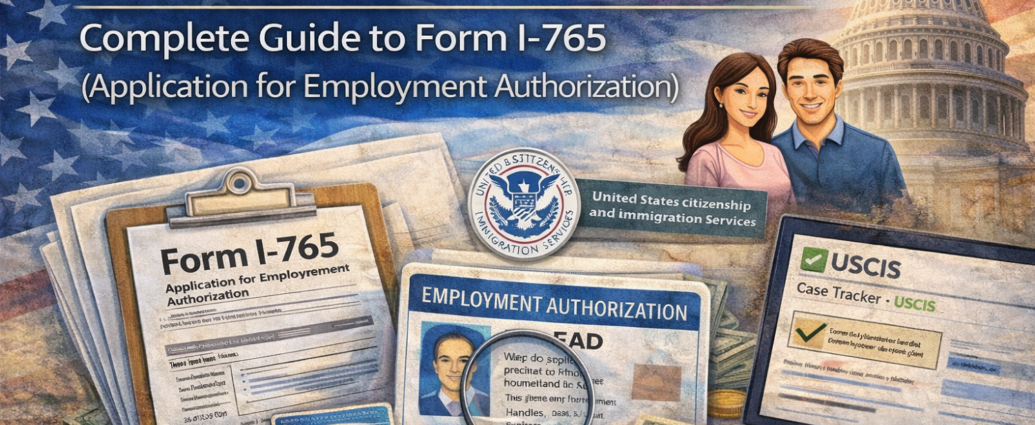
Form I-765 is one of the most important immigration forms used in the United States, especially for individuals who are not yet permanent residents or citizens but need legal authorization to work. For many immigrants, this form represents opportunity, independence, and financial stability. It is often filed during major immigration transitions such as applying for a green card, seeking asylum, or extending student work authorization. Although it may appear to be just another government document, Form I-765 plays a critical role in allowing lawful employment under U.S. immigration law.
What Is Form I-765?
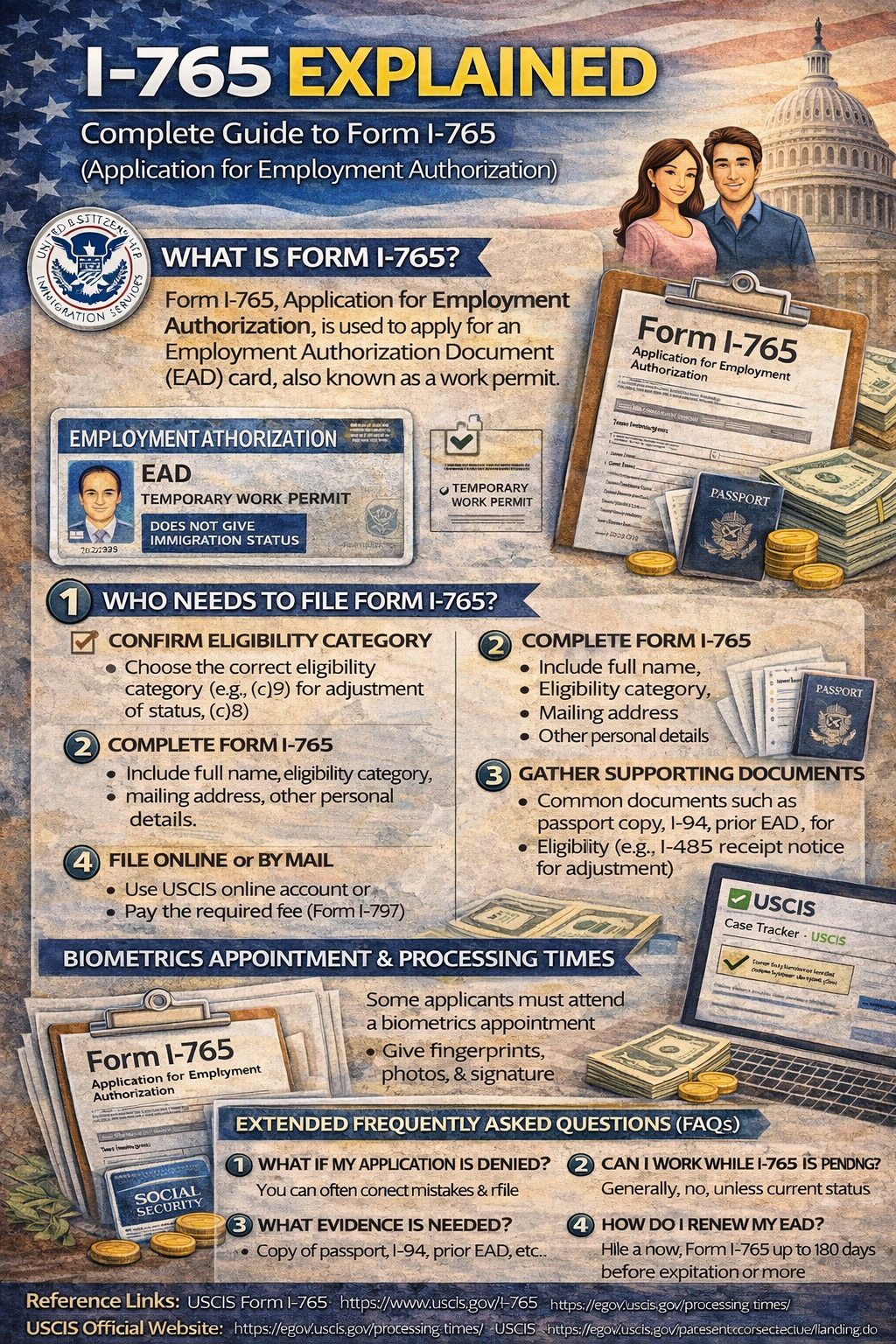
Form I-765 is officially called the Application for Employment Authorization. It is filed with:
United States Citizenship and Immigration Services
The purpose of this form is to request permission to work legally in the United States. When approved, USCIS issues an Employment Authorization Document (EAD), commonly referred to as a work permit card.
It is extremely important to understand that Form I-765 does not provide immigration status. It does not grant a visa, permanent residency, or citizenship. Instead, it provides temporary authorization to work based on an existing or pending immigration category.
What Is an Employment Authorization Document (EAD)?
An Employment Authorization Document (EAD) is a plastic card issued after Form I-765 is approved. It serves as official proof that the holder is legally permitted to work in the United States for a specific time period.
The EAD card includes:
Full legal name
Photograph
Eligibility category code
Card validity dates
USCIS identification information
Employers use the EAD card when completing Form I-9, which verifies employment eligibility under federal law.
Why Form I-765 Is So Important
Form I-765 is often described as a “bridge” form. It bridges the gap between immigration status and employment authorization. Many immigration processes take months or even years to complete. During that time, applicants may not automatically have the right to work. Filing Form I-765 allows eligible individuals to work legally while waiting for a final immigration decision.
Without an approved EAD, employment may be unauthorized, which can create serious immigration consequences. Therefore, proper filing of Form I-765 protects both the applicant and the employer.
Who Needs to File Form I-765?
Not everyone needs to file Form I-765. Some immigration categories automatically allow employment without requiring a separate EAD card. However, many categories require filing this form.
Common applicants include:
Adjustment of Status (Form I-485) applicants
Asylum applicants
DACA recipients
F-1 students applying for OPT
F-1 students applying for STEM OPT extension
H-4 spouses of certain H-1B visa holders
L-2 spouses in specific circumstances
TPS (Temporary Protected Status) beneficiaries
Refugees and asylees
Each category corresponds to a specific eligibility code that must be entered on Form I-765. Selecting the wrong code is one of the most common filing mistakes.
Understanding Eligibility Category Codes
Eligibility category codes are letter-and-number combinations such as (c)(9), (c)(8), or (c)(3)(B). These codes identify the immigration basis for requesting work authorization.
For example:
(c)(9) is commonly used by adjustment of status applicants.
(c)(8) is used by asylum applicants.
(c)(3)(B) is used for post-completion OPT students.
The code selected must match the applicant’s immigration situation. USCIS reviews the eligibility code carefully, and errors can result in denial.
Breaking Down Form I-765 Section by Section
Form I-765 contains multiple parts, each requiring accurate information.
Part 1: Reason for Applying
Applicants must indicate whether they are:
-
Applying for initial permission to accept employment
-
Renewing employment authorization
-
Replacing a lost, stolen, or damaged card
Selecting the correct option ensures proper processing.
Part 2: Personal Information
This section requests detailed information, including:
-
Full legal name
-
All other names used
-
Mailing address
-
Physical address
-
Date of birth
-
Country of birth
-
Citizenship information
-
Immigration status
-
Passport number
-
I-94 record number
Information must exactly match official documents. Even minor spelling differences can cause confusion.
Social Security Number Option
Applicants may request a Social Security Number directly through Form I-765. If approved, the Social Security card will be issued automatically without a separate visit to the Social Security Administration.
Applicant’s Signature
The form must be signed. Unsigned applications are automatically rejected.
Supporting Documents Required
The documents required depend on eligibility category, but common documents include:
Copy of passport biographic page
Copy of visa page
Copy of I-94 arrival/departure record
Two passport-style photographs (if filing by mail)
Copy of previous EAD (if renewing)
Proof of eligibility (such as I-485 receipt notice or OPT recommendation)
Incomplete documentation is one of the most common reasons for Requests for Evidence (RFEs).
Filing Fees and Payment
The filing fee for Form I-765 varies depending on category. Some categories qualify for fee exemptions. Others must pay a filing fee and possibly a biometrics fee.
USCIS updates fee schedules periodically. Applicants must confirm current fees before submitting payment.
How to File Form I-765
Form I-765 can often be filed:
Online through a USCIS account
By mail to the correct USCIS lockbox facility
Online filing allows electronic uploads and case tracking. Paper filing requires careful assembly of documents and correct mailing address.
After submission, USCIS issues Form I-797 (Receipt Notice).
Biometrics Appointment
Some applicants are required to attend a biometrics appointment at a USCIS Application Support Center. During this appointment:
Fingerprints are collected
A photograph is taken
Signature is recorded
These are used for background and security checks.
Processing Time
Processing times vary depending on:
Eligibility category
Service center workload
Background checks
Policy changes
Some applications are processed within a few months. Others may take longer.
Validity and Renewal
EAD cards are usually valid for one year, though some categories receive two-year cards.
Renewal applications should be filed up to 180 days before expiration.
In certain categories, automatic extensions of up to 540 days may apply when renewal is filed on time.
Common Mistakes to Avoid
Choosing incorrect eligibility code
Filing outdated form version
Forgetting to sign
Incorrect payment
Missing documents
Waiting too late to renew
Careful preparation significantly reduces risk of delay.
Frequently Asked Questions (FAQs)
Does Form I-765 give permanent residency?
No. It only provides temporary work authorization.
Can I work while waiting for approval?
Generally, no, unless your immigration status independently allows employment.
What if my application is denied?
A denial notice will explain the reason. Refiling may be possible.
Is premium processing available?
Premium processing is not widely available for most categories.
Can I travel while waiting?
Travel depends on underlying immigration status. Adjustment applicants may need Advance Parole.
What if my EAD is lost?
File Form I-765 again requesting replacement.
How do I check my case status?
Use the receipt number on the USCIS website.
Can I change employers?
Yes, unless restricted by your immigration category.
Is biometrics always required?
Not always. It depends on eligibility category.
Why is selecting the correct category so important?
Because USCIS evaluates eligibility strictly based on the selected code.
Reference Links
USCIS Form I-765 https://www.uscis.gov/i-765
USCIS Official Website https://www.uscis.gov
USCIS Processing Times https://egov.uscis.gov/processing-times/
USCIS Case Status https://egov.uscis.gov/casestatus/landing.do
Disclaimer
Program Clarity is an independent informational website and is not affiliated with any government agency. This article is for educational purposes only. Program rules and availability may change. Always verify details with official USCIS authorities.