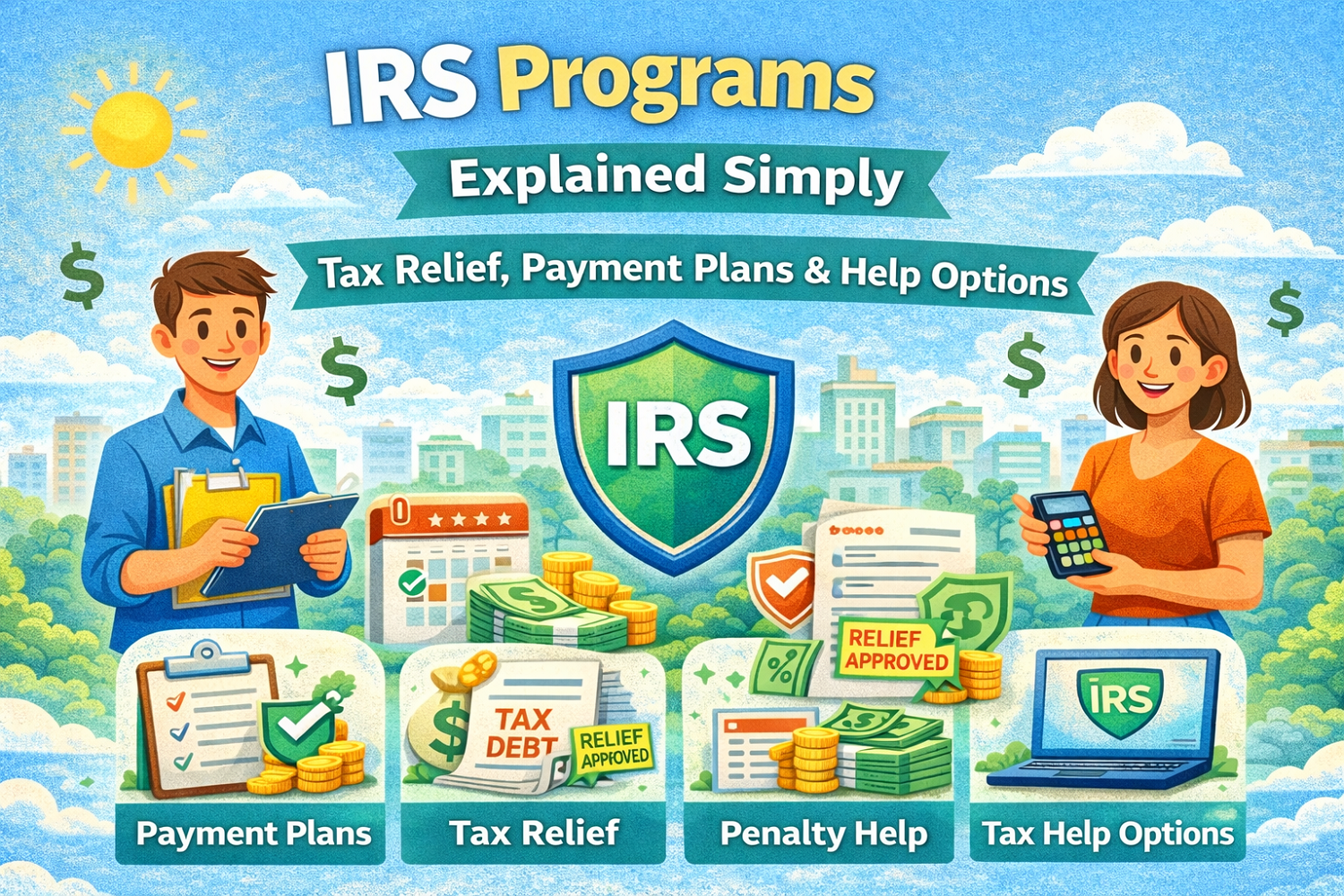
Taxes can feel confusing, stressful, and overwhelming for many people. Individuals, families, and business owners often worry about filing taxes correctly, paying what they owe, or dealing with tax debt. Many people fear the IRS because they believe the IRS only exists to collect money and punish mistakes. This fear causes people to avoid opening IRS letters, delay filing taxes, or ignore problems until they become much worse. In reality, the IRS offers many programs designed to help taxpayers, not just penalize them.
IRS programs exist to make taxes more manageable for people who cannot pay all at once, who made mistakes, who owe back taxes, or who are facing financial hardship. These programs help taxpayers stay compliant, reduce penalties, set up payment plans, and sometimes even lower the total amount owed. However, many people do not know these programs exist or do not understand how they work. Because of this lack of knowledge, they miss opportunities to get relief.
What Does IRS Mean?
IRS stands for Internal Revenue Service. It is the government agency responsible for collecting federal taxes and enforcing tax laws in the United States. The IRS manages income taxes, payroll taxes, business taxes, and other federal tax obligations.
The IRS is part of the U.S. government and operates under the Internal Revenue Service. While many people associate the IRS with audits and penalties, one of its main roles is to help taxpayers understand their obligations and stay compliant with tax laws.
What Are IRS Programs?
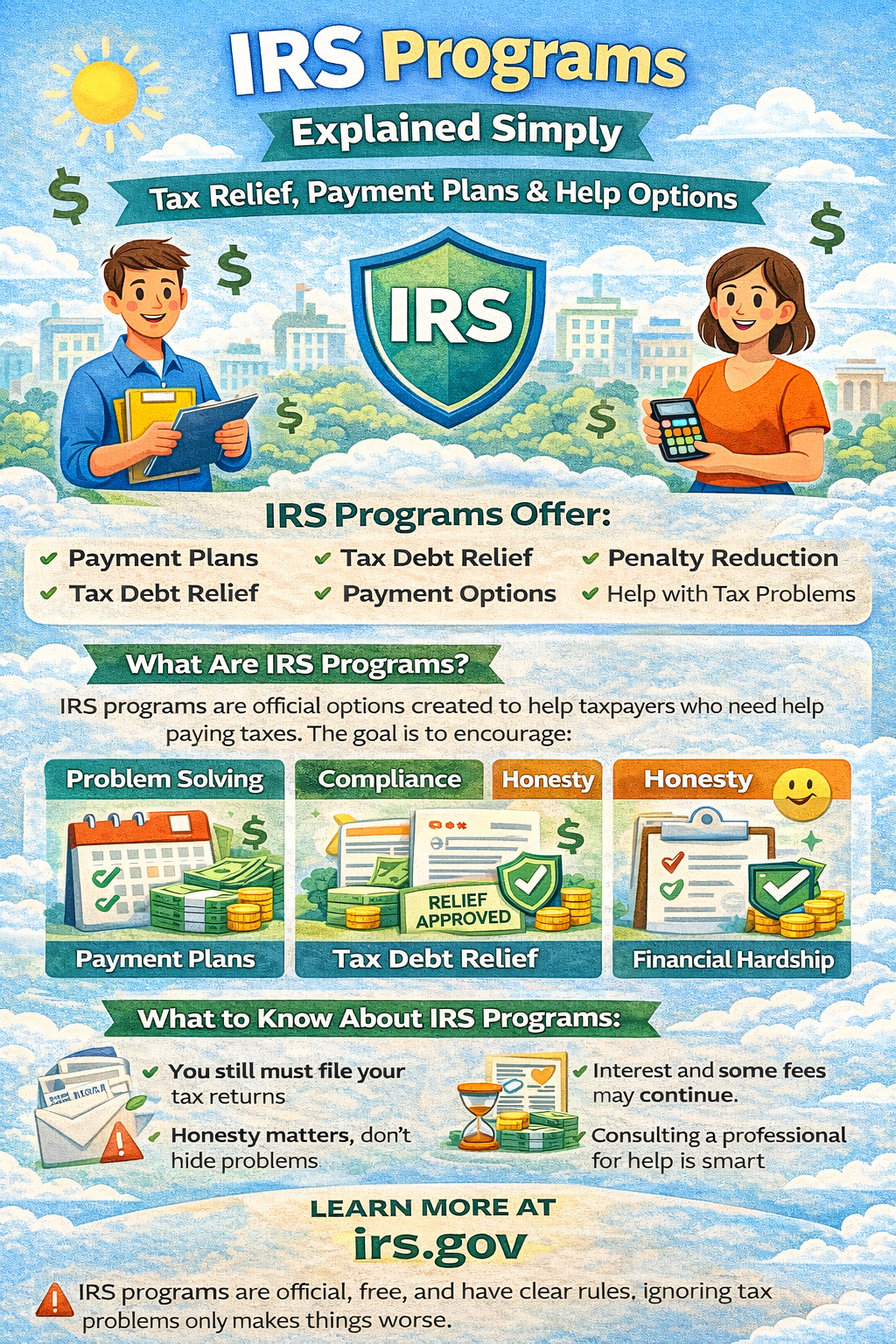
IRS programs are official options created to help taxpayers manage their tax responsibilities. These programs are not special favors or loopholes. They are part of the tax system and are meant to encourage people to file taxes, pay what they can, and resolve problems in a structured and fair way.
IRS programs help individuals and businesses who cannot pay their taxes in full, who owe back taxes, who missed filing deadlines, or who are struggling financially. Some programs allow taxpayers to pay over time, while others may reduce penalties or settle tax debt for less than the full amount.
Why IRS Programs Are Important
IRS programs are important because they prevent tax problems from becoming life-changing disasters. Without these programs, taxpayers who cannot pay immediately would face aggressive collections, wage garnishments, bank levies, and legal action. IRS programs offer a safer and more manageable way to resolve tax issues.
These programs also encourage honesty. The IRS prefers that people come forward, file missing returns, and communicate openly rather than avoid the system. When taxpayers use IRS programs correctly, they often avoid severe penalties and long-term financial damage.
IRS Payment Plan Programs
One of the most common IRS programs is the IRS payment plan, also known as an installment agreement. This program allows taxpayers to pay their tax debt over time instead of all at once. The IRS provides clear rules for installment agreements for individuals and businesses, making this one of the most widely used relief options.
Payment plans are helpful for people who can afford monthly payments but cannot pay the full amount immediately. Monthly payments are based on income, expenses, and total tax debt. As long as payments are made on time, the IRS usually stops aggressive collection actions.
IRS Offer in Compromise Program
The Offer in Compromise program is one of the most misunderstood IRS programs. This program allows some taxpayers to settle their tax debt for less than the full amount owed. It is designed for people who truly cannot afford to pay the full balance, even over time.
According to IRS guidelines on how an Offer in Compromise works, the IRS looks at income, expenses, assets, and overall financial ability. If the IRS believes it cannot reasonably collect the full amount, it may accept a lower settlement.
This program is not easy to qualify for, but it can be life-changing for people facing long-term financial hardship. When approved, it resolves tax debt permanently once the agreed amount is paid.
IRS Penalty Abatement Program
Penalties can greatly increase tax debt. The IRS penalty abatement program allows taxpayers to request removal or reduction of penalties under certain conditions. The IRS provides guidance on penalty relief for reasonable cause, such as illness, natural disasters, or serious personal hardship.
Penalty abatement does not remove the tax itself, but it can significantly lower the total amount owed. Many taxpayers qualify for penalty relief but never ask for it because they do not know it exists.
IRS Currently Not Collectible Status
The Currently Not Collectible (CNC) status is an IRS program for taxpayers who cannot afford to pay anything at the moment. This program is explained in IRS materials about financial hardship and collection relief.
When a taxpayer is placed in CNC status, the IRS temporarily stops collection actions. This does not erase the debt, but it provides breathing room for people experiencing serious financial hardship. During this time, wage garnishments and levies are paused.
IRS Fresh Start Program
The IRS Fresh Start Program is not a single program but a group of expanded relief options introduced to help struggling taxpayers. It includes easier access to installment agreements, more flexible Offer in Compromise rules, and higher thresholds for liens.
The IRS explains Fresh Start changes in its overview of tax relief initiatives for individuals and businesses. This program was designed to help taxpayers recover financially without being crushed by tax debt.
IRS Programs for Businesses
The IRS offers programs specifically for businesses, including payroll tax payment plans and penalty relief. Businesses that fall behind on employment taxes can face serious consequences, so the IRS encourages early communication.
Programs for businesses are explained in IRS resources on business tax payment options and employment tax relief. These programs help businesses stay open while resolving tax issues responsibly.
How to Apply for IRS Programs
Applying for IRS programs usually involves filing required tax returns, providing financial information, and submitting the correct forms. The IRS outlines the process clearly in its guides on how to resolve tax debt.
Honesty and accuracy are critical. Providing false information can lead to denial and penalties. Many taxpayers choose to seek professional help, but individuals can apply on their own using IRS instructions.
IRS Programs Frequently Asked Questions
What Are IRS Programs in Simple Words?
IRS programs are official options that help people pay taxes, reduce penalties, or manage tax debt when they cannot pay all at once.
Are IRS Programs Legal and Safe?
Yes. IRS programs are part of federal tax law and are explained on official IRS resources.
Does the IRS Forgive Tax Debt?
Sometimes. Programs like the Offer in Compromise may settle debt for less than the full amount if the taxpayer qualifies.
Can the IRS Stop Collections?
Yes. Programs like payment plans and Currently Not Collectible status can stop or reduce collection actions.
Do IRS Programs Remove Interest?
Usually no. Interest often continues, but penalties may be reduced or removed in some cases.
Can Businesses Use IRS Programs?
Yes. The IRS offers payment plans and relief options for businesses as well as individuals.
Is It Better to Contact the IRS Early?
Yes. The IRS is more flexible when taxpayers communicate early instead of ignoring notices.
SBA Loan Programs: A Complete Guide for Small Business Owners
Reference Links
Internal Revenue Service (IRS) Official Website:
https://www.irs.gov
IRS Payment Plans and Installment Agreements:
https://www.irs.gov/payments/payment-plans-installment-agreements
IRS Offer in Compromise Program:
https://www.irs.gov/payments/offer-in-compromise
IRS Penalty Relief and Abatement Information:
https://www.irs.gov/payments/penalty-relief
Currently Not Collectible Status (Financial Hardship):
https://www.irs.gov/businesses/small-businesses-self-employed/temporarily-delay-the-collection-process
IRS Fresh Start Program Overview:
https://www.irs.gov/newsroom/irs-fresh-start-initiative
IRS Taxpayer Bill of Rights:
https://www.irs.gov/taxpayer-bill-of-rights
IRS Business Tax Payment Options:
https://www.irs.gov/businesses/small-businesses-self-employed/business-payment-plan-options
Disclaimer
Program Clarity is an independent informational website and is not affiliated with any government agency. This article is for educational purposes only. Program rules and availability may change. Always verify details with official housing authorities.