Finding affordable housing is one of the biggest challenges for low-income families in the United States. Rent prices continue to rise in many cities, while wages often do not increase at the same pace. Because of this gap, many households struggle to pay rent every month and face the risk of eviction or homelessness. Section 8 housing was created to help solve this problem.
Section 8 is one of the most important housing assistance programs in the United States, yet it is also one of the most misunderstood. Many people have heard the term Section 8, but they are unsure what it really means, how it works, or whether they qualify.
What Does Section 8 Mean?
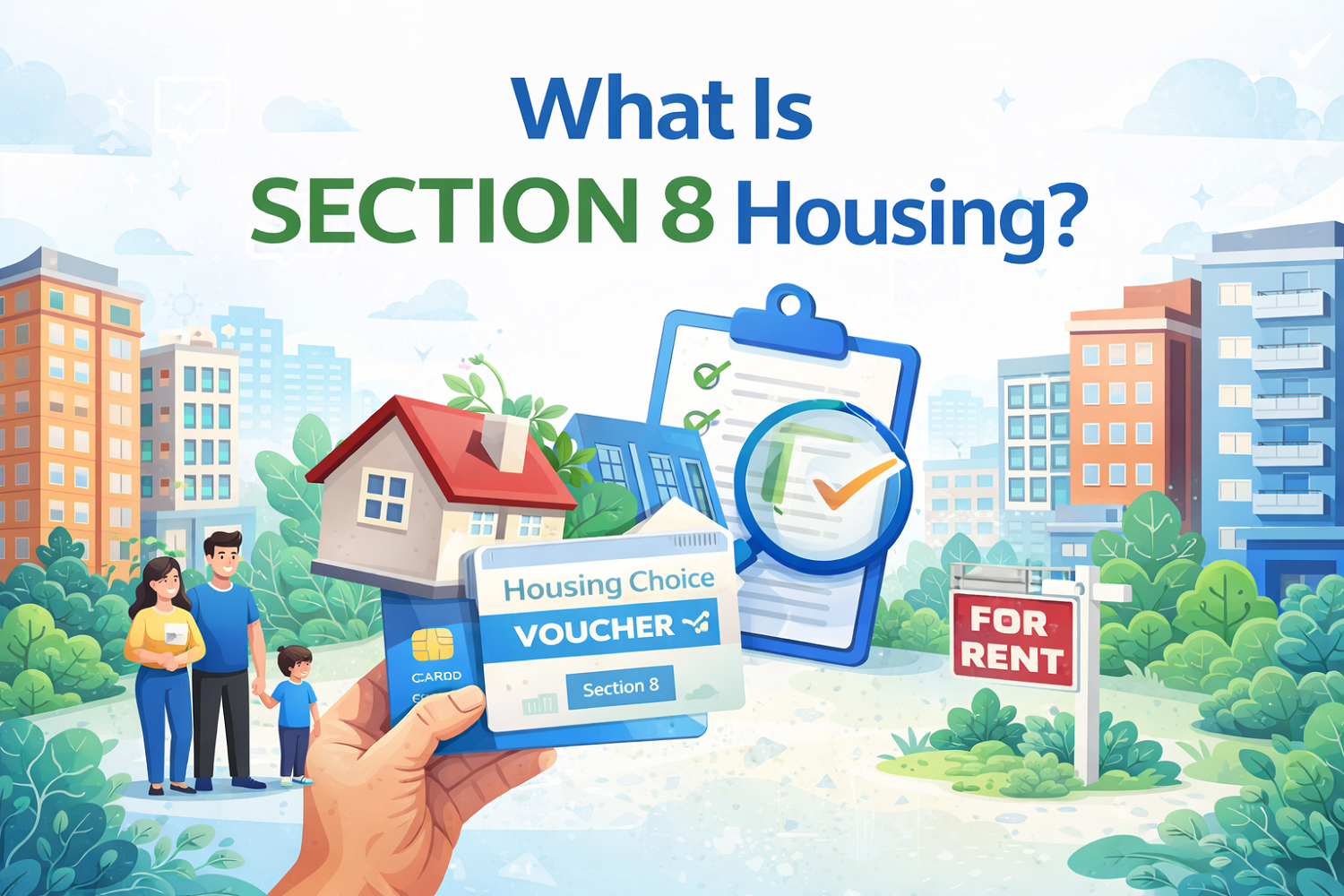
Section 8 is a federal housing assistance program officially known as the Housing Choice Voucher Program. The name “Section 8” comes from Section 8 of the Housing Act of 1937, which authorized rental assistance for low-income households.
The program helps eligible individuals and families afford safe and decent housing by paying a portion of their rent. Instead of living in government-owned housing, participants can choose their own rental homes in the private market, as long as the housing meets program requirements.
The Section 8 program is overseen by the U.S. Department of Housing and Urban Development, commonly known as HUD. However, the program is administered locally by Public Housing Authorities (PHAs) in cities and counties across the country.
Official program information is available on HUD’s website:
https://www.hud.gov/program_offices/public_indian_housing/programs/hcv
What Is the Purpose of Section 8 Housing?
The main purpose of Section 8 housing is to help low-income households access affordable housing in the private rental market. Without assistance, many families would be forced to spend most of their income on rent, leaving little money for food, transportation, utilities, and other basic needs.
Section 8 is designed to:
-
Reduce homelessness
-
Provide housing stability
-
Allow families to choose where they live
-
Promote access to safer neighborhoods
-
Support seniors and people with disabilities
How Section 8 Housing Works
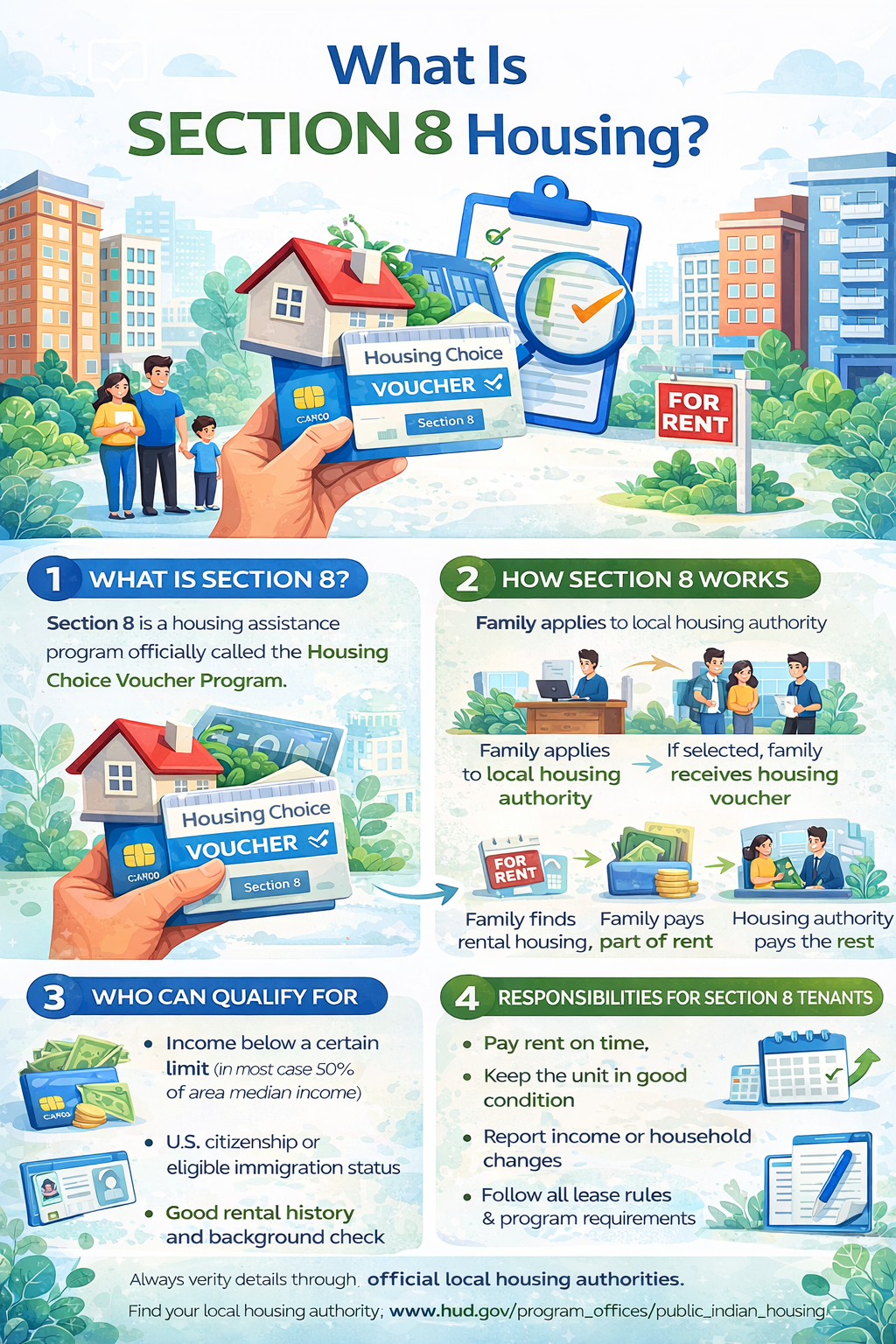
Section 8 housing works through a voucher system. If you are approved for the program, you receive a housing voucher that helps pay a portion of your rent each month.
Here is how the process usually works:
First, a household applies for Section 8 through their local Public Housing Authority. If approved and selected from the waiting list, the household receives a housing voucher.
Next, the household finds a rental unit on the private market. This could be an apartment, townhouse, or single-family home. The landlord must be willing to participate in the Section 8 program.
Once a suitable unit is found, the housing authority inspects the property to make sure it meets health and safety standards. If the unit passes inspection and the rent is reasonable, the housing authority approves the lease.
After approval, the tenant pays a portion of the rent directly to the landlord, and the housing authority pays the remaining portion on behalf of the tenant.
How Much Rent Does a Section 8 Tenant Pay?
One of the most common questions about Section 8 is how much rent a tenant must pay. In most cases, a Section 8 household pays about 30% of their adjusted monthly income toward rent and utilities.
The exact amount depends on:
-
Household income
-
Household size
-
Local rent limits
-
Utility costs
What Is Fair Market Rent?
Section 8 housing is based on Fair Market Rent (FMR). Fair Market Rent is the estimated cost of renting a modest home in a specific area. HUD sets Fair Market Rent limits each year based on local housing market data.
The housing authority uses these limits to determine:
-
The maximum rent allowed for a unit
-
The maximum subsidy amount
If a landlord charges rent higher than the allowed amount, the unit may not be approved unless the tenant agrees to pay the difference and the total rent remains within program rules.
HUD Fair Market Rent data can be found here:
https://www.huduser.gov/portal/datasets/fmr.html
Who Is Eligible for Section 8 Housing?
Eligibility for Section 8 housing is based primarily on income, but other factors are also considered.
In general, households must:
-
Have income below a certain limit
-
Be U.S. citizens or have eligible immigration status
-
Pass background and screening requirements
Income limits are set as a percentage of the Area Median Income (AMI). Most Section 8 participants fall into one of these categories:
-
Extremely low income (30% of AMI)
-
Very low income (50% of AMI)
-
Low income (80% of AMI, in limited cases)
Priority is often given to:
-
Families with children
-
Seniors
-
People with disabilities
-
Households facing homelessness
Income limits vary by location and household size. You can check local income limits here:
https://www.huduser.gov/portal/datasets/il.html
Is Section 8 Only for Families?
No. Section 8 housing is available to different types of households, including:
-
Single individuals
-
Families with children
-
Seniors
-
People with disabilities
Household size affects income limits and voucher size, but there is no requirement to have children to qualify.
How to Apply for Section 8 Housing
Applications for Section 8 housing are handled by local Public Housing Authorities, not directly by HUD. Each housing authority has its own application process and schedule.
-
Online
-
In person
-
During specific open enrollment periods
Because demand is very high, many housing authorities have long waiting lists. Some lists remain closed for years and only open when funding becomes available.
To find your local housing authority, visit:
https://www.hud.gov/program_offices/public_indian_housing/pha/contacts
Why Are Section 8 Waiting Lists So Long?
One of the biggest challenges with Section 8 housing is the long waiting list. Demand for affordable housing is much higher than available funding.
-
Funding is limited
-
Housing costs are high
-
Many households qualify
-
Vouchers are limited
What Happens After You Are Approved?
Once you are selected from the waiting list and approved, you receive a housing voucher. This voucher has an expiration date, usually between 60 and 120 days.
During this time, you must:
-
Find a rental unit
-
Ensure the landlord accepts Section 8
-
Submit required paperwork
If you cannot find a unit in time, you may request an extension. Extensions are not guaranteed.
What Are the Responsibilities of a Section 8 Tenant?
Section 8 tenants have responsibilities just like any other renter. These include:
-
Paying rent on time
-
Keeping the unit clean and undamaged
-
Following lease rules
-
Reporting income changes
-
Completing annual recertifications
Failure to follow program rules can result in termination of assistance.
What Are the Responsibilities of Landlords?
Landlords who participate in Section 8 must:
-
Maintain safe and habitable housing
-
Complete inspections
-
Follow fair housing laws
-
Comply with lease and program requirements
Landlords cannot discriminate against tenants based on race, religion, disability, or family status. In some states and cities, refusing Section 8 tenants is illegal.
Can You Move With Section 8?
Yes. Section 8 includes a feature called portability, which allows participants to move to a different city or state under certain conditions.
Portability rules vary, but generally:
-
You may need to live in the original area for a set period
-
The receiving housing authority must accept the transfer
Portability allows families to move closer to jobs, schools, or family support.
Is Section 8 Housing Permanent?
Section 8 assistance is not automatically permanent, but many households receive help for long periods as long as they remain eligible.
-
Renew eligibility annually
-
Meet income requirements
-
Follow program rules
If income increases significantly, assistance may decrease or end.
Common Myths About Section 8 Housing
Many myths surround Section 8 housing. Some common ones include:
Section 8 housing is only for unemployed people.
Many participants work but earn low wages.
Section 8 tenants live in poor-quality housing.
Units must meet safety and quality standards.
Section 8 is easy to get.
Demand is high and waiting lists are long.
Disclaimer
Program Clarity is an independent informational website and is not affiliated with any government agency. This article is for educational purposes only. Program rules and availability may change. Always verify details with official housing authorities.