
The Supplemental Nutrition Assistance Program (SNAP) continues to be one of the most important federal assistance programs in the United States, helping millions of low-income individuals and families afford food each month. Rising food prices, economic instability, and increasing living expenses have made it difficult for many households to maintain consistent access to nutritious meals. SNAP was created to address this issue by providing financial assistance that can be used to purchase groceries and other essential food items. The program helps reduce food insecurity while supporting public health by ensuring that people have access to balanced diets and adequate nutrition.
For 2026, SNAP remains a critical safety-net program designed to support households facing financial hardship. Benefits are provided through an Electronic Benefits Transfer (EBT) card, which functions similarly to a debit card and can be used at authorized grocery stores, supermarkets, and farmers markets. SNAP benefits help families purchase essential food items such as fruits, vegetables, dairy products, bread, cereal, meat, poultry, and fish. However, certain products like alcohol, tobacco, vitamins, and non-food household items cannot be purchased with SNAP benefits.
SNAP Eligibility Requirements 2026 depends on several factors that are used to evaluate a household’s financial situation and living arrangements. These factors include income levels, household size, citizenship or immigration status, available financial resources, and work requirements for certain individuals. Because the eligibility rules involve multiple components, many applicants may feel confused about whether they qualify or how the program works. Understanding these requirements is essential for individuals and families who may need assistance purchasing food.
Why SNAP Eligibility Requirements Are Important
SNAP eligibility requirements are designed to ensure that the program provides assistance to households that truly need support purchasing food. Because SNAP is funded through federal resources, strict guidelines are used to determine who qualifies for benefits and how much assistance each household receives. These rules help ensure that limited program funding is distributed fairly and efficiently.
Eligibility requirements also help prevent misuse of the program while ensuring that vulnerable populations receive assistance. By evaluating income levels, household size, available resources, and employment status, SNAP can determine whether a household is facing financial hardship that affects its ability to purchase food.
Income Limits for SNAP Eligibility Requirements 2026
Income is one of the most significant factors used to determine SNAP eligibility. The program evaluates both gross income and net income when reviewing applications. Gross income refers to the total amount of income received by a household before taxes or deductions are applied. Net income refers to the amount remaining after allowable deductions have been subtracted from the household’s gross income.
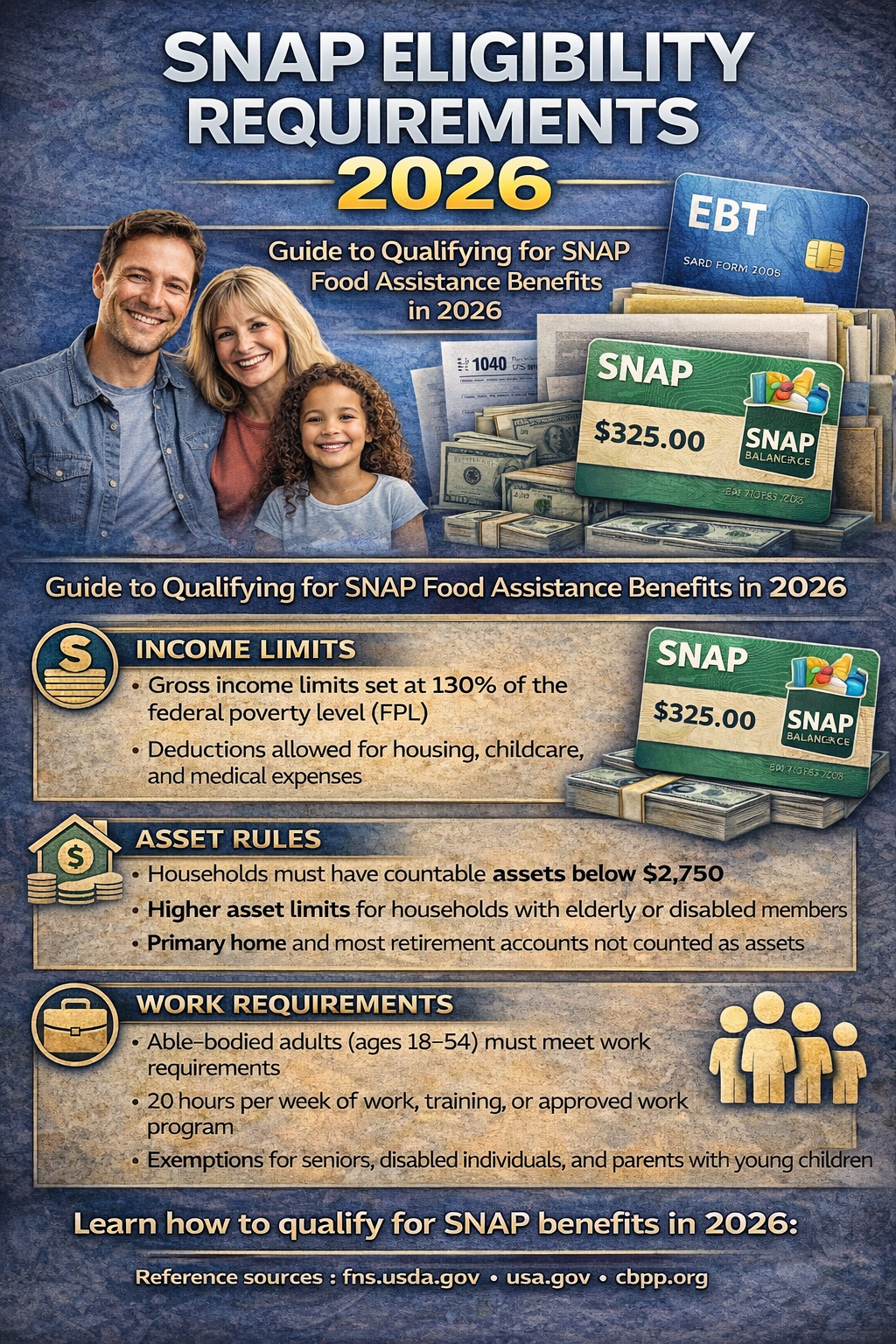
For most households applying for SNAP benefits in 2026, gross income must be at or below 130 percent of the federal poverty level. After allowable deductions are applied, net income must generally be at or below 100 percent of the federal poverty level. These income limits vary depending on the number of people in the household because larger households require more financial resources to meet basic living expenses.
Several deductions may be applied when calculating net income, which can significantly affect eligibility. For example, households may deduct certain housing costs, utility expenses, childcare costs necessary for employment, and legally required child support payments. Households that include elderly or disabled members may also deduct certain medical expenses that exceed a specific threshold.
Frequently Asked Questions (FAQs)
Who qualifies for SNAP benefits in 2026?
Individuals and families may qualify for SNAP benefits in 2026 if their household income and financial resources fall within the limits established by the program. Eligibility is generally based on several factors including gross and net income, household size, available assets, and citizenship status. Most households must have income at or below 130 percent of the federal poverty level and meet additional financial criteria. The program is designed to help low-income households, including working families, seniors, people with disabilities, and unemployed individuals who need assistance purchasing food.
What income limits apply for SNAP Eligibility Requirements 2026?
Income limits for SNAP are based on the federal poverty level and vary depending on household size. Most households must have gross income at or below 130 percent of the federal poverty level, while net income must be at or below 100 percent of the federal poverty level after deductions are applied. Allowable deductions may include housing costs, childcare expenses, and certain medical costs for elderly or disabled household members. These deductions help ensure that households facing necessary expenses are not unfairly disqualified from receiving food assistance.
Are there asset limits for SNAP benefits?
Yes, SNAP includes asset limits to determine whether a household has enough financial resources to purchase food without assistance. In most cases, households must have countable resources below approximately $2,750. However, households that include an elderly or disabled member may qualify with higher resource limits. Certain assets are not counted toward this limit, including a primary home, retirement accounts, and most personal belongings. These exclusions help ensure that applicants are not penalized for owning basic necessities.
Do SNAP recipients need to meet work requirements?
Some SNAP applicants must meet work requirements in order to receive benefits. Able-bodied adults without dependents between certain ages may be required to work, participate in job training programs, or actively search for employment for a minimum number of hours per week. However, several groups are exempt from these requirements, including seniors, people with disabilities, pregnant individuals, and parents who care for young children. States may also provide employment and training programs that help recipients gain skills and find stable employment.
How can someone apply for SNAP benefits in 2026?
Individuals who believe they may qualify for SNAP benefits can apply through their state’s SNAP office. Many states provide online applications, while others allow in-person applications at local social service agencies. Applicants must typically provide documentation verifying their income, household size, and living arrangements. After submitting the application, applicants usually participate in an interview with a caseworker who reviews their eligibility. If approved, the household receives an Electronic Benefits Transfer (EBT) card that can be used to purchase eligible food items at approved retailers.
Reference Links
https://www.fns.usda.gov/snap/eligibility
https://www.usa.gov/food-stamps
https://www.cbpp.org/research/food-assistance/snap
https://www.benefits.gov/benefit/361
https://www.fns.usda.gov/snap/recipient/eligibility
Disclaimer
Program Clarity is an independent informational website and is not affiliated with any government agency. This article is for educational purposes only. Program rules and availability may change. Always verify details with official authorities.