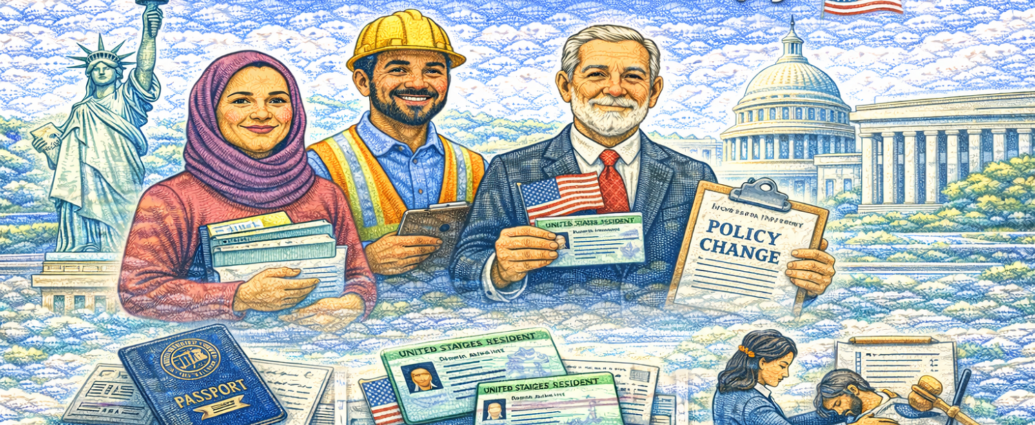
U.S. Immigration is always changing. New laws, new rules, and new policies often change how people can enter, stay, work, or become citizens. Every year brings updates from Congress, the courts, and federal agencies like the U.S. Citizenship and Immigration Services, Department of Homeland Security, and the Department of State. These changes can affect millions of people students, workers, families, refugees, asylees, and green card holders.
In 2026, several important immigration changes are happening or expected to take effect. Some changes are the result of new laws passed by Congress. Others come from executive actions, updated agency rules, or federal court decisions. These changes shape everything from visa availability and green card processing to enforcement priorities and asylum procedures. For immigrants and families planning their future in the U.S., understanding these updates is very important.
New Work Visa Flexibilities for High-Demand Jobs 2026
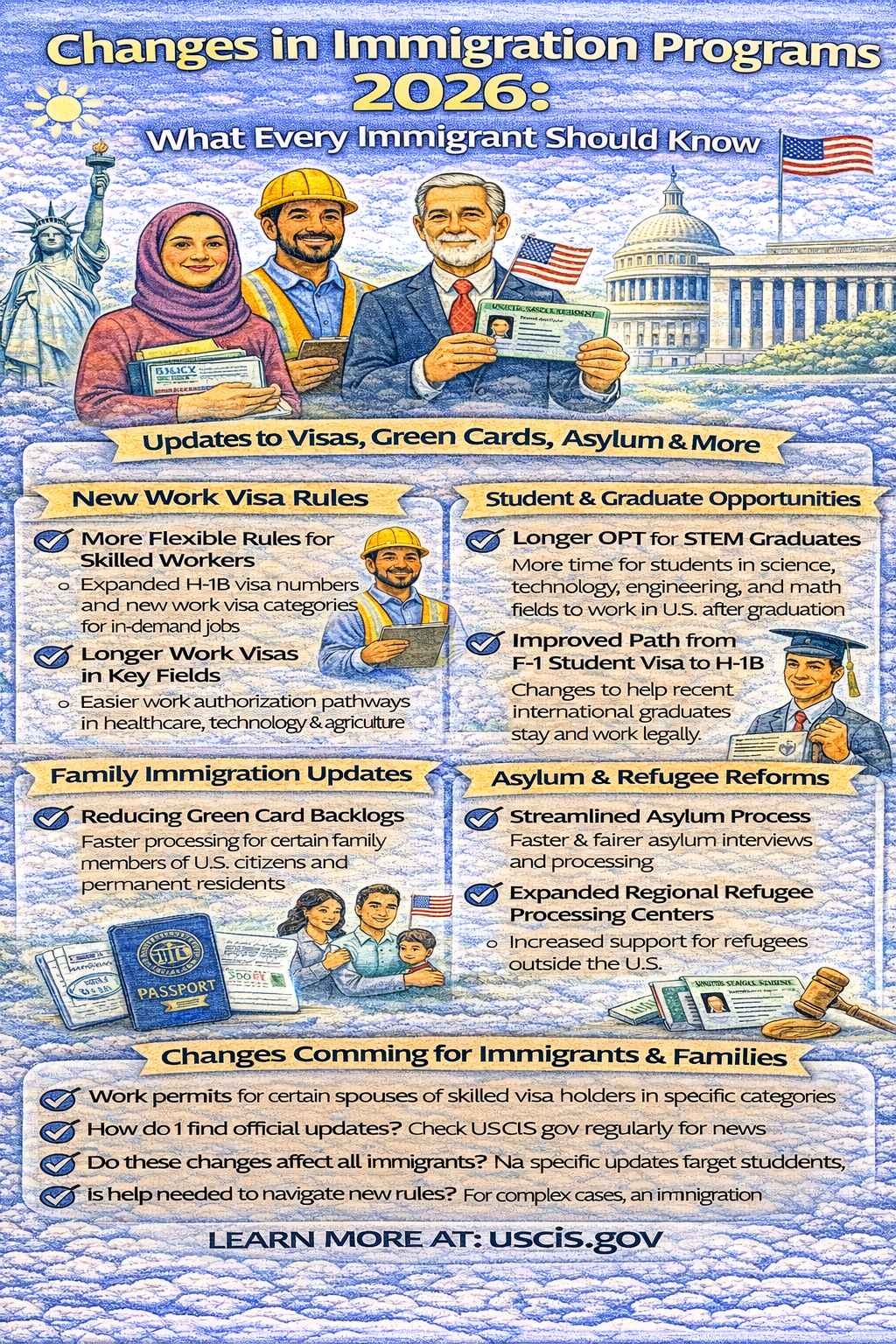
One of the biggest immigration program changes expected in 2026 involves work visas. The U.S. has faced a shortage of workers in certain fields such as healthcare, technology, agriculture, and manufacturing. In response, the government has expanded or proposed new rules making it easier for foreign workers with in-demand skills to come and stay in the United States.
These changes may include increasing the number of available H-1B visas for highly skilled workers or creating new categories for occupations with chronic labor shortages. For example, nurses, engineers, computer scientists, and agricultural specialists may see new or expanded pathways that allow them to work legally for longer periods without the strict quota limitations that existed in previous years.
Expanded Opportunities for Students and Recent Graduates
In 2026, immigration programs affecting international students are also seeing important changes. The Optional Practical Training (OPT) program and STEM OPT extension may be reformed or expanded to allow international students to stay and work longer after graduation. These updates are crucial because many students earn degrees in fields that the U.S. workforce desperately needs.
For example, changes may allow eligible students to remain in the country for up to four years after graduation to find work in their field of study, compared to shorter periods in previous years. These reforms help both the students and employers by creating smoother transitions from education to employment.
Family-Based Immigration Updates
Family-based U.S. Immigration has long been one of the most important pathways to lawful permanent residence (green cards). In 2026, several changes aim to reduce long waiting times and clear backlogs for certain family categories. Backlogs have been particularly long for siblings of U.S. citizens and for family members from heavily oversubscribed countries.
New rules may include reallocating unused visas from oversubscribed categories, increasing transparency in visa availability, and improving processing times. In some cases, legislation passed by Congress in 2025/2026 may expand the categories of relatives who can be sponsored or simplify the process for immediate family members.
Refugee and Asylum Processing Reforms
As global crises continue, refugee and asylum policies remain critical elements of U.S. immigration law. In 2026, changes have been made to make refugee processing more efficient and humane while addressing national security concerns. These include expanding regional processing hubs, improving screening procedures, and extending support services for resettlement.
Asylum seekers entering the U.S. are also benefiting from changes that reduce arbitrary limitations on eligibility and provide clearer paths for credible fear interviews and adjudication. These reforms aim to reduce long waits in detention or in limbo while cases are pending.
Green Card and Adjustment of Status Improvements
One of the most impactful changes in 2026 relates to “adjustment of status,” which is the process through which someone in the United States obtains lawful permanent residence without returning to their home country. Historically, visa backlogs and lengthy processing times have made adjustment slow and unpredictable.
New procedures introduced in 2026 aim to streamline this process. These may include:
Expanding availability of interview waivers for low-risk applicants
Increasing the use of electronic filing and tracking
Reallocating unused family and employment-based visas
Improving communication between agencies to reduce processing bottlenecks
Legalization or Status Adjustment Pathways for Long Term Residents
In recent years, there has been ongoing discussion in Congress about creating pathways to legal status (and eventually green cards) for undocumented individuals who have lived in the United States for many years and meet certain criteria. While comprehensive immigration reform has not yet passed, some changes in 2026 may allow more limited legalization programs for specific groups, such as DREAMers or long-term workers with clean records.
These potential changes are designed to bring stability to individuals and families who have deep roots in the United States but have lacked legal status for many years. They are often paired with enhanced background checks and requirements that encourage compliance with tax and employment laws.
Enforcement and Border Security Adjustments
While some 2026 changes focus on expanding opportunities and improving processes, other changes focus on enforcement and border security. Immigration authorities continue to refine how they manage border crossings, asylum processing at ports of entry, and interior enforcement priorities.
Some policies emphasize more targeted enforcement against individuals who pose public safety risks, while giving greater discretion to officers in dealing with low-risk immigrants. These changes aim to balance national security with humanitarian obligations.
Digital Modernization of U.S. Immigration Systems
Another major theme in 2026 is the modernization of U.S. Immigration systems. The government continues to move immigration forms, appointments, and case tracking into online platforms.
This digital transformation includes:
Electronic filing of applications and petitions
Online case status updates
Digital biometrics appointments
Expanded use of AI-assisted document review
Changes in Immigration Fees and Fee Waivers
In 2026, there may be adjustments to immigration filing fees, including increases or restructuring of fees for visas, green cards, citizenship, and work permits.
In some cases, fee waivers have been expanded for low-income applicants to ensure that cost is not a barrier to accessing the immigration system. These changes are intended to reflect administrative costs while maintaining fairness for individuals and families with limited financial resources.
Frequently Asked Questions (FAQs)
What Are the Biggest Immigration Changes in 2026?
Major updates include work visa flexibility, student work options, family-based immigration improvements, asylum reforms, and green card process modernization.
Do These Changes Affect All Immigrants?
Not all changes affect every category. Different programs target students, workers, families, refugees, and long-term residents.
How Do I Find Official Updates?
The U.S. Citizenship and Immigration Services (USCIS) website and Federal Register are the best official sources for updates.
Should I Consult an Attorney?
For complex cases, immigration attorneys can provide personalized advice and help navigate changes.
Are These Changes Permanent?
Some changes are permanent; others may be temporary or subject to future revision.
Reference Links
U.S. Citizenship and Immigration Services (USCIS) – Policy Updates: https://www.uscis.gov/newsroom/news-releases
Department of Homeland Security (DHS) – Immigration Policy: https://www.dhs.gov/immigration-statistics
U.S. Department of State – Visa Bulletin & Visa Policies: https://travel.state.gov/content/travel/en/us-visas/visa-information-resources.html
Federal Register – Immigration Regulations: https://www.federalregister.gov/immigration
USCIS processing times and fee changes: https://www.uscis.gov/forms
Immigration Courts & EOIR News: https://www.justice.gov/eoir
Disclaimer
Program Clarity is an independent informational website and is not affiliated with any government agency. This article is for educational purposes only. Program rules and availability may change. Always verify details with official housing authorities.