

Immigrating to the United States is a major life decision that often involves significant financial planning. While many applicants focus on meeting eligibility requirements and gathering documentation, understanding immigration fees is equally important. Whether you are applying for a temporary visa, family-sponsored green card, employment-based immigration benefit, or U.S. citizenship, various costs can arise throughout the process. These expenses include government filing fees, biometric services, medical examinations, document translations, travel costs, and sometimes attorney fees.
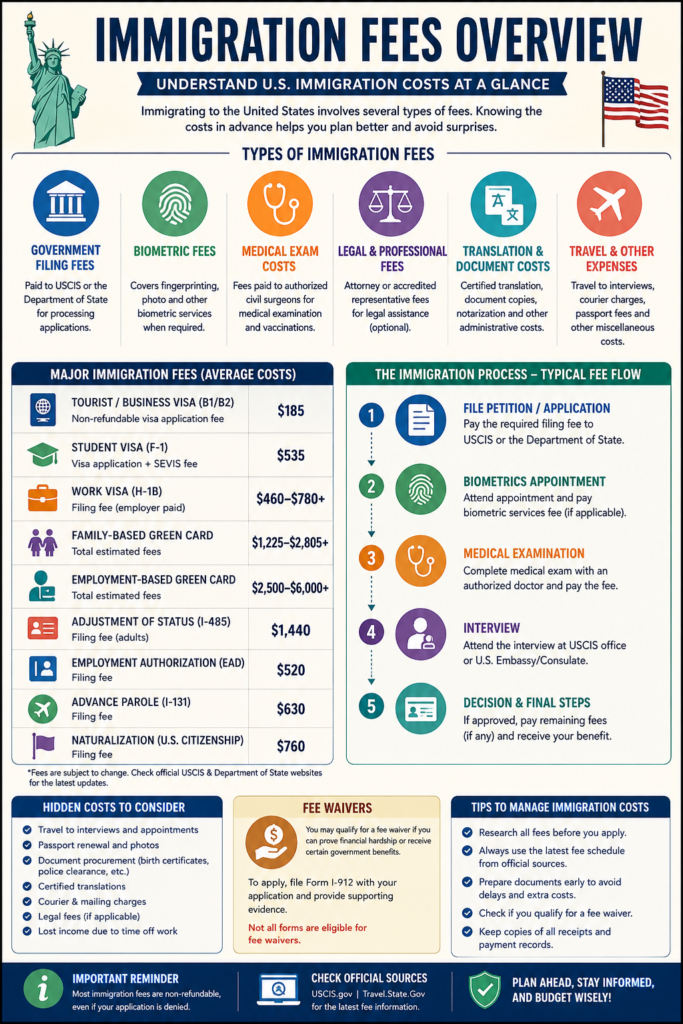
The total amount an applicant spends on immigration depends on the type of benefit being requested and the complexity of the case. Some applications require only a single filing fee, while others involve multiple stages with separate payments. Failing to understand these expenses can lead to unexpected financial challenges and delays in the immigration process.
Why Immigration Fees Matter
Immigration fees play a critical role in the administration of the U.S. immigration system. Government agencies use these fees to process applications, conduct background checks, maintain records, and provide immigration services. Because many immigration benefits are funded primarily through application fees rather than taxpayer dollars, applicants are generally responsible for covering processing costs.
Understanding these fees before starting an application can help individuals and families avoid surprises. Many applicants assume that the filing fee listed on a government form is the only expense involved. In reality, immigration often requires additional costs such as medical exams, document procurement, travel expenses, and translations. By planning ahead, applicants can reduce stress and ensure they have the financial resources necessary to complete every stage of the process.
Another important consideration is that most immigration fees are non-refundable. If an application is denied, rejected, or withdrawn, applicants usually do not receive their money back. This makes it especially important to submit accurate applications and verify fee amounts before filing.
Types of Immigration Fees
Immigration costs generally fall into several categories. Understanding these categories provides a clearer picture of the total financial commitment required.
Government Filing Fees
Government filing fees are payments made directly to immigration agencies for processing applications and petitions. These fees vary depending on the immigration benefit requested. Temporary visas, green cards, work permits, and citizenship applications all have different filing fee structures.
Because filing fees are mandatory in most cases, they typically represent the largest direct expense in the immigration process. Applicants should always check the latest fee schedule before submitting forms because fee amounts may change over time.
Biometric Services Fees
Many immigration applications require biometric appointments. During these appointments, fingerprints, photographs, and signatures are collected for identity verification and security screening purposes.
Biometric fees are separate from many filing fees and should be included when estimating total immigration expenses. Families filing multiple applications may face higher biometric costs because each applicant may need a separate appointment.
Medical Examination Costs
Medical examinations are required for many immigrant visa and green card applicants. These examinations are conducted by authorized physicians and help ensure compliance with public health requirements.
Medical exam costs vary depending on location and individual health needs. Vaccinations, laboratory tests, and follow-up treatments may increase overall expenses. Since medical fees are paid directly to healthcare providers rather than immigration agencies, they are often overlooked during budgeting.
Legal and Professional Fees
Although applicants are not required to hire an attorney, many choose professional legal assistance. Immigration laws can be complex, and mistakes may result in delays or denials.
Attorney fees vary widely depending on case complexity and the services provided. Straightforward applications may require little or no legal assistance, while employment-based immigration, waivers, and appeals often involve significant legal expenses.
Nonimmigrant Visa Fees
Nonimmigrant visas allow foreign nationals to enter the United States temporarily for tourism, business, education, or employment purposes.
Tourist and Business Visa Fees
Tourist and business visas are among the most common visa categories. Applicants generally pay a visa application processing fee before scheduling an interview at a U.S. embassy or consulate.
In addition to the application fee, applicants may need to pay for passport renewals, transportation to interview locations, and supporting documents. Depending on the applicant’s country of citizenship, additional visa issuance fees may also apply.
Student Visa Fees
Students planning to study in the United States typically apply for F-1, M-1, or J-1 visas. These visa categories involve several expenses beyond the visa application fee.
One major cost is the Student and Exchange Visitor Information System (SEVIS) fee. Students may also need to pay for school application fees, transcript evaluations, language proficiency tests, and educational credential assessments.
Because international education often involves significant financial commitments, students should budget carefully for both immigration-related and educational expenses.
Employment Visa Fees
Employment-based temporary visas such as H-1B, L-1, and O-1 visas often involve multiple filing fees and administrative costs. In many cases, employers are responsible for paying certain government fees associated with the petition process.
Additional expenses may include premium processing requests, legal representation, and credential evaluations. Employment visa costs can vary significantly depending on the visa category and employer requirements.
Family Based Immigration Fees
Family-based immigration is one of the most common pathways to permanent residency in the United States. U.S. citizens and lawful permanent residents can sponsor eligible family members through this process.
The immigration journey usually begins with a petition filed by the sponsoring relative. After petition approval, applicants often pay additional fees for visa processing, affidavit of support review, and immigrant visa issuance.
Medical examinations, document translations, and interview-related travel expenses can further increase overall costs. Families sponsoring multiple relatives should carefully budget for these expenses because costs can add up quickly.
Employment-Based Immigration Fees
Employment-based immigration allows qualified workers to obtain permanent residency through sponsorship from a U.S. employer. These cases often involve more complex procedures and higher costs than family-based immigration.
Some employment categories require labor certification before an immigrant petition can be filed. Labor certification may involve recruitment efforts, advertising expenses, and legal assistance.
After approval of the employment petition, applicants must complete adjustment of status or consular processing. Each stage involves separate fees and documentation requirements. As a result, employment-based immigration is often among the more expensive immigration pathways.
Green Card Application Costs
Obtaining a green card is a major goal for many immigrants. Green card applicants may apply through family sponsorship, employment sponsorship, humanitarian programs, or other immigration categories.
Applicants adjusting status from within the United States generally pay filing fees for the adjustment application, biometric services, and medical examinations. Supporting documentation costs may also apply.
Individuals completing consular processing outside the United States typically pay immigrant visa processing fees, National Visa Center fees, and medical examination costs. Depending on family size and circumstances, total green card expenses can be substantial.
Employment Authorization and Travel Document Fees
Many immigrants require work authorization while waiting for their permanent residency applications to be processed. Employment Authorization Documents (EADs) allow eligible individuals to work legally in the United States.
Applicants may also need travel documents such as advance parole permits or reentry permits. These documents often involve separate filing fees and processing costs.
Although some immigration categories qualify for fee exemptions, others must pay recurring renewal fees if authorization documents expire before the immigration process is complete.
Naturalization and Citizenship Fees
Naturalization is the process through which lawful permanent residents become U.S. citizens. Citizenship provides important benefits, including voting rights, expanded sponsorship opportunities, and greater legal security.
Applicants generally pay filing fees for the naturalization application and may also incur costs related to biometric services. Additional expenses may include study materials, English classes, and legal consultations.
Although citizenship requires an upfront financial investment, many immigrants view it as one of the most valuable long-term benefits available through the immigration system.
Hidden Immigration Costs
Many applicants focus exclusively on government filing fees and overlook other expenses that can significantly affect their budget.
Travel costs are among the most common hidden expenses. Applicants may need to travel for medical examinations, embassy interviews, or legal consultations. Transportation, lodging, and meals can quickly increase total costs.
Document procurement is another frequently overlooked expense. Birth certificates, marriage certificates, police clearances, and educational records may require fees to obtain.
Translation services can also be costly, especially when multiple documents require certified English translations. Additionally, mailing fees, photocopying expenses, and passport renewals can contribute to the overall financial burden.
Fee Waivers and Financial Assistance
To make immigration benefits more accessible, certain applicants may qualify for fee waivers. Fee waivers allow eligible individuals to avoid paying specific government filing fees based on financial hardship.
Eligibility typically depends on household income, participation in qualifying public assistance programs, or other financial circumstances. Applicants requesting fee waivers must provide supporting documentation demonstrating their eligibility.
While not every immigration form qualifies for a fee waiver, these programs can significantly reduce costs for eligible applicants and families.
How to Budget for Immigration Costs
Proper budgeting is one of the most effective ways to manage immigration expenses. Applicants should begin by researching all fees associated with their chosen immigration pathway and creating a timeline of expected payments.
It is also wise to establish an emergency fund for unexpected expenses. Requests for additional evidence, document replacements, and travel changes can create costs that were not part of the original budget.
Keeping track of fee updates and verifying information through official government sources can help applicants avoid costly mistakes. Careful planning ensures a smoother immigration experience and reduces financial stress.
Frequently Asked Questions (FAQs)
What are immigration fees?
Immigration fees are payments required for processing visas, green cards, citizenship applications, work permits, and other immigration benefits.
Are immigration filing fees refundable?
In most cases, immigration filing fees are non-refundable, even if an application is denied or withdrawn.
Do immigration fees change regularly?
Yes. Immigration agencies periodically update fee schedules, so applicants should always verify current fees before filing.
What additional costs should I expect besides filing fees?
Applicants may need to pay for medical examinations, biometrics, translations, document procurement, travel expenses, and legal services.
Can I receive a fee waiver?
Some applicants may qualify for fee waivers based on financial hardship, low income, or participation in certain public assistance programs.
Are attorney fees required?
No. Hiring an immigration attorney is optional, although professional guidance may be beneficial for complex cases.
Which immigration pathway is usually the most expensive?
Employment-based immigration and investor immigration categories are often among the most expensive due to multiple processing stages and legal requirements.
How can I reduce immigration expenses?
Applicants can reduce costs by avoiding filing errors, checking fee waiver eligibility, organizing documents early, and carefully budgeting for the entire process.
References
- USCIS: https://www.uscis.gov
- USCIS Filing Fees: https://www.uscis.gov/forms/filing-fees
- U.S. Department of State: https://travel.state.gov
- National Visa Center: https://travel.state.gov/content/travel/en/us-visas/immigrate/national-visa-center.html
- ICE SEVIS Program: https://www.ice.gov/sevis
- USCIS Fee Waiver Information: https://www.uscis.gov/i-912
- USA.gov Immigration Resources: https://www.usa.gov/immigration-and-citizenship
Disclaimer
Program Clarity is an independent informational website and is not affiliated with any government agency. This article is for educational purposes only. Program rules and availability may change. Always verify details with official authorities.