Natural disasters affect millions of Americans every year, and the financial impact can be devastating for families already struggling with rising living expenses. Hurricanes, tornadoes, floods, wildfires, winter storms, and earthquakes often damage homes, interrupt employment, destroy infrastructure, and leave entire communities without electricity, water, heating, or internet access for days or even weeks. During these emergencies, many families discover that recovering from a disaster involves much more than repairing property damage. One of the biggest challenges after any major disaster is restoring and maintaining essential utility services.
Electricity, clean water, gas, heating, cooling, and communication services are basic necessities that people rely on every day for safety and survival. When these services are interrupted after a disaster, households may face unsafe temperatures, spoiled food, contaminated water, medical risks, and severe financial stress. Utility bills can also become difficult to manage because many disaster victims experience temporary income loss, emergency relocation costs, insurance delays, or expensive home repairs at the same time.
To help families recover safely, federal agencies, state governments, utility providers, and nonprofit organizations offer disaster-related utility assistance programs. These programs provide emergency financial aid, payment plans, temporary housing support, utility restoration assistance, and crisis relief services that help households restore essential utilities and avoid shutoffs during recovery periods.
Understanding how utility assistance works after disasters is extremely important because many programs have limited funding and specific application requirements. Families that apply quickly and provide proper documentation often have a better chance of receiving help before available resources are exhausted.
Understanding Utility Assistance After Disasters
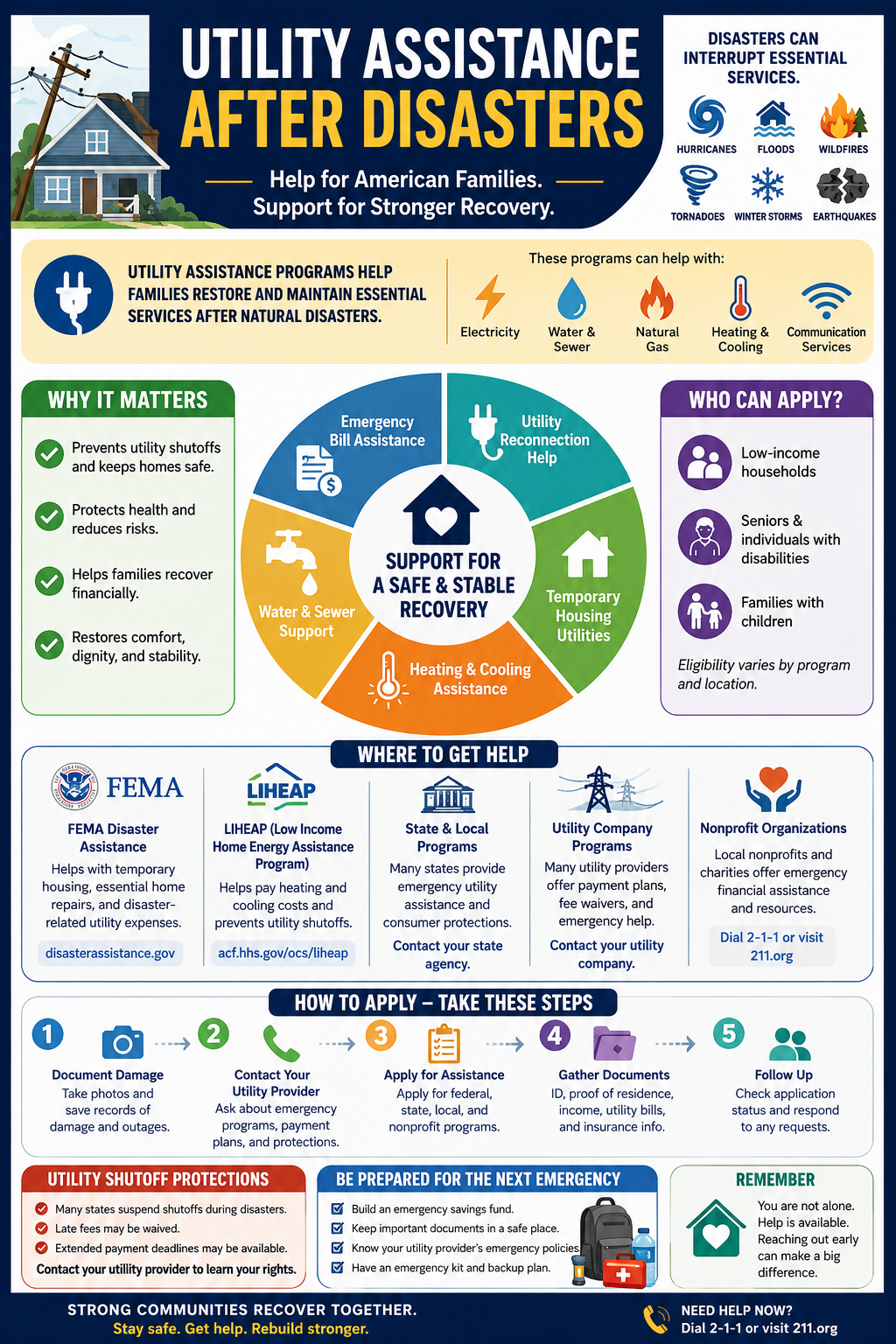
Utility assistance after disasters refers to emergency support programs that help households restore or maintain critical utility services following natural disasters or emergency situations. These programs are designed to reduce financial hardship, prevent unsafe living conditions, and support disaster recovery efforts for individuals and families affected by emergencies.
After a disaster, utility infrastructure is often damaged or completely destroyed. Power lines may collapse, water systems may become contaminated, gas services can be interrupted, and communication networks may stop functioning. Even after utility companies restore service to neighborhoods, many families still struggle to afford utility bills because of the financial impact caused by the disaster.
Emergency utility assistance helps households pay for services such as electricity, gas, water, heating, cooling, sewer systems, and temporary utility connections. Some programs also help cover reconnection fees, emergency repairs, generator costs, and utility-related housing expenses.
Utility assistance programs are important because they help families remain in safe and livable housing conditions while rebuilding their lives after emergencies. Access to electricity and clean water is essential for cooking, refrigeration, communication, sanitation, medical equipment, heating, and cooling. Without utility assistance, vulnerable households may face serious health and safety risks during recovery periods.
Many utility assistance programs are temporary and focus on immediate recovery needs, but some long-term recovery programs also help households repair damaged utility systems or improve energy efficiency after disasters.
Why Utility Assistance Is So Important After Natural Disasters
Natural disasters create financial emergencies very quickly. Families that were financially stable before a disaster may suddenly struggle with housing damage, lost income, emergency expenses, and rising utility costs. Utility assistance becomes extremely important because households often need immediate support to avoid dangerous living conditions.
Financial Pressure Increases Rapidly After Disasters
One of the biggest reasons utility assistance is necessary after disasters is the sudden increase in financial pressure. Many people cannot work immediately after emergencies because businesses are closed, transportation systems are damaged, or evacuation orders remain active. Self-employed workers, hourly employees, and small business owners are especially vulnerable because even short disruptions can reduce income significantly.
At the same time, disaster-related expenses increase rapidly. Families may need hotel stays, emergency transportation, temporary housing, food replacement, medical supplies, or emergency repairs. These unexpected costs can make it difficult to keep up with monthly utility bills.
Some households also face increased utility usage after disasters. Generators, portable heaters, emergency cooling systems, and restoration equipment often raise electricity consumption substantially. Water damage cleanup equipment such as fans and dehumidifiers may run continuously for days, increasing power bills even further.
Health and Safety Risks From Utility Interruptions
Utility interruptions can create serious health and safety problems during disaster recovery periods. Electricity is necessary for refrigeration, lighting, medical devices, communication systems, heating, and cooling. Without power, food spoils quickly, medications may become unsafe, and vulnerable individuals may face dangerous indoor temperatures.
Water service interruptions are equally dangerous because households need clean water for drinking, cooking, hygiene, and sanitation. Floods and storms may contaminate local water systems, creating increased risks of illness and disease.
Heating and cooling systems are especially important during extreme weather events. In winter disasters, loss of heating can create life-threatening conditions, particularly for elderly individuals, infants, and people with health problems. During summer heatwaves, the loss of air conditioning can increase risks of dehydration and heat-related illness.
Emotional Stress During Disaster Recovery
Recovering from a disaster is emotionally exhausting for many families. Utility shutoffs or overdue bills add additional stress during an already difficult time. Families often worry about whether they can safely remain in their homes while waiting for insurance claims, federal assistance, or repair work to be completed.
Utility assistance programs help reduce this pressure by providing short-term financial relief and improving household stability during recovery periods.
Common Natural Disasters That Trigger Utility Assistance Programs
Different types of natural disasters create different utility-related challenges. Most major utility assistance programs become available after federally declared disasters or state emergency declarations.
Hurricanes and Tropical Storms
Hurricanes are among the most destructive disasters affecting utility infrastructure in the United States. Strong winds damage electrical grids, while flooding destroys underground utility systems, water treatment plants, and gas infrastructure. Coastal states frequently experience widespread power outages lasting several days or weeks after severe hurricanes.
After hurricanes, many households face:
- Long-term power outages
- Water contamination
- Damaged electrical systems
- Increased cooling costs
- Temporary relocation expenses
- Utility reconnection fees
Families affected by hurricanes often require immediate utility assistance while waiting for repairs and insurance processing.
Floods and Flash Flooding
Floods are extremely damaging to household utility systems because water can destroy wiring, gas systems, heating equipment, and appliances. Flooded homes are often considered unsafe until electrical inspections are completed.
Flood recovery may include:
- Electrical repairs
- Water system restoration
- Well cleaning
- Mold removal
- Sewer system repairs
- Heating system replacement
Because flood damage is expensive and time-consuming to repair, many families rely on emergency utility assistance during the recovery process.
Wildfires
Wildfires have become increasingly destructive in many parts of the United States, especially in western states such as California and Oregon. Wildfires often destroy homes, force evacuations, and interrupt electricity and water services across large areas.
Utility providers may also intentionally shut off power during extreme fire conditions to reduce fire risks. These planned outages can last several days and create significant hardships for households.
Wildfire-related utility assistance may include:
- Temporary housing utilities
- Emergency cooling assistance
- Water restoration support
- Utility bill relief
- Generator assistance
Tornadoes
Tornadoes can destroy utility infrastructure within minutes. Power lines, water systems, and gas services are often heavily damaged in affected neighborhoods.
After tornadoes, utility assistance programs may help households with:
- Temporary housing utilities
- Emergency bill payments
- Reconnection fees
- Utility repairs
Because tornado damage is often highly localized, local nonprofit organizations frequently play a major role in immediate recovery efforts.
Winter Storms and Extreme Cold
Winter storms create serious heating emergencies across many parts of the United States. Snowstorms, ice storms, and freezing temperatures may damage power systems, freeze pipes, and increase heating costs dramatically.
Emergency winter utility assistance may include:
- Heating bill assistance
- Fuel delivery support
- Furnace repairs
- Temporary shelter services
- Emergency electricity restoration
Low-income households are particularly vulnerable during winter disasters because heating expenses can increase significantly during extended cold weather.
Types of Utility Assistance
Utility assistance programs vary depending on the disaster type, household needs, and available funding sources. Some programs focus on emergency financial support, while others help repair or restore damaged utility systems.
Emergency Utility Bill Assistance
Emergency utility bill assistance is one of the most common forms of disaster relief. These programs help households pay overdue utility balances and prevent service disconnections during recovery periods.
Emergency bill assistance may cover:
- Electricity bills
- Water bills
- Gas bills
- Sewer charges
- Heating costs
- Cooling expenses
Payments are usually sent directly to utility companies rather than to applicants. This ensures that utility services remain active while families recover financially.
Emergency bill assistance is especially important for low-income households, seniors, disabled individuals, and families with children who may struggle to manage disaster-related expenses.
Utility Reconnection Assistance
Some households lose utility service because they cannot afford reconnection fees or past-due balances after disasters. Utility reconnection assistance programs help restore essential services quickly.
Reconnection assistance may help pay for:
- Utility deposits
- Reconnection fees
- Past-due balances
- Emergency service restoration
Restoring utilities quickly is critical because many homes are unsafe without electricity, water, or heating.
Temporary Utility Support for Displaced Families
Families forced into temporary housing after disasters often face new utility expenses they were not prepared to pay. Hotels, rental units, or temporary apartments may require separate utility payments.
Temporary utility assistance programs help displaced households pay for:
- Electricity in temporary housing
- Water service
- Heating and cooling
- Basic communication services
This assistance reduces financial stress while families search for permanent housing solutions or wait for repairs to be completed.
Heating and Cooling Assistance
Extreme temperatures create dangerous conditions during disasters. Emergency heating and cooling programs help households maintain safe indoor temperatures during recovery periods.
These programs may provide:
- Heating bill assistance
- Air conditioning support
- Emergency HVAC repairs
- Portable heating equipment
- Cooling units
Heating and cooling assistance is especially important for medically vulnerable individuals and elderly residents.
Water and Sewer Assistance
Floods, hurricanes, and severe storms often damage water systems and sewer infrastructure. Water assistance programs help households restore access to safe drinking water and sanitation services.
Support may include:
- Water bill payments
- Emergency bottled water
- Well repairs
- Septic system repairs
- Sewer restoration services
Clean water access is essential for public health during disaster recovery.
Federal Utility Assistance Programs After Disasters
The federal government operates several important disaster recovery programs that help households restore utilities and manage emergency expenses.
FEMA Disaster Assistance Programs
Federal Emergency Management Agency (FEMA) provides emergency and financial assistance to people affected by natural disasters and emergencies. Its programs may include temporary housing, home repairs, medical support, and help with essential expenses. FEMA assistance is available to eligible residents in officially declared disaster areas whose losses are not fully covered by insurance. People can apply through the FEMA Official Website or the Disaster Assistance portal.
FEMA Eligibility Requirements
To qualify for Federal Emergency Management Agency assistance, applicants must live in an officially declared disaster area and be a U.S. citizen, non-citizen national, or qualified non-citizen. They must show proof of identity, residence, and disaster-related damage or loss. FEMA assistance is generally provided when insurance does not fully cover the expenses.
FEMA Application Process
The Federal Emergency Management Agency application process begins by registering online, through the FEMA mobile app, or by phone after a disaster is declared. Applicants need to provide personal details, proof of residence, insurance information, and details about the damage. FEMA may schedule a home inspection before approving assistance and sending financial aid to eligible applicants.
Nonprofit Organizations That Provide Utility Assistance
Nonprofit organizations are extremely important during disaster recovery because they often provide faster emergency support than government programs.
American Red Cross
The American Red Cross provides emergency shelter, food, supplies, and disaster recovery support to affected families. The organization also connects households with local utility assistance resources and emergency services.
Reference Link:
American Red Cross Disaster Relief
The Salvation Army
The Salvation Army frequently provides emergency financial assistance for utility bills, temporary housing, food, and disaster supplies.
Support availability depends on disaster severity and local funding.
Reference Link:
The Salvation Army Emergency Assistance
United Way 211
United Way’s 211 system helps families locate nearby utility assistance programs, shelters, food support, and disaster recovery services.
Reference Link:
United Way 211 Assistance
Catholic Charities
Catholic Charities organizations across the United States may help disaster victims with emergency financial aid, temporary housing support, and utility assistance.
Reference Link:
Catholic Charities USA
How to Apply for Utility Assistance After a Disaster
Applying quickly is important because disaster assistance programs often have limited funding.
Document Damage Immediately
Take photographs and save records related to:
- Utility outages
- Flood damage
- Broken systems
- Damaged appliances
- Evacuation notices
Accurate documentation improves the chances of approval.
Contact Utility Providers
Utility companies may offer:
- Emergency payment plans
- Delayed billing
- Reconnection assistance
- Temporary shutoff protection
Contacting providers early can prevent service disconnections.
Apply for Federal and State Programs
Households should apply for:
- FEMA assistance
- LIHEAP emergency aid
- State disaster grants
- Local emergency programs
Applications often require patience because demand increases after major disasters.
Seek Local Nonprofit Assistance
Community organizations may provide faster short-term help while larger applications are being processed.
Frequently Asked Questions (FAQs)
What is utility assistance after disasters?
Utility assistance after disasters refers to emergency programs that help households restore or maintain electricity, water, gas, heating, cooling, and other essential services after natural disasters.
Can FEMA help pay utility expenses?
Yes. FEMA may help eligible households with temporary housing utilities, emergency recovery costs, and utility-related disaster expenses.
Does LIHEAP help after disasters?
Yes. LIHEAP emergency assistance may help low-income households prevent utility shutoffs or restore heating and cooling services during disasters.
Can renters receive utility assistance after disasters?
Yes. Renters may qualify for utility support, temporary housing assistance, and disaster recovery aid depending on their circumstances.
What documents are needed for utility assistance?
Most programs require identification, proof of residence, utility bills, proof of income, and disaster damage documentation.
Which organizations help with utility bills after disasters?
Organizations such as FEMA, LIHEAP, the American Red Cross, Salvation Army, Catholic Charities, and United Way may provide emergency assistance.
- FEMA Disaster Assistance
- LIHEAP Official Program Page
- HUD Disaster Recovery Resources
- American Red Cross Disaster Relief
- United Way 211 Assistance
- Catholic Charities USA
Disclaimer
Program Clarity is an independent informational website and is not affiliated with any government agency. This article is for educational purposes only. Program rules and availability may change. Always verify details with official authorities.