

Living with a disability as an adult in the United States can create many financial and personal challenges. A serious medical condition can make it difficult or impossible to work full time. Even when someone wants to work, physical limitations, chronic illness, mental health conditions, or developmental disabilities may prevent consistent employment. Without stable income, paying for rent, food, utilities, medical treatment, and daily expenses becomes extremely stressful. On top of this, disabled adults often face higher healthcare costs than the general population. Doctor visits, medications, therapy, medical equipment, transportation needs, and home modifications can add thousands of dollars in expenses each year.
Because of these challenges, the federal and state governments have created multiple benefit programs specifically designed to help disabled adults maintain financial stability and access healthcare. However, many people do not fully understand what programs are available or how they work. Some believe disability benefits are only for people who are completely unable to do anything. Others assume the application process is impossible. Many people delay applying because they feel overwhelmed or confused.
The truth is that several major benefit programs exist to help disabled adults survive and maintain independence. These programs provide monthly income, medical insurance, housing assistance, food support, and even job training opportunities. While the system may appear complicated at first, understanding the basics makes it much easier to navigate.
Social Security Disability Insurance (SSDI)
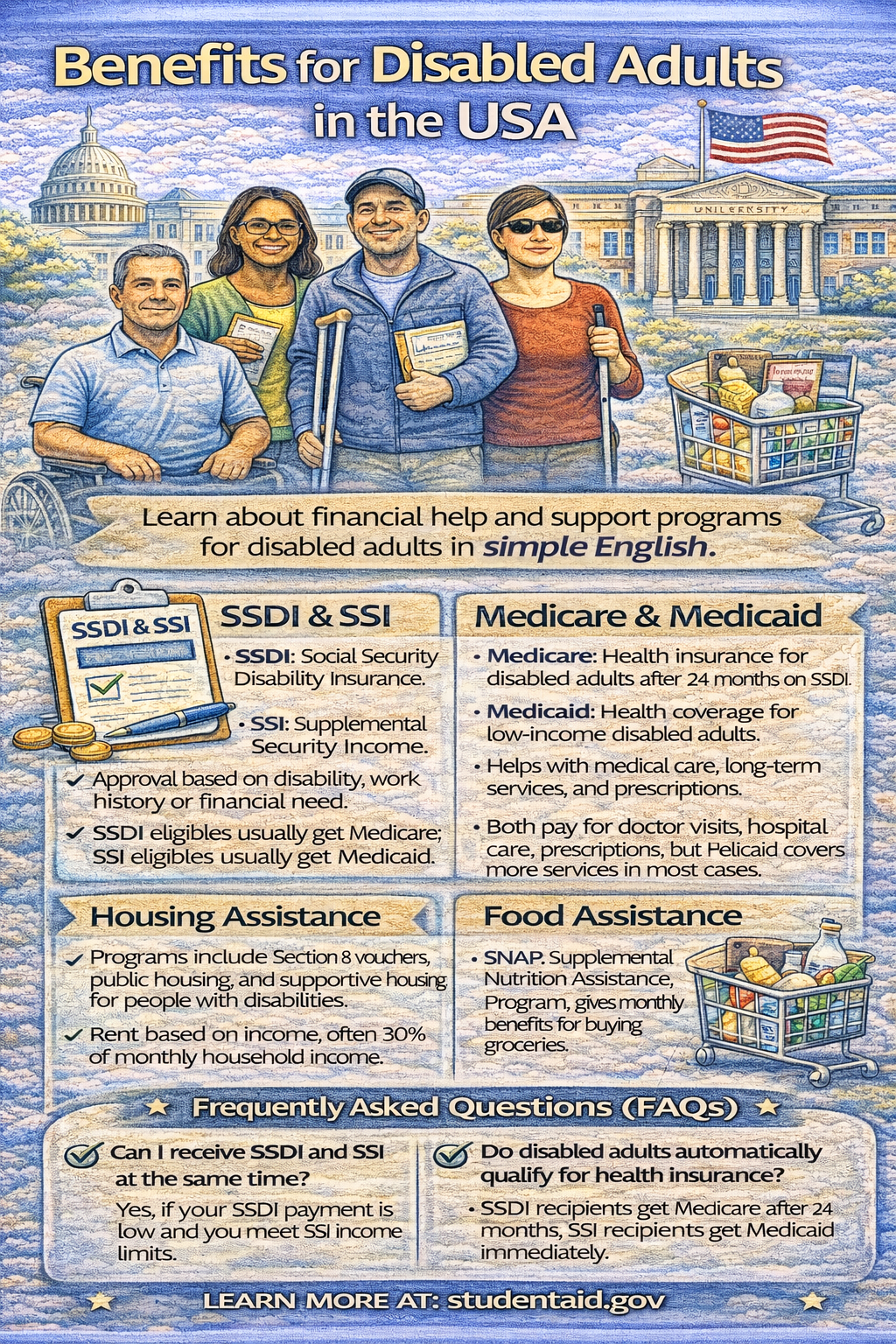
One of the most important benefit programs for disabled adults is Social Security Disability Insurance, commonly called SSDI. This program is designed for individuals who worked in the past and paid Social Security taxes through payroll deductions, but who can no longer work because of a serious medical condition. SSDI functions like an insurance program. When people work and pay into Social Security, they earn coverage. If they later become disabled before reaching retirement age, they may qualify for monthly disability payments.
SSDI is managed by the Social Security Administration. To qualify, a person must meet two main requirements. First, they must meet the official definition of disability. The Social Security Administration defines disability as a condition that prevents a person from performing substantial work and is expected to last at least 12 months or result in death. Second, the person must have earned enough work credits based on past employment.
Work credits are earned by working and paying Social Security taxes. The number of credits required depends on age. Younger workers may qualify with fewer credits, while older workers need more credits. The payment amount for SSDI is based on the person’s lifetime earnings. This means individuals who earned higher wages in the past may receive higher monthly payments.
Supplemental Security Income (SSI)
Supplemental Security Income, known as SSI, is another major program for disabled adults. Unlike SSDI, SSI is not based on work history. Instead, SSI is based entirely on financial need. It is designed to help disabled adults, blind individuals, and people age 65 or older who have very limited income and very limited financial resources.
SSI is also managed by the Social Security Administration. To qualify, a disabled adult must meet the medical disability definition and meet strict income and asset limits. Assets include money in bank accounts, investments, and other property. However, a primary home and one vehicle are usually excluded from asset calculations.
SSI provides a standard federal monthly payment amount, which may increase slightly each year due to cost-of-living adjustments. Some states provide additional supplemental payments on top of the federal amount. Because SSI is based on need, any additional income may reduce the monthly payment.
Medicare Coverage for Disabled Adults
Medicare is federal health insurance that becomes available to SSDI recipients after a 24-month waiting period. It is administered by the Centers for Medicare & Medicaid Services.
Medicare is divided into several parts. Part A covers hospital care. Part B covers doctor visits and outpatient services. Part D covers prescription drugs. Some recipients also enroll in Medicare Advantage plans for additional benefits.
Supplemental Nutrition Assistance Program (SNAP)
Food security is another major concern for disabled adults with limited income. The Supplemental Nutrition Assistance Program, known as SNAP, provides monthly food benefits to help low-income individuals purchase groceries.
SNAP is managed by the U.S. Department of Agriculture. Benefits are provided on an electronic card that works like a debit card at grocery stores.
Disabled adults often qualify for SNAP because their income is limited. The program helps ensure access to nutritious food and reduces the risk of hunger.
Housing Assistance for Disabled Adults
Housing costs are often the largest monthly expense for disabled adults. The U.S. Department of Housing and Urban Development (HUD) manages several housing assistance programs.
These include Section 8 Housing Choice Vouchers, public housing programs, and supportive housing programs specifically designed for individuals with disabilities. These programs typically limit rent payments to a percentage of income, making housing more affordable.
Waiting lists for housing assistance can be long, so applying early is important.
Veterans Disability Benefits
Disabled veterans may qualify for disability compensation through the Department of Veterans Affairs. Veterans benefits are separate from SSI and SSDI and are based on service-connected disabilities.
Veterans may also qualify for healthcare services through the VA system, which can provide specialized medical care.
Work Incentive Programs
Many disabled adults want to work but are afraid of losing benefits. The Social Security Administration offers work incentive programs such as Ticket to Work and Trial Work Periods. These programs allow individuals to test their ability to work without immediately losing disability benefits.
Frequently Asked Questions (FAQs)
Can I Receive Both SSI and SSDI?
Yes, some individuals qualify for both if their SSDI payment is low and they meet SSI income limits.
Do Disabled Adults Automatically Get Health Insurance?
SSDI recipients receive Medicare after 24 months. SSI recipients usually qualify for Medicaid immediately.
Can I Work While Receiving Benefits?
Yes, under specific work incentive programs.
Is the Application Process Difficult?
It can be detailed and may require medical documentation, but assistance is available.
Reference Links
Social Security Administration – Disability Benefits: https://www.ssa.gov/benefits/disability
Supplemental Security Income (SSI): https://www.ssa.gov/ssi
Centers for Medicare & Medicaid Services: https://www.cms.gov
Medicaid Information: https://www.medicaid.gov
Supplemental Nutrition Assistance Program (SNAP): https://www.fns.usda.gov/snap
U.S. Department of Housing and Urban Development (HUD): https://www.hud.gov
Department of Veterans Affairs – Disability Compensation: https://www.va.gov/disability
Ticket to Work Program: https://choosework.ssa.gov
Disclaimer
Program Clarity is an independent informational website and is not affiliated with any government agency. This article is for educational purposes only. Program rules and availability may change. Always verify details with official authorities.