The Pell Grant renewal process is one of the most important steps for students who rely on federal financial aid to continue their education. The Federal Pell Grant is a need-based financial aid program provided by the U.S. government to help undergraduate students pay for college expenses. Unlike loans, Pell Grants do not need to be repaid, making them one of the most valuable sources of funding for students from low- and moderate-income families. However, many students mistakenly believe that once they receive a Pell Grant, it will automatically continue throughout their academic journey. In reality, Pell Grants must be renewed every year, and eligibility must be reassessed based on updated financial and academic information.
The renewal process ensures that financial aid is distributed fairly and continues to support students who demonstrate financial need. Because a student’s financial situation, family income, and academic progress can change over time, the government requires students to reapply annually. This process primarily involves submitting or updating the Free Application for Federal Student Aid (FAFSA), maintaining satisfactory academic progress, and meeting all eligibility requirements set by federal guidelines. Failing to complete the renewal process correctly or on time can result in delays, reduced funding, or even loss of eligibility.
Why Renewal Is Required
The Federal Pell Grant is designed to provide financial assistance to undergraduate students who demonstrate significant financial need. It is administered by the U.S. Department of Education and is awarded based on information provided through the FAFSA. The amount a student receives depends on several factors, including family income, household size, enrollment status, and the cost of attendance at the chosen institution.
Because financial situations can change from year to year, the Pell Grant is not automatically renewed. Instead, students must complete the renewal process annually to confirm that they still qualify. For example, a student’s family income may increase or decrease, which can affect the amount of aid awarded. Similarly, changes in enrollment status, such as switching from full-time to part-time, can impact eligibility and funding levels.
Renewal also ensures that students continue to meet academic requirements. Federal regulations require students to maintain Satisfactory Academic Progress (SAP), which includes maintaining a minimum GPA and completing a certain percentage of attempted coursework. Students who fail to meet these requirements may lose eligibility for Pell Grants and other forms of federal aid.
What Is the Pell Grant Renewal Process?
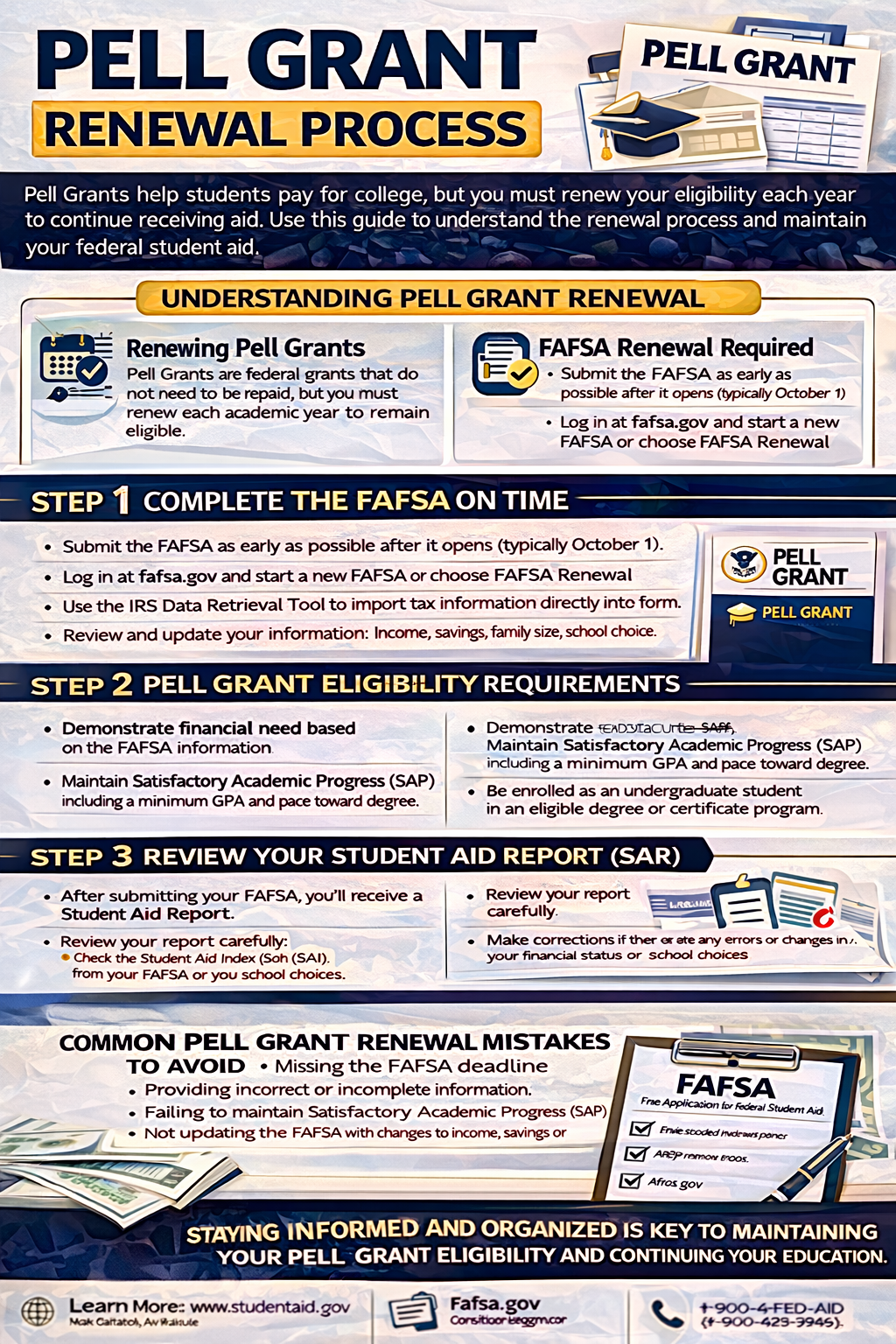
The Pell Grant renewal process is the annual procedure through which students reapply for federal financial aid by updating their FAFSA information and confirming their continued eligibility. This process is essential because Pell Grants are awarded on a yearly basis, and eligibility must be reassessed each academic year.
Renewing a Pell Grant typically involves updating personal and financial information, verifying tax data, and submitting the FAFSA before the required deadlines. Many students can use the FAFSA Renewal form, which pre-fills information from the previous year to make the process easier. However, it is still important to review all information carefully and make necessary updates.
FAFSA Renewal: The Core of the Pell Grant Renewal Process
The most important part of renewing a Pell Grant is completing the FAFSA each year. The FAFSA collects financial information used to determine eligibility for federal student aid, including Pell Grants.
Students can complete the FAFSA online through the official federal student aid website. For returning students, the FAFSA Renewal option allows previously submitted information to be carried forward, making the process faster and easier. However, students must update any information that has changed, such as income, family size, or school selection.
The FAFSA typically requires the following information:
- Social Security number and identification details
- Tax return information from the previous year
- Records of untaxed income
- Information about assets and savings
- List of schools to receive the FAFSA data
Using the IRS Data Retrieval Tool (DRT) can simplify the process by automatically transferring tax information from the IRS into the FAFSA. This reduces errors and speeds up processing.
Pell Grant Eligibility Requirements for Renewal
To successfully renew a Pell Grant, students must continue to meet eligibility requirements established by federal guidelines. These requirements ensure that financial aid is awarded to students who need it and are actively pursuing their education.
Financial Need
Eligibility for the Pell Grant is based primarily on financial need. The FAFSA calculates a Student Aid Index (SAI), which determines how much financial assistance a student qualifies for. If the student’s financial situation changes significantly, the Pell Grant amount may increase or decrease accordingly.
Enrollment Status
Students must be enrolled in an eligible undergraduate program. The amount of the Pell Grant depends on whether the student is enrolled full-time, half-time, or less than half-time.
Academic Progress
Maintaining satisfactory academic progress is essential for continued eligibility. Schools typically require students to maintain a minimum GPA and complete a certain percentage of credits each year.
Lifetime Eligibility Limit
Students can receive Pell Grants for a maximum of 12 semesters (or the equivalent). This is known as the Lifetime Eligibility Used (LEU) limit. Once this limit is reached, students can no longer receive Pell Grant funding.
Important Pell Grant Renewal Deadlines
Meeting deadlines is critical in the Pell Grant renewal process. The FAFSA opens each year, and students are encouraged to apply as early as possible. Federal, state, and school deadlines may vary, and missing any of these deadlines can reduce the amount of aid available.
Applying early is especially important because some financial aid programs are awarded on a first-come, first-served basis. Even though Pell Grants are entitlement-based, submitting the FAFSA early ensures faster processing and access to additional aid opportunities.
Common Mistakes in Pell Grant Renewal
Many students lose or delay their financial aid due to avoidable mistakes during the renewal process. Understanding these common errors can help prevent issues.
One of the most common mistakes is failing to submit the FAFSA on time. Late applications can result in delayed aid or missed opportunities for additional funding.
Another common issue is providing incorrect or outdated financial information. Errors in income reporting or household size can affect eligibility and may require corrections that delay processing.
Some students also fail to meet academic progress requirements, which can lead to loss of eligibility. Others forget to update changes in enrollment status or fail to respond to verification requests from their school.
Tips to Successfully Renew Your Pell Grant
To ensure a smooth renewal process, students should follow several best practices.
Students should submit the FAFSA as early as possible each year to avoid delays. Reviewing all information carefully before submission can help prevent errors. Using the IRS Data Retrieval Tool can also reduce mistakes and speed up processing.
Maintaining strong academic performance is essential for continued eligibility. Students should also regularly check their school email and financial aid portal for updates or requests for additional information.
Keeping personal and financial records organized can make the renewal process easier and less stressful.
What Happens After FAFSA Submission?
After submitting the FAFSA, students receive a Student Aid Report (SAR) summarizing the information provided. This report includes the Student Aid Index and should be reviewed for accuracy.
The FAFSA information is then sent to the schools listed by the student. Each school uses this information to determine the student’s financial aid package, including Pell Grant eligibility.
Students may be required to complete a verification process, which involves providing additional documentation to confirm the accuracy of FAFSA information. Once all requirements are met, the school issues a financial aid award letter outlining the aid offered.
Frequently Asked Questions (FAQs)
Do I need to reapply for the Pell Grant every year?
Yes, students must complete the FAFSA each year to renew their Pell Grant eligibility. The grant is not automatically renewed.
What happens if I miss the FAFSA deadline?
Missing the deadline may result in delayed or reduced financial aid. It is important to submit the FAFSA as early as possible.
Can my Pell Grant amount change each year?
Yes, the amount may change based on financial circumstances, enrollment status, and federal funding guidelines.
What is the maximum time I can receive Pell Grants?
Students can receive Pell Grants for up to 12 semesters or the equivalent.
What if my financial situation changes during the year?
Students can contact their school’s financial aid office to request a review of their situation. In some cases, adjustments may be made.
Reference Links
https://studentaid.gov/h/apply-for-aid/fafsa
https://studentaid.gov/understand-aid/types/grants/pell
https://studentaid.gov/help-center/answers/article/how-to-renew-fafsa
https://studentaid.gov/apply-for-aid/fafsa/filling-out
Disclaimer
Program Clarity is an independent informational website and is not affiliated with any government agency. This article is for educational purposes only. Program rules and availability may change. Always verify details with official authorities.