Applying for a nonimmigrant visa is no longer just about filling out a form and attending an interview. Immigration systems in 2026 have become far more detailed, technology-driven, and document-focused than they were a few years ago. Embassies and consulates now carefully analyze digital applications, financial records, travel history, interview responses, and supporting evidence before deciding whether an applicant qualifies for temporary entry. Because of this, understanding the nonimmigrant visa application process step by step is extremely important for travelers who want to avoid delays, administrative processing, or visa refusals.
A nonimmigrant visa is issued to individuals who plan to enter another country temporarily for a specific reason such as tourism, education, temporary employment, medical treatment, business activities, conferences, or exchange programs. Unlike immigrant visas that are intended for permanent settlement, nonimmigrant visas are based on the expectation that the traveler will leave the country before the authorized stay expires. Immigration officers therefore place strong attention on whether the applicant genuinely intends to return home after the visit.
One of the biggest misconceptions among applicants is believing that a strong financial position alone guarantees approval. In reality, visa officers evaluate the complete profile of the applicant, including employment stability, educational background, family responsibilities, travel purpose, previous immigration history, and consistency between documents and interview responses. Even applicants with good finances can face refusal if their overall application appears unclear or incomplete.
Table of Contents
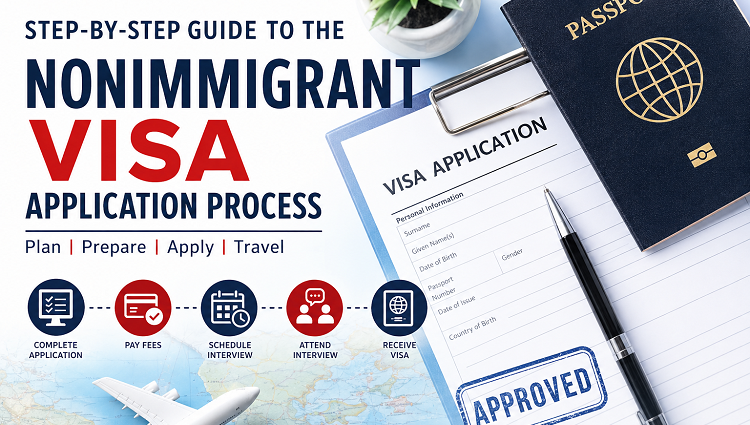
ToggleThe nonimmigrant visa process can vary slightly depending on the country and visa category, but most applications follow a structured sequence that includes selecting the visa type, completing online forms, uploading photographs, paying fees, attending biometric appointments, preparing documentation, appearing for an interview, and waiting for administrative review. Every stage matters because mistakes made early in the process can affect the final outcome.
Understanding the Purpose
Before beginning the application process, it is important to understand why governments issue nonimmigrant visas and what immigration officers look for during evaluation. A nonimmigrant visa is not simply a travel document. It is a temporary legal permission granted under specific conditions and limitations.
Immigration authorities want to confirm three major things before approving a visa application:
- The applicant has a legitimate temporary reason for travel.
- The applicant has sufficient financial and personal stability.
- The applicant intends to leave the country after the approved stay ends.
This is why applicants are often asked to provide extensive documentation regarding employment, finances, studies, family relationships, and travel plans. Visa officers are trained to assess whether the applicant’s situation matches the claimed purpose of travel..
Choosing the Correct Nonimmigrant Visa Category
The first and most important step in the nonimmigrant visa application process is selecting the correct visa category. Every visa classification is created for a specific travel purpose, and applying under the wrong category can lead to rejection or future immigration complications.
Many applicants make the mistake of choosing a visa based on convenience instead of eligibility. For instance, someone intending to study full time should not apply for a tourist visa simply because interview wait times are shorter. Immigration officers often identify inconsistencies between travel intentions and visa categories very quickly.
Some of the most common nonimmigrant visa categories include:
| Visa Type | Purpose |
|---|---|
| Tourist Visa | Vacations, sightseeing, family visits |
| Business Visa | Meetings, conferences, negotiations |
| Student Visa | Academic or vocational study |
| Exchange Visitor Visa | Cultural or educational exchange |
| Temporary Work Visa | Authorized employment |
| Medical Visa | Medical treatment abroad |
| Transit Visa | Passing through another country |
Each category has its own eligibility requirements, supporting documentation rules, and permitted activities.
Completing the Online Visa Application Form
Once the visa category is selected, applicants usually complete an online application form. For United States nonimmigrant visas, the primary form is DS-160, which is submitted electronically.
This stage is more important than many applicants realize because immigration officers review the form carefully before the interview even begins. The application creates the foundation of the entire case, and inconsistencies later in the process can create credibility concerns.
The application form generally asks for:
- Full legal identity information
- Passport details
- Residential history
- Employment background
- Educational qualifications
- Travel plans
- Family information
- Social media disclosures in some cases
- Previous international travel history
- Security and background questions
Applicants should avoid rushing through the form. Even small spelling mistakes, incorrect dates, or inaccurate employment information can create delays or confusion during the interview.
One important strategy is ensuring consistency across all documents. For example, the employment title listed on the application should match employment letters and salary documents submitted later.
Uploading a Visa Compliant Photograph
Modern visa systems rely heavily on biometric technology, making photograph requirements extremely strict. Many applications face delays simply because the uploaded photo does not meet technical standards.
The photograph usually must:
- Have a plain white background
- Show full facial visibility
- Avoid heavy editing or filters
- Meet exact pixel dimensions
- Be recently taken
- Follow specific lighting rules
Applicants should avoid using casual mobile photos or heavily edited studio pictures because facial recognition systems may reject them during processing.
Official photo requirements:
Official Visa Photo Requirements
Paying the Nonimmigrant Visa Application Fee
After submitting the application form, applicants must pay the required visa processing fee. The fee amount depends on the visa category and the destination country’s immigration policies.
The payment stage may appear simple, but it is closely connected to appointment scheduling systems. Incorrect payments, expired receipts, or mismatched payment references can create technical delays.
Applicants should:
- Save payment confirmations
- Print receipts if required
- Verify payment activation timelines
- Check whether additional reciprocity fees apply
Since most visa fees are non-refundable, applicants should ensure that they fully qualify before submitting payment.
Scheduling the Embassy or Consulate Interview
The interview scheduling process has become increasingly competitive in many countries because of high application volumes and limited appointment availability.
Applicants usually schedule interviews through official embassy portals after fee payment confirmation. During busy seasons, available appointments may be delayed for weeks or months.
Several factors affect interview availability:
- Political conditions
- Embassy staffing levels
- Seasonal travel demand
- Student intake periods
- Security backlogs
Applicants planning travel for university semesters, conferences, or business events should begin the process early to avoid missing important dates.
Preparing Supporting Documents Strategically
One of the most misunderstood parts of the nonimmigrant visa application process is document preparation. Many applicants wrongly believe that carrying excessive paperwork automatically improves approval chances. In reality, immigration officers focus more on relevance, consistency, and credibility than the number of papers presented.
Supporting documents help verify the applicant’s story and overall profile.
Financial Documents
Financial evidence demonstrates whether the applicant can support travel expenses legally and independently.
Common financial records include:
- Bank statements
- Salary slips
- Tax returns
- Business income records
- Sponsorship affidavits
- Scholarship confirmations
Immigration officers often examine whether financial activity appears stable and realistic. Large unexplained deposits made shortly before the interview can create suspicion.
Employment and Business Documents
Employment documents help establish strong home-country ties and financial stability.
Applicants may provide:
- Employment verification letters
- Leave approval certificates
- Business registration records
- Company tax documents
- Professional licenses
Stable employment is often viewed positively because it suggests the applicant has reasons to return home after the trip.
Educational Documents
Student visa applicants generally need:
- Admission letters
- Academic transcripts
- Degree certificates
- Language proficiency scores
- Tuition payment evidence
Educational plans should appear logical and connected to future career goals.
Travel Documents
Travel-related records may include:
- Flight reservations
- Hotel bookings
- Conference registrations
- Tour itineraries
- Invitation letters
Travel plans should match the purpose stated in the application.
Understanding the Visa Interview Psychology
The visa interview is not simply a conversation. It is an evaluation process where officers assess credibility, confidence, consistency, and risk factors within a short period of time.
Most interviews last only a few minutes, meaning officers make decisions quickly based on:
- Application history
- Body language
- Response clarity
- Supporting evidence
- Overall profile strength
Applicants should avoid memorized answers because robotic responses often appear unnatural. Officers are trained to identify rehearsed behavior and inconsistent statements.
Common interview questions may include:
- Why are you traveling?
- Who will fund your trip?
- What do you do professionally?
- Why did you choose this university?
- How long will you stay?
- Do you have relatives abroad?
Strong applicants usually provide simple, direct, and confident answers without unnecessary details.
Administrative Processing and Background Verification
After the interview, some applications are approved immediately while others enter administrative processing. This additional review stage can be frustrating because timelines are unpredictable.
Administrative processing may involve:
- Security screening
- Employment verification
- Technology-related background checks
- Identity verification
- Immigration history review
Applicants working in technical industries, scientific research, cybersecurity, or sensitive technology sectors sometimes experience longer reviews.
Administrative processing does not automatically mean denial, but applicants should prepare for possible delays.
Visa Approval, Refusal, or Further Review
After processing concludes, the embassy issues one of several decisions.
| Decision | Meaning |
|---|---|
| Approved | Visa granted |
| Refused | Eligibility not established |
| Administrative Processing | Additional review pending |
If approved, applicants usually receive their passport with the visa stamp attached.
Applicants should immediately verify:
- Name spelling
- Passport number
- Visa category
- Validity dates
Mistakes should be corrected before travel.
Why Many Nonimmigrant Visa Applications Are Refused
Understanding refusal reasons can help applicants prepare stronger cases.
Weak Travel Purpose
If the travel reason appears unclear, unrealistic, or unsupported by documents, officers may question the legitimacy of the application.
Lack of Strong Home-Country Ties
Applicants who cannot demonstrate employment, studies, business commitments, or family responsibilities may appear more likely to overstay.
Financial Inconsistencies
Unstable finances or unexplained transactions can create credibility concerns.
Inaccurate or False Information
Even minor false statements may severely damage future immigration eligibility.
Poor Interview Performance
Confused, contradictory, or overly rehearsed answers sometimes negatively affect officer confidence.
FAQs About the Nonimmigrant Visa Application Process
What is the purpose of a nonimmigrant visa?
A nonimmigrant visa allows temporary travel for tourism, education, business, temporary work, medical treatment, or exchange programs.
How long does the visa application process usually take?
Processing times vary depending on embassy workload, visa category, security screening, and administrative review requirements.
Is financial proof mandatory for nonimmigrant visas?
Yes. Most applicants must demonstrate sufficient financial resources to support themselves during their stay.
Can visa officers deny applications without reviewing all documents?
Yes. Officers often make decisions based on the overall application profile and interview responses.
What happens if administrative processing is required?
The application undergoes additional background or security review before a final decision is made.
Can applicants reapply after a refusal?
Yes. Applicants may reapply after improving weak areas of the previous application.
Does previous travel history help visa approval?
Positive travel history may strengthen credibility because it demonstrates compliance with immigration laws.
Is the visa interview always required?
Many applicants must attend interviews, although some renewals may qualify for interview waivers.
Can applicants work on tourist visas?
No. Tourist visas generally prohibit employment activities.
Where can applicants find official visa information?
Disclaimer
Program Clarity is an independent informational website and is not affiliated with any government agency. This article is for educational purposes only. Program rules and availability may change. Always verify details with official authorities.