
The USCIS interview process is one of the most critical stages in the U.S. immigration journey, and for many applicants, it represents the final and most decisive step before a life-changing approval or denial. Whether someone is applying for a green card through adjustment of status, seeking naturalization to become a U.S. citizen, or going through a marriage-based immigration case, the interview serves as a direct evaluation of the applicant by a government officer. This face-to-face interaction is designed to confirm the accuracy of the information submitted, verify eligibility under immigration laws, and assess the credibility of the applicant. Because immigration benefits such as permanent residency or citizenship carry significant legal and personal consequences, the interview process is treated with great importance by both applicants and immigration authorities.
For many individuals, the USCIS interview can feel stressful or intimidating, especially if they are unfamiliar with the structure of the process or unsure about what types of questions may be asked. However, it is important to understand that the interview is not meant to trap or confuse applicants but rather to ensure that all information provided in the application is correct and that the applicant meets all legal requirements. The officer conducting the interview will review documents, ask questions based on the application, and evaluate whether the applicant qualifies for the requested immigration benefit. With proper preparation, a clear understanding of the process, and honest communication, most applicants can successfully navigate the USCIS interview.
USCIS Interview Process
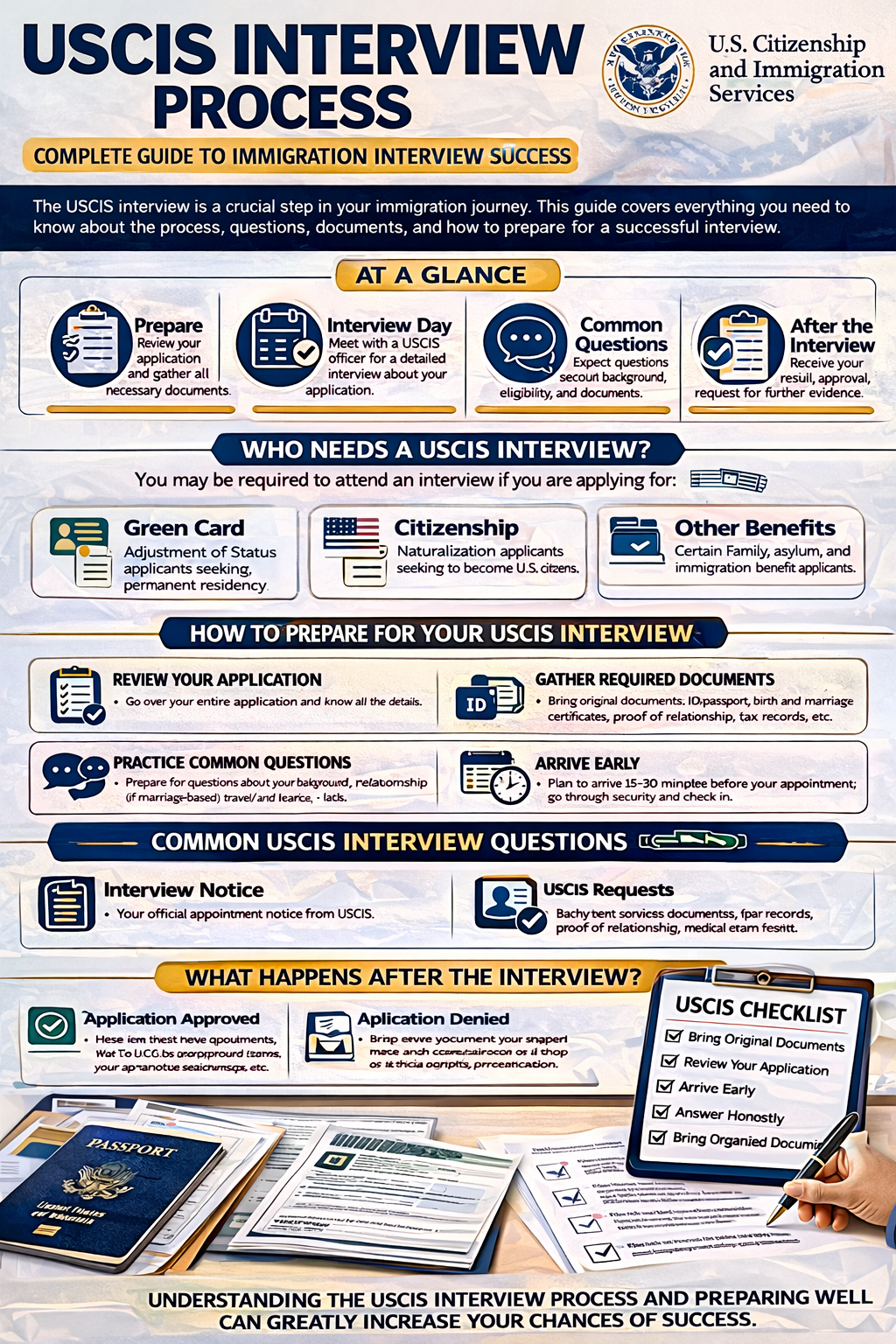
The USCIS interview is a structured and formal meeting conducted by an immigration officer from the U.S. Citizenship and Immigration Services. This interview is typically required for many immigration applications because it allows USCIS to directly interact with the applicant and verify important details that cannot always be confirmed through paperwork alone. While written applications provide essential information, the interview allows officers to clarify inconsistencies, confirm identity, and assess whether the applicant genuinely meets all eligibility requirements.
During the interview, the applicant is placed under oath, which means they are legally required to provide truthful and accurate information. Any false statements or intentional misrepresentation can result in serious consequences, including denial of the application or even legal penalties. This is why honesty is one of the most important factors during the interview process.
The structure of the interview may vary slightly depending on the type of application, but most USCIS interviews follow a similar pattern. The officer typically begins by verifying the applicant’s identity using official documents such as a passport or government-issued identification. After that, the officer reviews the application form and asks questions related to the information provided. In some cases, additional questions may be asked to clarify specific details or address any concerns that arise during the review.
Types of USCIS Interviews and Their Importance
The USCIS interview process differs depending on the type of immigration benefit being requested. Each type of interview has its own focus and requirements, but all share the common goal of verifying eligibility and ensuring compliance with immigration laws.
Adjustment of Status Interview
The adjustment of status interview is conducted for individuals who are applying for a green card from within the United States. This type of interview focuses on verifying eligibility for permanent residency, including reviewing the applicant’s immigration history, employment status, and supporting documents. If the application is based on marriage, both spouses are usually required to attend the interview together.
Naturalization Interview
The naturalization interview is required for applicants seeking U.S. citizenship. In addition to reviewing the application, the officer will test the applicant’s ability to read, write, and speak English, as well as their knowledge of U.S. history and government. This part of the interview is commonly known as the civics test.
Marriage-Based Interview
Marriage-based interviews are often more detailed because USCIS must confirm that the marriage is genuine and not entered into solely for immigration purposes. Couples may be asked questions about their relationship, daily routines, living arrangements, and shared responsibilities. In some cases, couples may be interviewed separately to verify consistency in their answers.
Other Immigration Interviews
Other types of interviews may include asylum interviews, employment-based immigration interviews, or interviews related to specific immigration benefits. Each type of interview is tailored to the requirements of the application being reviewed.
USCIS Interview Notice and Scheduling Process
After submitting an application, USCIS will send an official interview notice to the applicant. This notice is a critical document that provides detailed information about the interview, including the date, time, and location. It also includes instructions on what documents to bring and what steps to follow if the applicant needs to reschedule.
It is extremely important to read the interview notice carefully and follow all instructions provided. Missing the scheduled interview without proper notification can lead to delays or denial of the application. If an applicant cannot attend the interview due to a valid reason, they must request rescheduling as soon as possible according to USCIS guidelines.
How to Prepare for the USCIS Interview
Preparation plays a major role in the success of the USCIS interview process. Applicants who take the time to prepare thoroughly are more likely to feel confident and provide clear, accurate answers during the interview.
Reviewing the Application
Applicants should carefully review their entire application before the interview. This includes understanding all the information provided, such as personal details, employment history, travel history, and any previous immigration records. USCIS officers often ask questions directly based on the application, so being familiar with the content is essential.
Organizing Documents
Applicants should gather all required documents and organize them in a clear and accessible manner. These documents may include identification, passports, birth certificates, marriage certificates, tax records, employment documents, and any additional evidence requested in the interview notice. Bringing both original documents and copies is recommended.
Practicing Interview Questions
Practicing common interview questions can help applicants feel more comfortable and reduce nervousness. While it is not necessary to memorize answers, understanding how to respond clearly and honestly is important.
Mental Preparation
In addition to practical preparation, applicants should also prepare mentally for the interview. Staying calm, confident, and focused can make a significant difference in how the interview is conducted.
What Happens During the USCIS Interview
On the day of the interview, applicants are required to arrive at the USCIS office early to allow time for security screening and check-in procedures. After checking in, applicants wait until their name is called by an immigration officer.
Once the interview begins, the officer will place the applicant under oath and begin asking questions. The officer may review documents, verify information, and ask follow-up questions as needed. The tone of the interview is usually professional and straightforward, although it may become more detailed if the officer needs clarification.
Common USCIS Interview Questions
The questions asked during the USCIS interview depend on the type of application, but they generally fall into several categories.
Applicants may be asked about personal information such as their name, address, and date of birth. They may also be asked questions related to their application, including employment history, travel history, and previous immigration records.
Marriage-based applicants may be asked detailed questions about their relationship, including how they met, where they live, and how they manage daily life together.
Naturalization applicants will be asked questions related to U.S. history and government as part of the civics test.
What Happens After the USCIS Interview
After the interview, the USCIS officer will review the information and make a decision on the application. In some cases, applicants may receive a decision on the same day. In other cases, the decision may take several weeks or months.
Possible outcomes include approval, denial, or a request for additional evidence. If additional documents are required, USCIS will provide instructions on how to submit them.
Applicants can track their case status online using the USCIS case tracking system.
Common Mistakes to Avoid
Many applicants make mistakes that can negatively affect their USCIS interview. These mistakes include failing to review the application, providing inconsistent answers, not bringing required documents, or arriving late to the interview.
Another common mistake is providing false or misleading information. Honesty is essential during the interview process, and any attempt to provide incorrect information can lead to serious consequences.
Frequently Asked Questions (FAQs)
What happens if I fail the USCIS interview?
If an applicant does not pass the interview, USCIS may deny the application or request additional information. In some cases, applicants may be given another opportunity to attend a second interview or provide supporting evidence.
Can I reschedule my USCIS interview?
Yes, applicants can request to reschedule their interview if they have a valid reason. It is important to follow USCIS instructions and submit the request as soon as possible.
Do I need a lawyer for the USCIS interview?
A lawyer is not required, but some applicants choose to have legal representation, especially if their case is complex or involves legal issues.
How long does the USCIS interview take?
Most interviews last between 20 minutes and one hour, although the duration may vary depending on the complexity of the case.
How long does it take to receive a decision after the interview?
Some applicants receive a decision immediately, while others may need to wait several weeks or months.
Reference Links
https://www.uscis.gov/citizenship/learn-about-citizenship/the-naturalization-interview-and-test
https://www.uscis.gov/green-card/green-card-processes-and-procedures/adjustment-of-status
https://www.uscis.gov/forms/all-forms
https://www.usa.gov/immigration-and-citizenship
Disclaimer
Program Clarity is an independent informational website and is not affiliated with any government agency. This article is for educational purposes only. Program rules and availability may change. Always verify details with official authorities.