
Introduction
Immigration is one of the most important and life-changing journeys a person can undertake. Whether you are applying for a work visa, family sponsorship, permanent residency, student visa, refugee protection, or citizenship, every decision you make depends on having accurate and up-to-date information. Unfortunately, immigration is also one of the most misunderstood areas of law. The internet is filled with outdated articles, social media rumors, unofficial advice, and misleading information that can confuse applicants and lead to costly mistakes.
Every year, thousands of people experience delays, denials, financial losses, and legal complications because they relied on incorrect immigration information. Some applicants submit outdated forms, others misunderstand eligibility requirements, and many become victims of immigration scams that promise guaranteed approvals or special access to government programs. Since immigration policies can change due to legislation, court rulings, political decisions, and administrative updates, information that was accurate a year ago may no longer be valid today.
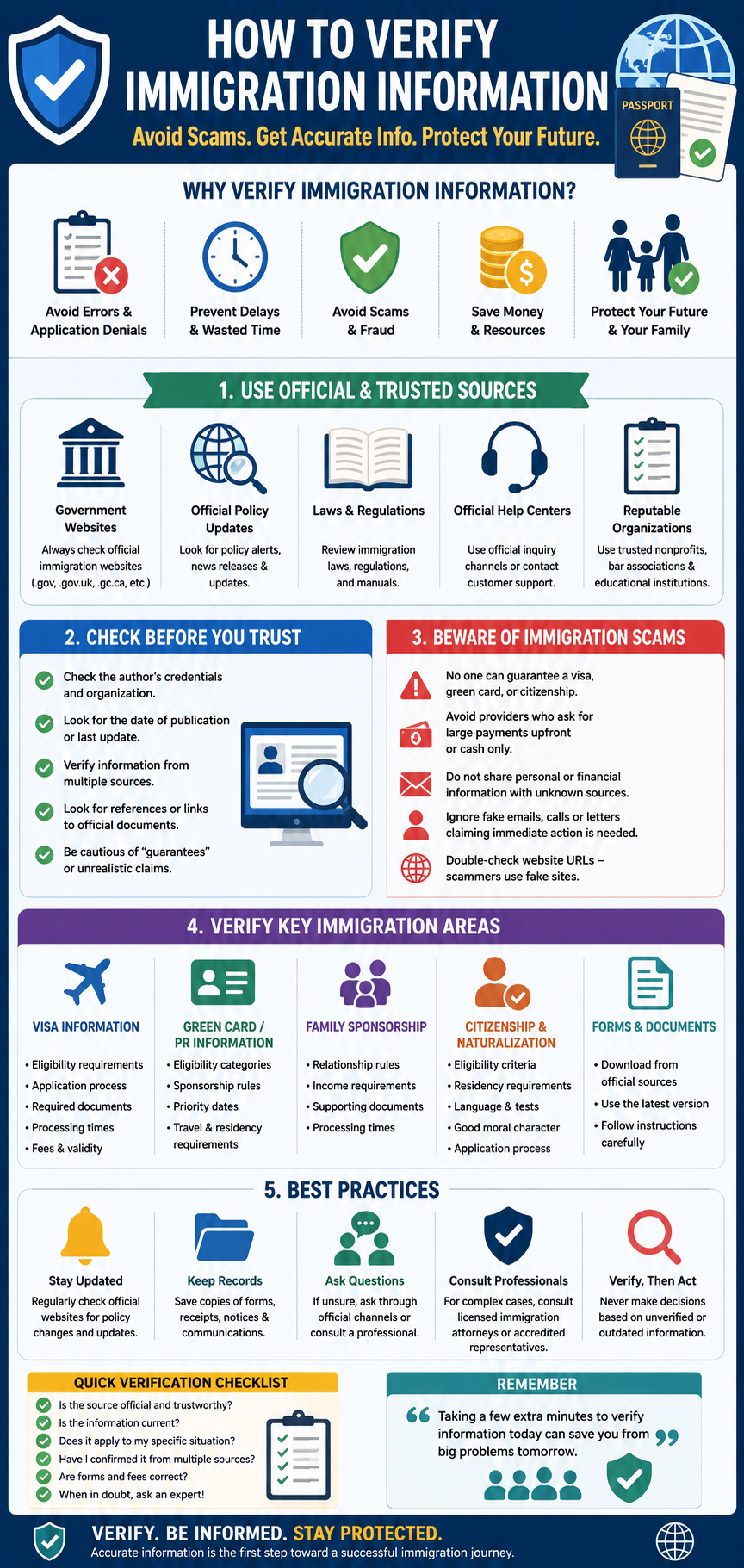
This is why learning how to verify immigration information is essential. Verifying information means checking whether a claim is accurate, current, and supported by reliable sources before acting on it. It helps applicants avoid mistakes, protect themselves from fraud, and make informed decisions about their future. This comprehensive guide explains how to verify immigration information, identify trustworthy sources, recognize misinformation, avoid scams, and stay informed throughout the immigration process.
Table of Contents
ToggleWhy Verifying Immigration Information Matters
Immigration laws are among the most complex legal systems in the world. Unlike many legal topics that remain relatively stable, immigration policies frequently evolve in response to changing economic conditions, labor market demands, national security concerns, court decisions, and government priorities. These changes can affect visa eligibility requirements, application procedures, processing times, filing fees, and even entire immigration programs.
Because immigration regulations are constantly changing, relying on inaccurate information can have serious consequences. An applicant may submit an outdated application form, miss an important deadline, fail to provide required supporting documents, or misunderstand visa conditions. Even minor errors can result in processing delays, requests for additional evidence, application denials, or loss of immigration benefits.
The impact goes beyond paperwork. Immigration decisions affect careers, educational opportunities, family reunification, travel plans, and long-term settlement goals. Many individuals invest significant time, money, and emotional energy into their applications. Taking a few extra steps to verify information can prevent unnecessary stress and improve the likelihood of a successful outcome.
Understanding Where Immigration Information Comes From
Before evaluating immigration information, it is important to understand the different sources from which it originates. Not all sources are equally reliable, and recognizing the differences can help applicants determine which information deserves trust.
Many people begin their research using search engines. While search engines provide access to a wide range of resources, they do not guarantee accuracy. Search rankings are influenced by many factors, including website authority, popularity, and search engine optimization practices. A highly ranked website may still contain outdated or incomplete information.
Social media platforms have also become major sources of immigration advice. Videos, discussion groups, and personal success stories often attract large audiences. While some creators are qualified professionals, others may simply be sharing personal opinions or experiences that do not apply to everyone.
Government agencies, immigration attorneys, accredited representatives, nonprofit organizations, and professional associations typically provide more reliable information because they have expertise and accountability. Understanding the strengths and limitations of each source is the first step toward effective verification.
Official Government Sources
Official government immigration websites should always be your primary source of information. Government agencies create, administer, and enforce immigration laws, making them the most authoritative source for policies, procedures, and eligibility requirements.
Official websites typically provide:
- Application forms
- Filing instructions
- Eligibility requirements
- Processing time updates
- Fee schedules
- Policy announcements
- Frequently asked questions
- Official contact information
One of the greatest benefits of government sources is that they are updated whenever policies change. If a new immigration program is introduced or filing requirements are modified, official websites usually publish the information first.
Even when using other sources such as legal blogs or educational guides, applicants should compare important details with official government publications to ensure accuracy.
How to Evaluate Online Immigration Articles
The internet contains millions of immigration-related articles, but not all are equally trustworthy. Learning how to evaluate online content can help you distinguish reliable information from misinformation.
Start by examining the author’s qualifications. Articles written by immigration attorneys, accredited representatives, government agencies, or reputable nonprofit organizations generally carry more credibility than anonymous blog posts.
Look for references and citations. Reliable articles often link to official regulations, government policies, or legal sources. References allow readers to verify claims independently and determine whether the information is supported by evidence.
Publication dates are equally important. Immigration regulations change frequently, so always check when an article was written or last updated. Older content may no longer reflect current requirements.
The tone of the article can also provide clues. Trustworthy resources typically present balanced information and acknowledge limitations. Be cautious of sensational headlines, unrealistic promises, or claims that sound too good to be true.
The Risks of Social Media Immigration Advice
Social media has become one of the most influential sources of immigration information. Platforms such as Facebook, YouTube, TikTok, Instagram, LinkedIn, and X allow users to share immigration updates, personal experiences, and legal commentary. While these platforms can be helpful, they also contribute to the spread of misinformation.
One major issue is oversimplification. Immigration laws are complex, yet social media content is often designed to be short and engaging. Important details may be omitted, leaving viewers with an incomplete understanding of the issue.
Another problem is outdated content. A video explaining visa requirements from several years ago may still be available online even though regulations have changed significantly.
Personal experiences can also be misleading. Just because someone successfully obtained a visa using a particular strategy does not mean the same approach will work for another applicant. Every immigration case is unique.
Social media should be viewed as a starting point for research rather than a final authority. Always verify important claims through official sources.
Understanding the Difference Between Facts and Opinions
One of the most valuable skills in immigration research is learning to distinguish facts from opinions. Immigration discussions often include personal interpretations, predictions, and anecdotal experiences.
Facts are supported by official regulations, statutes, policy manuals, or government announcements. Opinions reflect individual beliefs, expectations, or interpretations.
For example, someone might claim that a certain visa category is easy to obtain based on their personal experience. While that statement may reflect their situation, it does not necessarily represent the reality for all applicants.
Understanding this distinction helps applicants avoid making decisions based on speculation rather than verified information.
How to Cross-Reference Immigration Information
Cross-referencing involves comparing information from multiple reliable sources. Rather than relying on a single article or video, applicants should verify claims through government publications, legal resources, and reputable organizations.
For example, if a website states that a sponsor must meet a specific income requirement, applicants should confirm the information through official government guidance and additional trusted sources.
Cross-referencing helps identify inconsistencies and reduces the risk of relying on inaccurate information. The more important the decision, the more important it is to verify information through multiple authoritative channels.
Why Immigration Policies Change Frequently
Immigration policies are influenced by many factors, including economic conditions, labor shortages, political priorities, international relations, court rulings, and humanitarian concerns.
A new government administration may revise visa policies, adjust enforcement priorities, or introduce new immigration programs. Courts may reinterpret existing laws, leading to changes in implementation. Global events such as pandemics, conflicts, or economic crises can also trigger temporary or permanent policy changes.
Because immigration regulations are dynamic, applicants should regularly verify information throughout their immigration journey rather than assuming previously researched information remains accurate.
How to Recognize Immigration Scams
Immigration fraud is a serious problem worldwide. Scammers often target immigrants because they may be unfamiliar with legal procedures and anxious about their future.
Common warning signs include:
Guaranteed Approvals
No individual can guarantee visa, green card, or citizenship approval. Government authorities make immigration decisions based on legal requirements.
Fake Government Communications
Scammers may send emails, text messages, or phone calls claiming to represent immigration agencies. These messages often create urgency by threatening deportation, arrest, or fines.
Unusual Payment Requests
Requests for payment through gift cards, cryptocurrency, wire transfers, or cash-only methods should raise immediate concerns.
Fake Websites
Some fraudulent websites imitate official government portals. Always verify website addresses before entering personal information.
Notario Fraud
In some countries, a notario is a legal professional. In the United States, however, a notary public generally cannot provide immigration legal advice unless separately authorized.
Verifying Immigration Consultants and Attorneys
Many applicants seek professional assistance. While qualified professionals can provide valuable guidance, it is essential to verify credentials.
Check whether an attorney is licensed through the appropriate legal authority. Accredited representatives should be recognized by the relevant regulatory body.
Evaluate experience, professional affiliations, client reviews, and disciplinary history when possible. Be cautious of professionals who promise guaranteed results, request large cash payments, or refuse to provide written agreements.
Verifying Visa Information
Visa requirements vary significantly depending on the country and visa category. Applicants should verify:
- Eligibility requirements
- Financial criteria
- Educational qualifications
- Sponsorship obligations
- Language requirements
- Supporting documents
- Processing times
- Application fees
Never rely solely on online discussions or personal experiences when evaluating visa eligibility.
Verifying Green Card and Permanent Residency Information
Permanent residency pathways often involve complex rules regarding sponsorship, quotas, waiting periods, and documentation requirements.
Applicants should verify:
- Eligibility criteria
- Priority date requirements
- Sponsorship obligations
- Travel restrictions
- Employment authorization rules
- Renewal procedures
- Residency obligations
Because permanent residency applications often involve substantial financial and emotional investment, careful verification is especially important.
Verifying Citizenship and Naturalization Information
Citizenship is often the final stage of the immigration process. Applicants must verify requirements related to:
- Continuous residence
- Physical presence
- Language proficiency
- Civics examinations
- Good moral character
- Tax compliance
- Supporting documentation
Individuals with criminal history, extended travel abroad, or prior immigration issues should be especially careful when evaluating eligibility.
How to Verify Immigration Forms and Application Requirements
Submitting incorrect forms is one of the most common immigration mistakes. Applicants should always obtain forms directly from official government websites and verify that they are using the latest versions.
Review official instructions carefully. These instructions often contain critical information regarding eligibility, supporting documents, filing procedures, and deadlines.
Applicants should also verify document requirements, translation standards, photograph specifications, and medical examination procedures before submitting applications.
Protecting Your Personal Information During Immigration Research
Protecting personal information is an important part of verifying immigration information. Fraudulent websites and scammers often attempt to collect sensitive information such as passport numbers, identification documents, and financial details.
Before sharing personal information:
- Verify website authenticity
- Confirm secure connections
- Avoid sharing sensitive data publicly
- Use strong passwords
- Monitor accounts for suspicious activity
Good privacy practices can help prevent identity theft and financial fraud.
Best Practices for Staying Updated
Immigration laws and procedures change regularly. To stay informed:
- Subscribe to official government updates
- Review official websites periodically
- Follow reputable nonprofit organizations
- Maintain organized immigration records
- Verify information before sharing it
Staying informed is an ongoing process that requires attention and diligence.
Common Verification Mistakes
Many applicants make avoidable mistakes, including:
- Trusting personal experiences too much
- Using outdated information
- Ignoring official instructions
- Assuming social media influencers are experts
- Failing to cross-reference sources
- Falling for urgency tactics used by scammers
Recognizing these mistakes can improve decision-making and reduce risk.
Creating a Personal Immigration Verification Checklist
A verification checklist can help ensure information accuracy. Before relying on any immigration guidance, ask:
- Is the source official?
- Is the information current?
- Are references provided?
- Can the claim be verified elsewhere?
- Does it apply to my specific situation?
- Have I reviewed official instructions?
- Do I need professional advice?
Using a consistent verification process can significantly improve the quality of immigration decisions.
Frequently Asked Questions (FAQs)
How can I verify immigration information?
Compare information with official government websites, reputable legal resources, and qualified professionals.
What is the most reliable immigration information source?
Official government immigration agencies are generally the most authoritative sources.
Can I trust immigration advice on social media?
Social media can provide useful insights, but all important information should be independently verified.
How often do immigration laws change?
Changes can occur frequently due to legislation, policy updates, court decisions, and global events.
How do I identify an immigration scam?
Watch for guaranteed approvals, unusual payment methods, threats, fake government communications, and unrealistic promises.
Should I hire an immigration attorney?
Complex cases involving appeals, waivers, prior denials, or legal complications may benefit from professional assistance.
Why are publication dates important?
Older content may no longer reflect current immigration policies and procedures.
What should I do if sources disagree?
Prioritize official government guidance and consult qualified professionals when necessary.
References
- USCIS – https://www.uscis.gov
- U.S. Department of State – https://travel.state.gov
- CBP – https://www.cbp.gov
- IRCC – https://www.canada.ca/en/immigration-refugees-citizenship.html
- AILA – https://www.aila.org
- NILC – https://www.nilc.org
- CLINIC – https://www.cliniclegal.org
- UK Home Office – https://www.gov.uk/government/organisations/home-office
- Australian Department of Home Affairs – https://www.homeaffairs.gov.au
- IOM – https://www.iom.int
Disclaimer
Program Clarity is an independent informational website and is not affiliated with any government agency. This article is for educational purposes only. Program rules and availability may change. Always verify details with official authorities.