Introduction
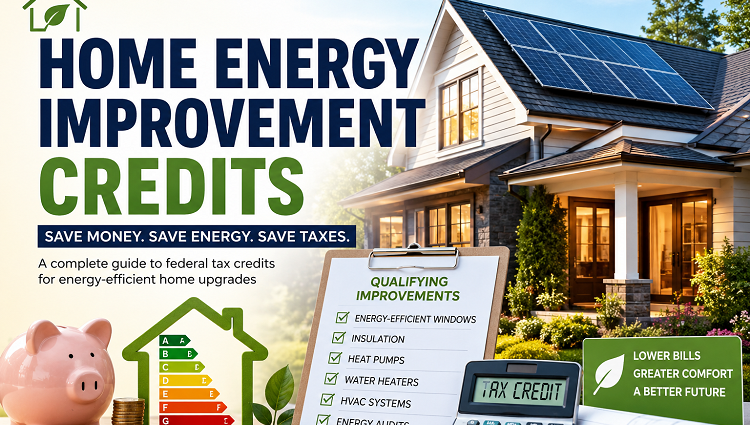
Home energy improvement credits are valuable federal tax incentives designed to encourage homeowners to invest in energy-efficient upgrades. As utility costs continue to rise, many homeowners are looking for ways to reduce monthly energy bills while improving the comfort and efficiency of their homes. Energy-efficient improvements such as insulation upgrades, high-performance windows, heat pumps, energy-efficient doors, and modern heating and cooling systems can significantly lower energy consumption and long-term operating costs.
To make these upgrades more affordable, the federal government offers Home Energy Improvement Credits that allow eligible homeowners to claim a portion of qualifying expenses as a tax credit. Unlike tax deductions, which reduce taxable income, tax credits directly reduce the amount of federal income tax owed, making them one of the most valuable financial incentives available for home improvement projects.
In addition to providing immediate tax savings, energy-efficient upgrades can increase property value, improve indoor comfort, reduce environmental impact, and generate ongoing savings through lower utility bills. Understanding how these credits work can help homeowners make informed decisions and maximize the financial benefits of their energy-efficiency investments. This guide covers everything you need to know about Home Energy Improvement Credits, including eligibility requirements, qualifying improvements, available tax savings, and the process for claiming the credit on your tax return.
What Are Home Energy Improvement Credits?
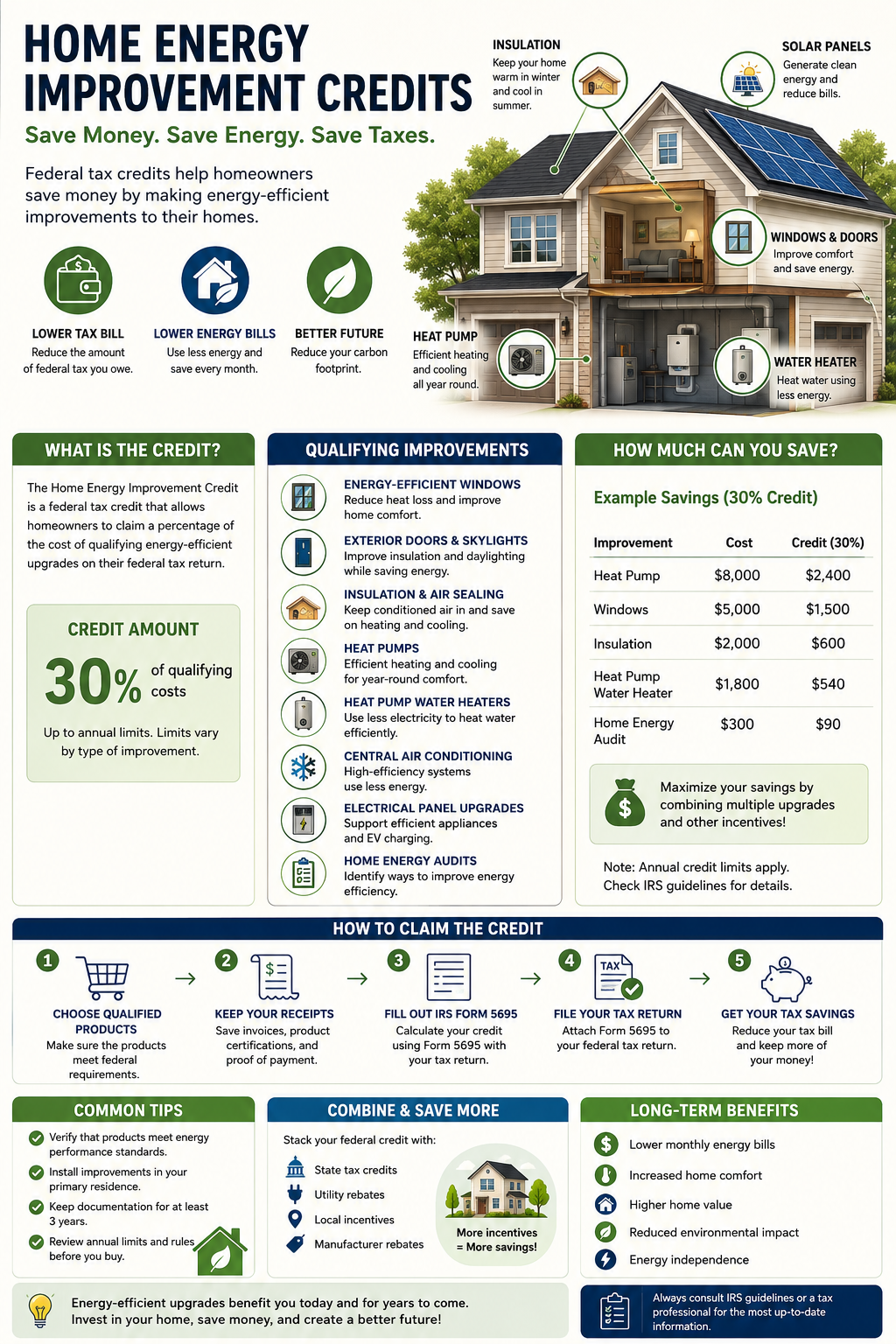
Home Energy Improvement Credits are federal tax incentives that help homeowners reduce the cost of making energy-efficient upgrades to their homes. These credits are designed to encourage investments in improvements that lower energy consumption, reduce utility bills, and make homes more environmentally friendly. Instead of simply reducing taxable income, these credits directly reduce the amount of federal income tax a homeowner owes, making them one of the most valuable incentives available for energy-related home improvements.
The credit applies to a variety of qualifying upgrades, including energy-efficient windows, exterior doors, insulation, heat pumps, heat pump water heaters, central air conditioning systems, electrical panel upgrades, and professional home energy audits. By covering a percentage of eligible expenses, the program helps offset the upfront costs associated with improving a home’s energy performance.
The federal government introduced and expanded these credits to encourage homeowners to adopt modern, energy-saving technologies. Many older homes lose significant amounts of energy due to poor insulation, outdated heating and cooling systems, and inefficient construction materials. By providing tax incentives, policymakers aim to reduce overall energy consumption, lower greenhouse gas emissions, and help families save money over the long term.
One of the biggest advantages of Home Energy Improvement Credits is that homeowners benefit in multiple ways. First, they receive a tax credit that lowers their federal tax liability. Second, energy-efficient upgrades can significantly reduce monthly utility bills. Third, these improvements often increase home comfort by maintaining more consistent indoor temperatures and reducing drafts. Finally, many energy-efficient features can increase property value, making the home more attractive to future buyers.
Why Energy Efficiency Matters for Homeowners
Energy efficiency has become one of the most important considerations for modern homeowners. As utility costs continue to rise and environmental concerns gain greater attention, improving a home’s energy performance offers both financial and practical advantages. While many people initially focus on tax credits and rebates, the long-term benefits of energy efficiency often extend far beyond the immediate incentives.
One of the primary reasons energy efficiency matters is its direct impact on household expenses. Every home requires energy for heating, cooling, lighting, water heating, cooking, and operating appliances. When a home is inefficient, more energy is required to perform these functions, resulting in higher monthly utility bills. Over time, even modest inefficiencies can cost homeowners thousands of dollars.
For example, a poorly insulated attic can allow substantial amounts of heat to escape during winter. Similarly, old windows may permit conditioned air to leak out while allowing outdoor temperatures to influence indoor comfort. In both cases, heating and cooling systems must work harder to compensate for energy losses. This increased workload leads to higher electricity or fuel consumption and greater operating costs.
Understanding the Energy Efficient Home Improvement Credit
The Energy Efficient Home Improvement Credit is one of the most valuable federal incentives available to homeowners seeking to improve residential energy efficiency. Understanding how the credit works is essential for making informed decisions about home improvement projects and maximizing available tax savings.
At its core, the credit is designed to reimburse homeowners for a portion of the cost of qualifying energy-efficient improvements. Rather than functioning as a loan or rebate, the credit reduces federal income tax liability. This means homeowners can lower the amount of tax they owe by claiming eligible expenses on their tax return.
In most cases, qualifying improvements are eligible for a credit equal to 30 percent of eligible costs. This percentage can represent substantial savings, particularly for larger projects involving heating systems, insulation upgrades, or high-efficiency equipment. However, annual limits apply, and different categories of improvements may be subject to different maximum credit amounts.
The credit covers a wide variety of energy-efficient products and systems. Qualifying improvements commonly include insulation materials, air sealing products, energy-efficient exterior windows, exterior doors, skylights, central air conditioning systems, heat pumps, heat pump water heaters, electrical panel upgrades, and professional home energy audits.
One important feature of the Energy Efficient Home Improvement Credit is that homeowners can potentially claim credits over multiple years. Unlike some older programs that imposed lifetime limits, current rules generally allow taxpayers to claim credits annually when making eligible improvements. This creates opportunities for long-term planning and phased home improvement strategies.
Eligibility Requirements
Before planning an energy-efficient home improvement project, homeowners should understand the eligibility requirements associated with the Energy Efficient Home Improvement Credit. Meeting these requirements is essential because purchasing a qualifying product alone does not automatically guarantee eligibility for a tax credit. The property, homeowner, and installed equipment must all satisfy specific criteria established by federal tax regulations.
Homeownership Requirements
One of the most important eligibility requirements is ownership of the property where the improvements are installed. In most situations, the taxpayer claiming the credit must own the home. The federal government created these incentives to encourage property owners to invest in long-term energy efficiency improvements that reduce energy consumption and improve residential building performance.
Renters generally cannot claim the Energy Efficient Home Improvement Credit for upgrades made to a leased property. Even if a tenant pays for certain improvements, ownership requirements typically prevent them from claiming the credit. Homeowners should retain documentation proving ownership and installation of qualifying products.
Primary Residence Requirements
Most improvements eligible for the credit must be installed in a taxpayer’s principal residence located within the United States. A principal residence is generally the home where an individual lives for the majority of the year. This requirement helps ensure that tax incentives are used to improve primary living spaces rather than vacation homes or investment properties.
Because rules may vary depending on the specific improvement, homeowners should carefully review IRS guidance before assuming a second home qualifies. Understanding these distinctions can prevent filing errors and unexpected tax issues later.
Existing Home Requirements
The Energy Efficient Home Improvement Credit generally applies to existing homes rather than newly constructed residences. The purpose of this requirement is to encourage upgrades that improve the efficiency of the current housing stock. Many older homes were built before modern energy-efficiency standards became common, making them ideal candidates for improvement projects.
Existing homes often contain outdated insulation, inefficient windows, aging HVAC systems, and other features that contribute to excessive energy consumption. By targeting these properties, the credit encourages meaningful reductions in residential energy use.
Product Certification Requirements
A common misconception is that any energy-efficient product automatically qualifies for a tax credit. In reality, products must meet specific energy-efficiency standards established by federal regulations. Manufacturers typically provide certification statements verifying compliance with these requirements.
Before purchasing equipment, homeowners should review product specifications and certification documentation carefully. Retaining these records is also important because they may be needed when preparing tax returns or responding to questions regarding eligibility.
Documentation and Recordkeeping
Proper recordkeeping is essential when claiming any federal tax credit. Homeowners should maintain copies of receipts, invoices, contracts, product certifications, and other relevant documents associated with the project.
Keeping organized records not only simplifies tax preparation but also provides evidence supporting the claim if questions arise later. A well-documented project can help avoid unnecessary complications during tax filing.
Qualifying Home Energy Improvements
The Energy Efficient Home Improvement Credit covers a wide variety of energy-saving upgrades. These improvements are designed to reduce residential energy consumption while improving comfort, performance, and sustainability.
Energy-Efficient Windows
Windows play a major role in determining a home’s overall energy efficiency. Older windows often allow significant heat transfer, causing heating and cooling systems to work harder throughout the year. Drafts, poor insulation, and inefficient glass technologies contribute to higher utility bills and reduced indoor comfort.
Modern energy-efficient windows incorporate advanced features such as Low-E coatings, multiple panes of glass, insulated frames, and gas-filled chambers that reduce heat transfer. These technologies help maintain stable indoor temperatures and improve overall efficiency.
Replacing outdated windows can provide several benefits beyond energy savings. Homeowners often notice reduced outside noise, improved indoor comfort, and enhanced curb appeal. In many cases, energy-efficient windows can also increase property value by making a home more attractive to prospective buyers.
Energy-Efficient Exterior Doors
Exterior doors are another important component of a home’s thermal envelope. Older doors may allow air leakage around edges and frames, leading to energy loss and temperature fluctuations.
Modern energy-efficient doors feature improved insulation, weather stripping, and construction materials designed to reduce heat transfer. Installing qualifying doors can improve comfort while helping homeowners lower heating and cooling costs throughout the year.
Skylights
Skylights can provide natural lighting while reducing the need for artificial illumination during daylight hours. Energy-efficient skylights are designed to minimize unwanted heat gain and heat loss while maximizing natural light.
When properly installed, qualifying skylights can improve both aesthetics and efficiency. Homeowners often appreciate the enhanced brightness and openness that skylights bring to living spaces.
Insulation and Air Sealing
Insulation remains one of the most cost-effective energy improvements available. Many homes, particularly older properties, have inadequate insulation levels that allow excessive heat transfer between indoor and outdoor environments.
Adding insulation to attics, walls, crawl spaces, and basements can significantly improve thermal performance. Proper insulation helps maintain comfortable indoor temperatures while reducing heating and cooling costs.
Air sealing is often performed alongside insulation upgrades. Gaps around windows, doors, pipes, electrical outlets, and ductwork can allow conditioned air to escape. Sealing these leaks reduces energy waste and improves overall efficiency.
Heat Pumps
Heat pumps have emerged as one of the most popular energy-efficient technologies available today. Unlike traditional heating systems that generate heat through combustion or electrical resistance, heat pumps transfer heat from one location to another.
This approach allows heat pumps to provide both heating and cooling while using significantly less energy than many conventional systems. Their efficiency makes them particularly attractive for homeowners seeking long-term energy savings.
Heat pumps often qualify for some of the largest available tax credits due to their substantial energy-saving potential.
Heat Pump Water Heaters
Water heating is one of the largest energy expenses in many households. Traditional electric water heaters consume considerable amounts of electricity because they generate heat directly.
Heat pump water heaters operate more efficiently by extracting heat from surrounding air and transferring it to water. This process requires substantially less energy and can result in significant utility savings over time.
Central Air Conditioning Systems
Replacing an older air conditioning system with a modern high-efficiency unit can dramatically reduce electricity consumption during hot weather. New systems often feature advanced compressors, improved refrigerants, and sophisticated controls that enhance performance while reducing energy use.
High-Efficiency Furnaces and Boilers
Certain natural gas, propane, and oil heating systems may qualify when they meet established efficiency requirements. These systems provide improved performance while consuming less fuel, making them attractive options for homeowners seeking to reduce heating costs.
Home Energy Audits
A professional home energy audit evaluates a home’s energy performance and identifies opportunities for improvement. Auditors assess insulation levels, HVAC systems, windows, air leakage, and other factors affecting energy consumption.
The resulting report helps homeowners prioritize upgrades that provide the greatest return on investment.
How Much Can Homeowners Save?
The financial benefits of Home Energy Improvement Credits come from two primary sources: direct tax savings and reduced utility expenses.
Most qualifying improvements are eligible for a credit equal to 30 percent of eligible costs, subject to annual limits. Depending on the type and scope of the project, homeowners may save hundreds or even thousands of dollars through federal tax incentives alone.
For example, a homeowner who spends $4,000 on qualifying insulation improvements may be eligible for a credit worth approximately 30 percent of the cost, subject to applicable limits. Similar savings may apply to qualifying windows, doors, heat pumps, and other upgrades.
How to Claim the Credit
Claiming the Energy Efficient Home Improvement Credit requires proper planning and documentation.
Verify Product Eligibility
Before purchasing any equipment, homeowners should confirm that products meet federal energy-efficiency standards. Reviewing manufacturer certifications can help avoid costly mistakes.
Save All Documentation
Important records include:
- Receipts
- Contractor invoices
- Product specifications
- Manufacturer certifications
- Energy audit reports
These documents should be retained for tax purposes.
Complete IRS Form 5695
Most taxpayers claim the credit using IRS Form 5695. This form calculates eligible expenses and determines the amount of credit available.
Include the Credit on Your Tax Return
After completing Form 5695, transfer the credit amount to the appropriate section of your federal income tax return.
Tax preparation software often simplifies this process by guiding users through each step.
Common Mistakes Homeowners Should Avoid
Purchasing Non-Qualifying Products
One of the most common mistakes involves assuming that every energy-efficient product qualifies for a tax credit. Eligibility requirements can be highly specific, making verification essential before purchase.
Losing Documentation
Failure to retain receipts and certifications can create difficulties during tax filing. Organized recordkeeping helps support claims and reduces the likelihood of errors.
Ignoring Annual Limits
Many homeowners overestimate available credits because they do not understand annual limitations. Reviewing current IRS guidance can help establish realistic expectations.
Claiming Ineligible Expenses
Some costs may not qualify for the credit. Understanding which expenses are eligible helps prevent filing mistakes.
Waiting Until Tax Season
Homeowners who wait until tax season to review requirements may discover that products purchased earlier do not qualify. Researching eligibility before beginning a project is always advisable.
Combining Federal Credits with Other Incentives
One of the most effective ways to maximize savings is by combining federal tax credits with other available incentives.
State Energy Programs
Many states offer additional tax credits, rebates, grants, or low-interest financing programs that support energy-efficient home improvements.
Utility Company Rebates
Utility providers frequently encourage efficiency upgrades through rebate programs. These incentives can significantly reduce upfront project costs.
Local Government Incentives
Cities and counties sometimes provide additional financial assistance for qualifying projects.
Manufacturer Discounts
Manufacturers occasionally offer promotions or seasonal discounts that further reduce equipment costs.
When combined strategically, these incentives can dramatically lower the overall cost of energy-efficient improvements.
Long-Term Benefits of Energy-Efficient Home Improvements
While tax credits provide immediate financial value, the long-term benefits are often even more significant.
Lower Utility Bills
Reduced energy consumption translates directly into lower monthly operating costs. Over time, these savings can exceed the original cost of many improvements.
Improved Comfort
Energy-efficient homes typically experience fewer drafts, more consistent temperatures, and better humidity control.
Increased Property Value
Many buyers actively seek homes with energy-efficient features, making these upgrades attractive investments.
Reduced Maintenance Costs
Modern equipment often operates more reliably and requires fewer repairs than older systems.
Environmental Benefits
Lower energy consumption helps reduce greenhouse gas emissions and supports broader sustainability goals.
Frequently Asked Questions (FAQs)
What is the Home Energy Improvement Credit?
It is a federal tax credit that helps homeowners offset the cost of qualifying energy-efficient home improvements.
How much is the credit worth?
Most qualifying improvements are eligible for a credit equal to 30 percent of eligible expenses, subject to annual limits.
Can I claim the credit every year?
Yes. Homeowners who make qualifying improvements in multiple years may be able to claim credits annually.
Do replacement windows qualify?
Many energy-efficient replacement windows qualify if they meet federal standards.
Are heat pumps eligible?
Yes. Qualifying heat pumps often qualify for some of the highest available credits.
Can insulation improvements qualify?
Many insulation and air-sealing improvements are eligible.
Do I need receipts?
Yes. Maintaining documentation is essential when claiming the credit.
What form is used to claim the credit?
Most taxpayers use IRS Form 5695.
Can I combine federal credits with utility rebates?
In many cases, yes.
Are home energy audits eligible?
Certain professional energy audits may qualify.
Disclaimer
Program Clarity is an independent informational website and is not affiliated with any government agency. This article is for educational purposes only. Program rules and availability may change. Always verify details with official authorities.