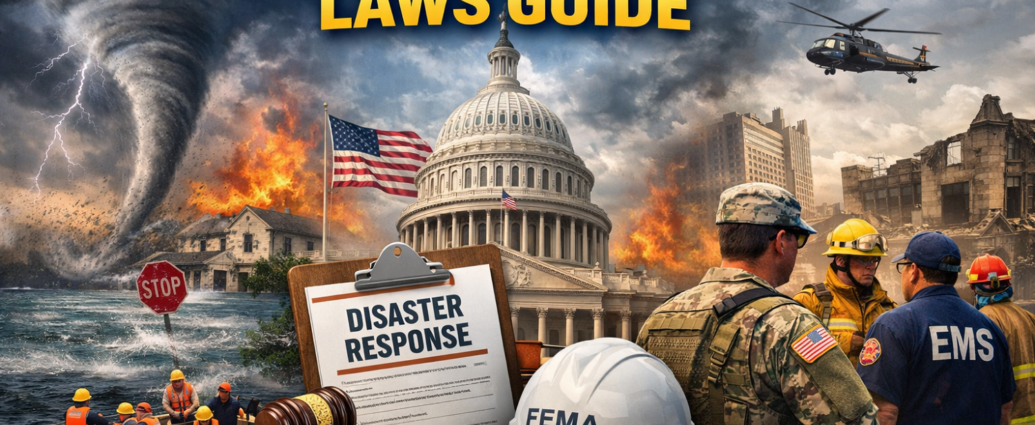
Natural disasters and large-scale emergencies can strike any country without warning. Floods, earthquakes, hurricanes, pandemics, and large wildfires have the potential to damage communities, destroy infrastructure, and threaten the safety of millions of people. In such situations, quick and organized government action becomes essential. To make this possible, many countries have developed federal disaster laws. These laws create a legal framework that allows national governments to respond effectively when disasters occur, coordinate resources, provide financial assistance, and protect affected citizens.
Federal disaster laws are not only designed for emergency response. They also play a critical role in disaster preparedness, mitigation, recovery, and long-term rebuilding. These laws ensure that national agencies, regional authorities, and local governments work together in a coordinated way. Without these laws, disaster response could become disorganized, slow, and ineffective.
Understanding Federal Disaster Laws
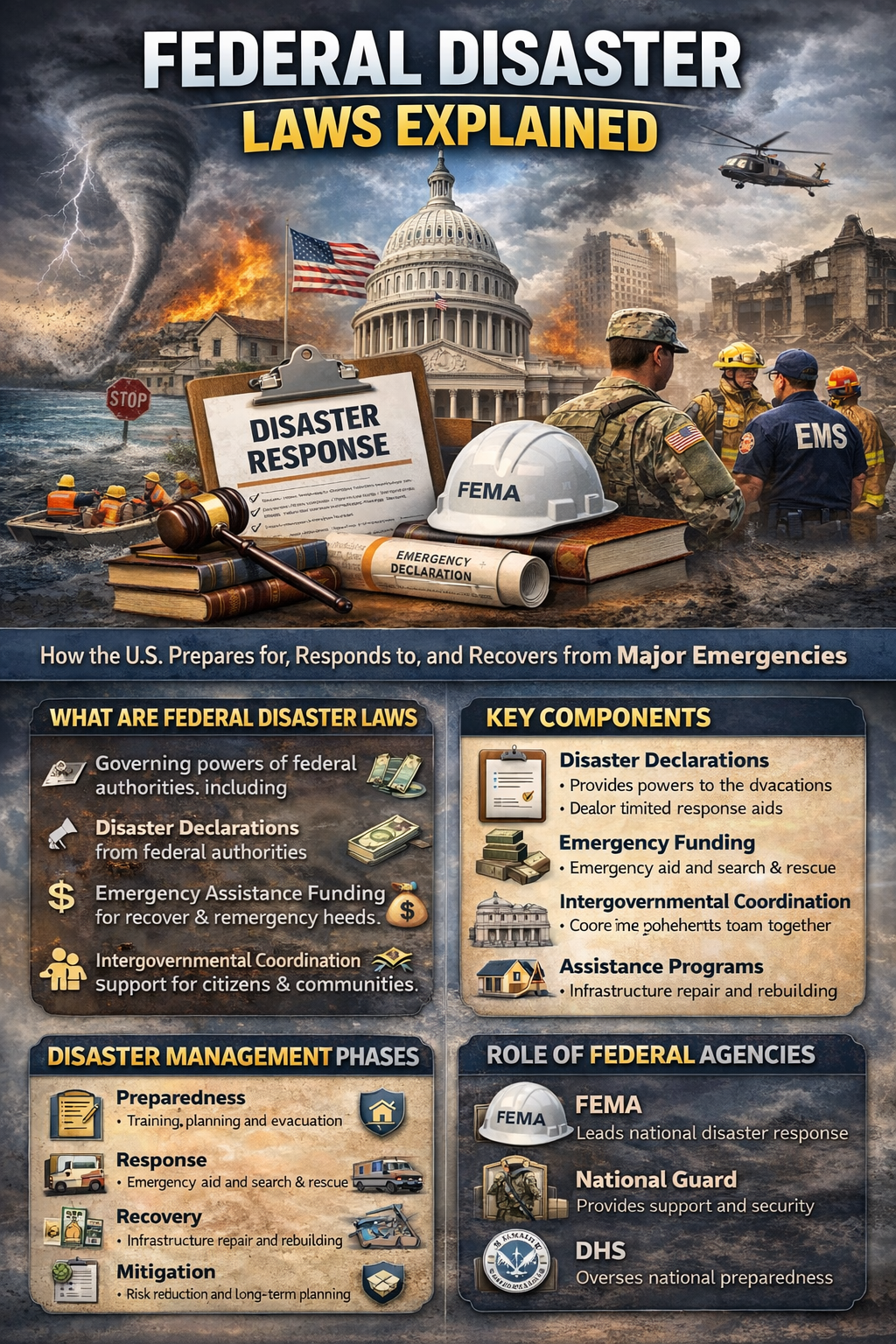
Federal disaster laws refer to national-level legislation that governs how a country prepares for, responds to, and recovers from disasters. These laws define the powers of the federal government during emergencies and establish procedures for declaring disasters, distributing aid, and coordinating relief efforts.
In many countries, disasters are first handled at the local or regional level. However, when the scale of the disaster becomes too large for local authorities to manage, the federal government can step in. Federal disaster laws provide the legal authority for this intervention.
The primary purpose of these laws is to ensure that disaster response systems operate quickly and efficiently. They establish clear rules for decision-making and allow governments to mobilize resources such as emergency funding, rescue teams, medical support, and infrastructure repair.
The Legal Foundations of Disaster Management
Federal disaster laws are usually built upon broader legal principles related to public safety, emergency management, and national security. Governments have a responsibility to protect the lives and property of their citizens, and disaster legislation helps fulfill this responsibility.
The legal framework for disaster management generally includes the following key elements:
Emergency powers for government authorities
Clear definitions of what constitutes a disaster
Procedures for declaring national emergencies
Rules for funding disaster response
Coordination mechanisms between federal, state, and local agencies
These legal elements ensure that emergency actions are conducted lawfully while maintaining accountability and transparency.
Key Objectives of Federal Disaster Laws
Federal disaster laws serve several important objectives that guide how governments handle emergencies.
Protecting Human Life
The most important goal of disaster legislation is the protection of human life. Laws ensure that emergency response teams can be deployed quickly and that resources such as food, shelter, and medical care are made available to affected populations.
Coordinating Government Agencies
Large disasters often require the involvement of multiple government agencies. Federal disaster laws establish a coordinated system that allows agencies responsible for transportation, health, defense, housing, and infrastructure to work together efficiently.
Providing Financial Assistance
Disasters can cause enormous economic damage. Federal disaster laws allow governments to provide financial assistance to individuals, businesses, and local governments that have suffered losses. This support helps communities recover more quickly.
Strengthening Preparedness and Mitigation
Modern disaster legislation does not focus only on response. It also emphasizes prevention and preparedness. Governments invest in early warning systems, infrastructure protection, and public education to reduce disaster risks.
Supporting Recovery and Reconstruction
After the immediate emergency has passed, affected communities must rebuild homes, roads, hospitals, and businesses. Federal disaster laws provide legal mechanisms for reconstruction programs and long-term recovery initiatives.
Major Components of Federal Disaster Legislation
Federal disaster laws usually include several key components that guide disaster management at the national level.
Disaster Declarations
A disaster declaration is an official statement by the federal government recognizing that a severe emergency has occurred. This declaration unlocks access to national resources and funding.
Once a disaster is declared, federal agencies can deploy emergency teams, provide financial assistance, and coordinate recovery efforts.
Emergency Funding
Disaster response requires significant financial resources. Federal disaster laws typically create special funds that can be used immediately during emergencies.
These funds support activities such as:
Search and rescue operations
Temporary housing programs
Infrastructure repair
Medical assistance
Food distribution
Emergency funding allows governments to act quickly without waiting for lengthy budget approvals.
Intergovernmental Coordination
Disasters often affect multiple regions and require cooperation between different levels of government. Federal disaster laws define the roles of federal, state, and local authorities.
Local governments usually manage the first response, while federal agencies provide support when the disaster becomes too large to handle locally.
Public Assistance Programs
Federal disaster laws often include programs designed to help communities rebuild public infrastructure. Schools, hospitals, roads, and utilities may receive funding for repair or reconstruction.
Individual Assistance Programs
Many disaster laws also include programs that support individuals directly. These programs may provide temporary housing, financial grants, or loans to help families recover from losses.
Disaster Preparedness and Risk Reduction
One of the most important aspects of modern federal disaster laws is the emphasis on disaster risk reduction. Instead of focusing only on emergency response, governments now invest heavily in preparedness and prevention strategies.
Preparedness programs may include:
Building earthquake-resistant infrastructure
Improving flood protection systems
Creating emergency evacuation plans
Conducting disaster response training exercises
Developing early warning systems
These strategies can significantly reduce the human and economic impacts of disasters.
The Role of Federal Agencies in Disaster Management
Federal disaster laws often assign responsibilities to specialized government agencies that focus on emergency management.
These agencies are responsible for coordinating disaster response, distributing aid, and supporting recovery efforts.
Common responsibilities include:
Managing emergency operations centers
Deploying search and rescue teams
Coordinating humanitarian assistance
Conducting damage assessments
Supporting rebuilding programs
In some countries, national disaster agencies also work closely with military forces, public health departments, and humanitarian organizations.
Federal Disaster Laws and Climate Change
Climate change has significantly increased the frequency and severity of certain natural disasters, including floods, storms, wildfires, and heatwaves. As a result, federal disaster laws are evolving to address new environmental challenges.
Governments are now integrating climate resilience strategies into disaster legislation. These strategies aim to strengthen infrastructure, protect vulnerable communities, and reduce the long-term risks associated with climate-related disasters.
For example, new policies may require buildings in flood-prone areas to follow stricter construction standards. Governments may also invest in coastal protection systems to defend against rising sea levels.
Challenges in Implementing Federal Disaster Laws
Although federal disaster laws provide a strong legal framework, several challenges can arise during their implementation.
Bureaucratic Delays
In some cases, complex administrative procedures may slow down disaster response efforts. Governments must balance efficiency with accountability when distributing emergency funds.
Resource Limitations
Large disasters can overwhelm available resources, especially if multiple emergencies occur at the same time.
Coordination Difficulties
Coordinating multiple government agencies can be challenging during large-scale emergencies. Clear communication and leadership are essential to ensure effective disaster management.
Inequality in Disaster Impact
Disasters often affect vulnerable populations more severely. Federal disaster laws must address issues such as poverty, housing inequality, and access to resources to ensure fair recovery support.
Examples of Federal Disaster Laws
Many countries have developed comprehensive disaster legislation that guides national emergency response.
One of the most well-known examples is the United States Stafford Act, which provides the legal authority for federal disaster assistance programs.
Other countries have similar laws that regulate disaster management and emergency response systems.
These laws typically include provisions for:
Disaster declarations
Emergency funding
Coordination between government agencies
Support for affected communities
Studying these legal frameworks helps policymakers improve disaster management systems worldwide.
The Future of Federal Disaster Legislation
The future of disaster legislation will likely focus on increased resilience, improved technology, and stronger international cooperation.
Advances in technology are transforming disaster management. Satellite monitoring, artificial intelligence, and advanced weather forecasting systems can help governments predict disasters more accurately.
Federal disaster laws will continue evolving to incorporate these technologies and improve national preparedness.
International cooperation will also become increasingly important. Many disasters, such as pandemics and climate-related events, cross national borders and require coordinated global responses.
Frequently Asked Questions (FAQs)
What are federal disaster laws?
Federal disaster laws are national-level regulations that define how governments prepare for, respond to, and recover from disasters. They provide legal authority for emergency actions and disaster assistance programs.
Why are disaster laws important?
Disaster laws ensure that governments can respond quickly and effectively during emergencies. They establish clear procedures for coordination, funding, and resource allocation.
Who is responsible for disaster response?
Disaster response usually begins at the local level, but federal governments provide support when disasters exceed local capabilities.
Do disaster laws provide financial assistance to citizens?
Yes. Many federal disaster laws include programs that provide financial aid, housing support, and recovery assistance to individuals and businesses affected by disasters.
How do disaster laws help prevent disasters?
Modern disaster legislation emphasizes preparedness and risk reduction through infrastructure improvements, early warning systems, and public education programs.
Reference Links
https://www.fema.gov/disaster/stafford-act
https://www.ifrc.org/disaster-law
https://www.unisdr.org
https://www.worldbank.org/en/topic/disasterriskmanagement
https://www.undrr.org/terminology/disaster-risk-reduction
Disclaimer
Program Clarity is an independent informational website and is not affiliated with any government agency. This article is for educational purposes only. Program rules and availability may change. Always verify details with official authorities.