
Starting a side business in the United States has become one of the most popular ways to build extra income and financial stability. Millions of people now operate small businesses alongside full-time jobs, college studies, or family responsibilities. Some people launch online stores, while others provide freelance services, digital marketing, photography, coaching, or consulting. Many successful companies that exist today originally began as small side hustles operated from bedrooms, garages, or kitchen tables.
The growth of remote work and digital platforms has made starting a side business easier than ever before. Today, almost anyone can create an online brand, sell products through eCommerce platforms, offer services to clients worldwide, or generate income through content creation and freelancing. However, while starting a business has become easier, properly registering and managing that business legally is still one of the most important responsibilities for entrepreneurs.
Many beginners focus entirely on making money and attracting customers while ignoring the legal side of operating a business. At first, the business may seem too small to require formal registration. Some people assume they only need to register once they start earning large amounts of income. In reality, registration becomes important much earlier than many entrepreneurs realize.
Proper business registration helps separate personal and business finances, improves legal protection, increases professionalism, supports tax compliance, and creates a stronger foundation for future growth. Whether your side business is online or offline, understanding how registration works can prevent expensive legal and financial problems later.
Importantance
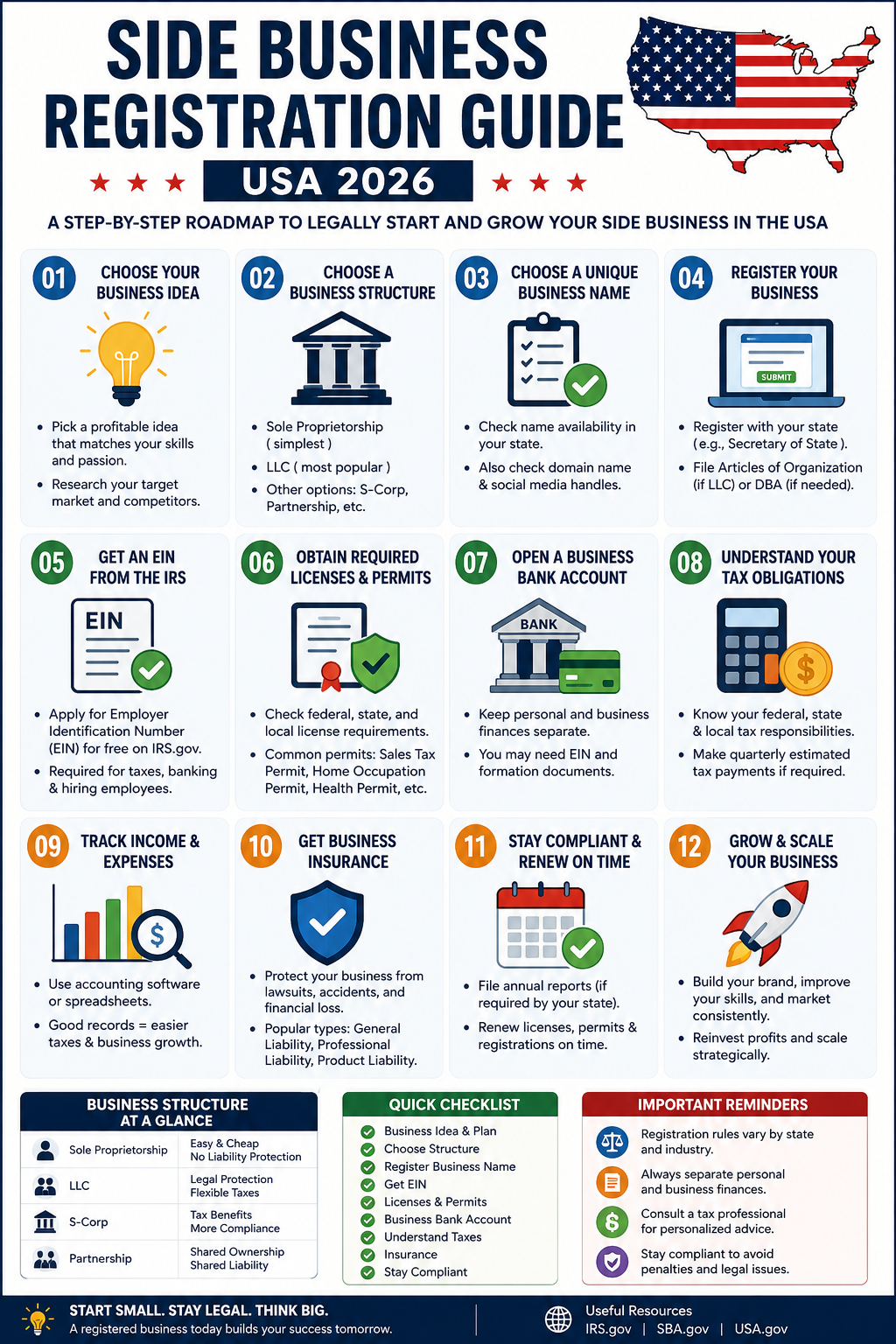
Many side businesses begin casually. Someone may start offering graphic design services through social media, selling handmade products online, or creating content on YouTube without thinking about legal paperwork. In the beginning, the income may be small and inconsistent, which causes many entrepreneurs to delay registration.
However, as soon as a business starts generating regular income, registration becomes increasingly important. A registered business creates legal separation between personal activities and business operations. This separation can help protect personal finances and assets if legal disputes or financial problems occur.
Without proper registration, business liabilities may become personal liabilities. If customers file lawsuits, contracts create disputes, or tax issues arise, the owner’s personal bank accounts, savings, or property could potentially be affected. This is one of the biggest reasons many entrepreneurs eventually move beyond informal business operations.
Registration also improves business credibility. Customers generally trust registered businesses more than unregistered side hustles. Having an official business name, business bank account, and legal documentation creates a more professional image that can help attract clients and opportunities.
Tax organization is another major reason registration matters. Proper registration makes bookkeeping easier and allows entrepreneurs to legally claim business deductions. It also helps businesses remain compliant with IRS regulations and state tax laws.
As a side business grows, registration becomes even more valuable because it simplifies banking, financing, payment processing, partnerships, and long-term expansion.
What Is Considered a Side Business?
A side business is any activity that generates income outside of a person’s main job or primary source of income. The business may operate part-time, seasonally, online, or locally. Some side businesses only require a few hours each week, while others eventually grow into full-time careers.
There are many different types of side businesses operating across the United States today. Some entrepreneurs provide services, while others focus on selling products or digital content.
Common examples include:
- Freelance writing
- Graphic design
- Blogging
- Affiliate marketing
- Online tutoring
- Photography
- Social media management
- Digital marketing
- Print-on-demand stores
- Shopify businesses
- Etsy shops
- YouTube channels
- Consulting
- Fitness coaching
- Pet care services
- Home baking businesses
- Delivery services
Even if the business only earns part-time income, legal registration requirements may still apply depending on the type of business and local laws.
Choosing the Right Business Structure
One of the most important decisions entrepreneurs make is selecting a business structure. The structure affects taxes, liability, paperwork, legal protection, and long-term growth opportunities.
The most common business structures for side hustles are sole proprietorships and LLCs.
Sole Proprietorship
A sole proprietorship is the simplest and most common business structure in the United States. In this setup, the owner and the business are legally considered the same entity. It is easy to start, requires minimal paperwork, and works well for freelancers and small side hustles. However, the owner is personally responsible for all business debts and liabilities. Many entrepreneurs begin as sole proprietors before upgrading to an LLC later.
For example, if a client files a legal claim against the business, personal savings or property could potentially be affected because there is no legal separation between the owner and the business.
LLC vs Sole Proprietorship for Side Hustles
Choosing between an LLC and a sole proprietorship is one of the biggest decisions for new entrepreneurs. Sole proprietorships are easier and cheaper to start, while LLCs provide stronger legal protection and a more professional business structure. Because taxes, liability protection, and long-term goals all play major roles in this decision, this topic is usually covered separately in a complete detailed guide.
Limited Liability Company (LLC)
An LLC, or Limited Liability Company, is one of the most popular business structures for side businesses in the United States.
An LLC creates a separate legal entity for the business. This separation helps protect personal assets from business liabilities. Many entrepreneurs eventually switch from sole proprietorships to LLCs once their side business starts generating stable income.
LLCs are especially popular among online businesses, freelancers, consultants, and eCommerce entrepreneurs because they combine legal protection with relatively flexible management requirements.
LLC Registration Guide USA
The LLC registration process usually includes selecting a business name, filing formation documents with the state, choosing a registered agent, and paying state filing fees. Because every state has slightly different requirements and costs, the complete LLC setup process is usually explained separately in a dedicated registration guide.
Choosing a Business Name
A business name is one of the most important branding decisions an entrepreneur makes. The name becomes part of the company’s identity and can strongly influence customer perception.
A good business name should be:
- Easy to remember
- Simple to pronounce
- Relevant to the business
- Professional sounding
- Unique within the state
Before choosing a name, entrepreneurs should check state business databases, domain name availability, and social media usernames. Trademark conflicts should also be avoided because legal disputes over names can become expensive later.
Some business owners also register DBAs, which allow them to operate under business names different from their personal legal names.
Understanding EIN Registration
An Employer Identification Number, commonly called an EIN, is issued by the IRS and works similarly to a Social Security number for businesses.
Many businesses need an EIN for:
- Opening business bank accounts
- Hiring employees
- Filing business taxes
- Working with payment processors
- Registering LLCs
Even some sole proprietors apply for EINs to avoid using personal Social Security numbers for business activities.
EIN Registration Guide USA
The EIN application process is generally free through the IRS website. However, entrepreneurs often have questions regarding eligibility, filing requirements, and business structures, which is why EIN registration is usually discussed separately in a full detailed article.
Business Licenses and Permits
Business registration does not automatically complete all legal requirements. Many side businesses also need licenses or permits depending on industry and location.
Examples include:
- Food permits
- Sales tax permits
- Contractor licenses
- Professional certifications
- Home occupation permits
- Health department approvals
Requirements vary significantly between states, counties, and cities. A business operating legally in one area may require entirely different permits somewhere else.
Ignoring licensing requirements can result in fines, penalties, or forced business closures.
Online Businesses and Legal Registration
Online businesses have become extremely common because they allow entrepreneurs to reach customers nationwide or globally from home.
Examples include:
- Etsy stores
- Shopify businesses
- Amazon FBA stores
- Affiliate marketing websites
- Freelance service platforms
- Online coaching businesses
Many people mistakenly believe online businesses do not require legal registration. However, online businesses often face the same tax and compliance obligations as physical businesses.
Online Business Registration Guide USA
Online business registration may involve LLC formation, DBA registration, sales tax permits, and platform compliance requirements. Because eCommerce laws can become complex, especially when selling across multiple states, this topic is often covered in a separate detailed guide.
Opening a Business Bank Account
Separating business and personal finances is extremely important for organization and legal protection.
A dedicated business bank account helps:
- Simplify bookkeeping
- Improve tax preparation
- Increase professionalism
- Support liability protection
Most banks require:
- Business registration documents
- EIN
- Government-issued ID
- DBA certificates if applicable
Using personal accounts for business activities is one of the most common mistakes new entrepreneurs make.
Understanding Small Business Taxes
Taxes are one of the most important responsibilities for side business owners. Many beginners underestimate how quickly tax obligations can become complicated.
Depending on the business structure and state, side businesses may owe:
- Federal income tax
- State income tax
- Self-employment tax
- Sales tax
Failing to prepare for taxes properly can create serious financial problems later.
Small Business Taxes Guide USA
Business taxes involve deductions, quarterly estimated payments, IRS compliance, and financial reporting. Since tax rules can become very detailed, small business taxation is often explained separately in a complete in-depth guide.
Self Employment Tax
Self-employment tax covers Social Security and Medicare contributions for independent business owners.
Traditional employees split payroll taxes with employers, but self-employed individuals usually pay the full amount themselves.
This often surprises freelancers and side hustlers during their first tax filing season.
Tax Deductions for Side Businesses
One advantage of operating a registered business is the ability to claim legitimate business deductions.
Common deductions may include:
- Home office expenses
- Website hosting
- Internet bills
- Advertising costs
- Business software
- Equipment purchases
- Educational courses
- Office supplies
Accurate bookkeeping is extremely important for supporting deductions legally.
Side Hustle Tax Deductions Guide USA
Tax deductions can significantly reduce taxable income for freelancers and entrepreneurs. Because deduction rules involve detailed IRS guidelines and documentation requirements, this subject is usually explained in a separate dedicated article.
Home Based Business Rules
Many side businesses operate from home offices, garages, or spare rooms. However, local zoning laws and homeowners associations may restrict:
- Customer traffic
- Noise
- Parking
- Inventory storage
- Signage
Entrepreneurs should review local rules before expanding home-based operations.
Business Insurance
Insurance helps protect businesses against financial losses and lawsuits.
Depending on the business type, useful coverage may include:
- General liability insurance
- Professional liability insurance
- Product liability insurance
- Commercial auto insurance
Insurance needs vary based on services, products, and business activities.
Common Mistakes New Entrepreneurs Make
Many side business owners make avoidable mistakes during the early stages of business growth.
One major mistake is delaying registration for too long. Some entrepreneurs wait until they are already earning significant income before addressing legal requirements.
Another common problem is poor bookkeeping. Failing to track income and expenses properly creates tax complications and financial confusion.
Ignoring licenses and permits is another risky mistake. Some entrepreneurs incorrectly assume online businesses do not require legal compliance.
Mixing personal and business finances also creates accounting problems and weakens liability protection.
FAQs
Do I need to register a small side business?
In many cases, yes. Requirements depend on the business type and local laws.
Is an LLC necessary for a side business?
Not always, but LLCs provide stronger liability protection and professionalism.
Can online businesses operate without registration?
Some very small businesses begin informally, but many online businesses still require licenses or tax registration.
What is an EIN used for?
An EIN helps businesses handle taxes, banking, and employee-related requirements.
Are side business earnings taxable?
Yes, side business income is generally taxable in the United States.
Reference Links
- IRS Small Business Resources
- U.S. Small Business Administration (SBA)
- USA.gov Business Guide
- IRS EIN Application
- SBA Business Registration Guide
Disclaimer
Program Clarity is an independent informational website and is not affiliated with any government agency. This article is for educational purposes only. Program rules and availability may change. Always verify details with official authorities.