
Starting an online business in the United States is one of the most exciting opportunities available today. The internet has created endless possibilities for entrepreneurs who want to sell products, offer services, create digital brands, or build scalable businesses from anywhere in the world. Whether you want to launch an eCommerce store, become a freelancer, sell digital products, run an online agency, or create a content-based business, proper registration is one of the most important steps you can take.
Many beginners focus only on building a website or creating social media pages, but legal registration forms the real foundation of a successful online business. Registering your business properly helps protect your personal finances, creates professional credibility, simplifies taxes, and allows long-term growth. It also helps avoid future legal problems that can arise when businesses operate informally.
The good news is that online business registration in the USA is easier than most people think. Once you understand the process step by step, it becomes much more manageable. From choosing the right business structure to applying for an EIN and handling taxes, every stage plays an important role in building a secure and scalable online company.
Understanding Online Business Registration
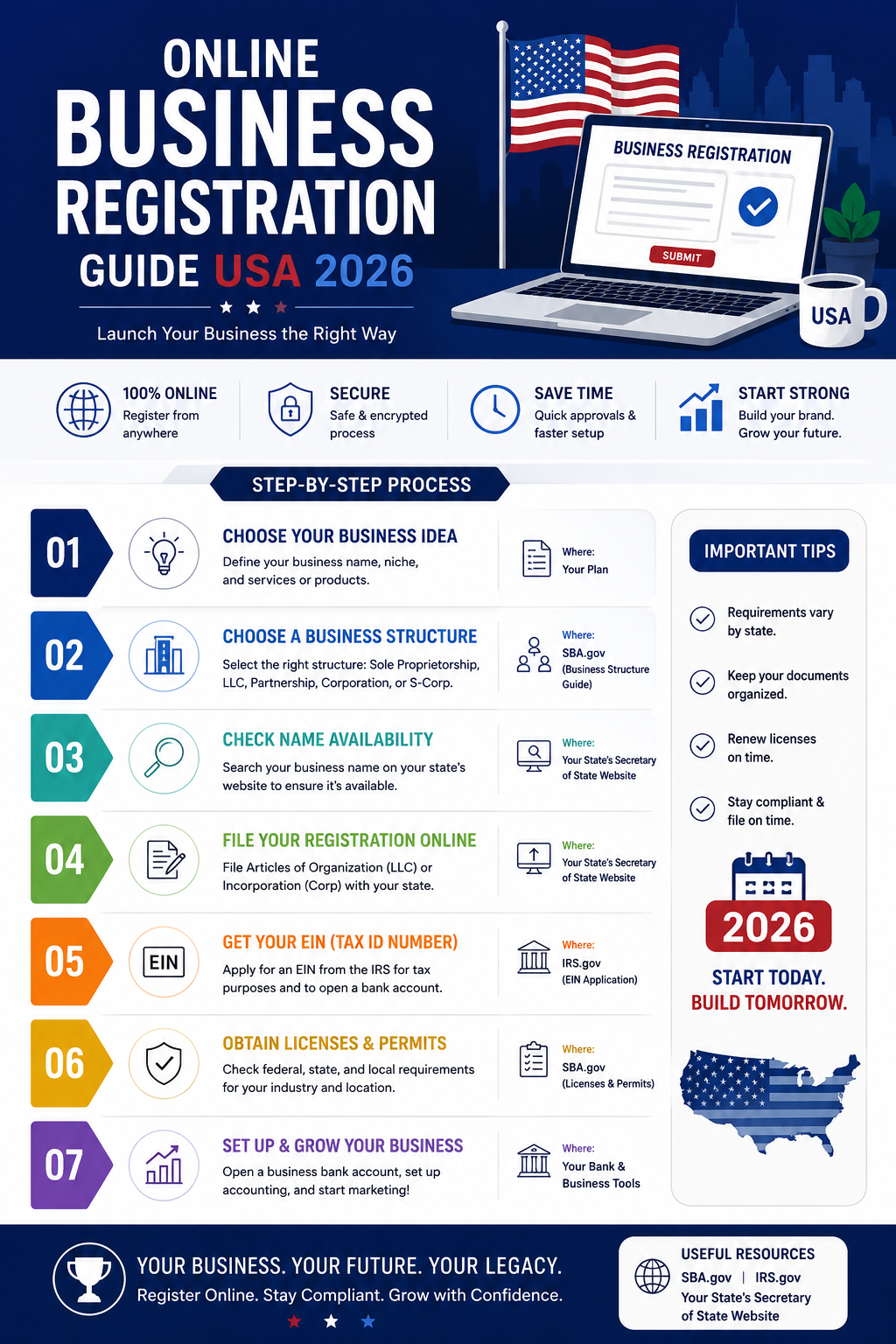
Online business registration means legally creating and recognizing your business under federal, state, or local government rules. Even though your business operates on the internet, it still needs to follow business regulations just like traditional companies.
A properly registered business allows you to legally conduct commercial activities, enter contracts, receive payments professionally, and build trust with customers. Many payment processors, banks, and suppliers also require official registration before they work with your business.
Without proper registration, business owners may face issues such as:
- Personal liability for business debts
- Difficulty opening business bank accounts
- Problems with taxes
- Limited access to payment gateways
- Legal complications
- Reduced customer trust
Registering your online business creates a strong legal and financial foundation that supports future growth.
Why Online Businesses Are Growing Rapidly in the USA
The online business industry has expanded dramatically over the past decade. Technology, remote work opportunities, social media marketing, and digital payment systems have made online entrepreneurship accessible to millions of people.
Today, online businesses include far more than simple online stores. Entrepreneurs now operate digital service agencies, subscription businesses, educational platforms, affiliate websites, mobile applications, and remote consulting firms entirely online.
One major reason for this growth is flexibility. Online businesses can often be started with lower costs compared to traditional physical businesses. Many entrepreneurs begin from home without renting office space or hiring large teams.
Another major advantage is scalability. A successful online business can reach customers across multiple states or even worldwide without opening physical locations.
Because of these benefits, proper registration has become increasingly important as competition and regulations continue to grow.
Types of Online Businesses in the USA
eCommerce Businesses
eCommerce stores sell physical or digital products online. These businesses commonly operate through platforms like Shopify, Amazon, Etsy, or WooCommerce.
Examples include:
- Clothing stores
- Electronics stores
- Handmade products
- Print-on-demand businesses
- Dropshipping stores
These businesses may require sales tax registration depending on sales volume and states served.
Freelancing Businesses
Freelancers offer personal services online. Many start as sole proprietors but later register LLCs for liability protection.
Common freelancing services include:
- Graphic design
- Web development
- Content writing
- Digital marketing
- Video editing
- SEO services
Freelancers often operate remotely while serving clients globally.
Digital Product Businesses
Digital product businesses sell downloadable or online products.
Examples include:
- Online courses
- eBooks
- Templates
- Software
- Music
- Photography presets
These businesses usually have lower operational costs because there is no physical inventory.
Affiliate Marketing Businesses
Affiliate marketers earn commissions by promoting products or services through websites, blogs, YouTube channels, or social media platforms.
While affiliate marketing may start casually, successful affiliate businesses often benefit from formal registration for tax and financial management purposes.
Online Coaching and Consulting
Online consultants and coaches provide professional guidance through digital platforms.
Popular industries include:
- Fitness coaching
- Business consulting
- Career coaching
- Financial consulting
- Educational tutoring
As revenue increases, many consultants register LLCs for professionalism and liability protection.
Choosing the Right Business Structure
Your business structure affects taxes, legal liability, paperwork requirements, and future business flexibility. Selecting the right structure is one of the most important decisions when registering an online business.
Sole Proprietorship
A sole proprietorship is the simplest and most common business structure for beginners.
In this structure, the business and owner are legally considered the same entity. This means the owner personally receives all profits and is personally responsible for debts and liabilities.
Many freelancers and side hustlers begin as sole proprietors because setup requirements are minimal.
Advantages of Sole Proprietorship
A sole proprietorship is easy and inexpensive to start. In many states, formal registration may not even be required unless operating under a different business name.
Other benefits include:
- Full control over business decisions
- Simple tax filing
- Minimal paperwork
- Low startup costs
Because income is reported directly on personal tax returns, accounting is usually simpler compared to corporations.
Disadvantages of Sole Proprietorship
The biggest disadvantage is unlimited personal liability. If the business faces lawsuits or debts, the owner’s personal assets may be at risk.
Other disadvantages include:
- Harder to raise funding
- Less professional credibility
- No legal separation between owner and business
As businesses grow, many owners transition from sole proprietorships to LLCs.
Limited Liability Company (LLC)
A Limited Liability Company (LLC) is one of the most popular business structures in the USA for small and online businesses. It provides legal protection by separating personal assets from business liabilities. This means the owner’s personal savings and property are usually protected if the business faces debt or legal issues. LLCs are also flexible when it comes to taxes and management structure. Many entrepreneurs choose LLCs because they are easier to manage than corporations while still offering professional credibility. LLCs are commonly used for eCommerce stores, freelancing businesses, digital agencies, and online services.
Corporation Structure
Corporations are more formal business entities designed for larger companies or startups seeking investors.
Corporations are legally separate from owners and can continue existing even if ownership changes.
C Corporation
A C Corporation is taxed independently from its owners.
Large companies often use this structure because it supports:
- Investor funding
- Stock issuance
- Unlimited shareholders
However, C Corporations may face double taxation because profits are taxed at both corporate and shareholder levels.
S Corporation
An S Corporation allows profits and losses to pass through directly to owners’ personal tax returns.
Many small businesses choose S Corporation tax treatment to reduce self-employment taxes.
However, S Corporations have stricter rules regarding:
- Shareholder limits
- Ownership eligibility
- Corporate formalities
Partnership Structure
Partnerships involve two or more owners sharing business responsibilities and profits.
Common partnership types include:
- General Partnership
- Limited Partnership
- Limited Liability Partnership
Partnership agreements should clearly define ownership percentages, responsibilities, and profit distribution to avoid future conflicts.
How to Choose the Best Business Structure
Choosing the right structure depends on several factors.
These include:
- Business size
- Liability risk
- Tax goals
- Growth plans
- Ownership structure
For small online businesses, LLCs often provide the best combination of protection and simplicity.
However, each business is unique, so consulting legal or tax professionals may be beneficial.
Choosing a Business Name
Your business name is one of the most important branding decisions you will make.
A strong business name helps customers remember your company and creates a professional image.
The name should ideally be:
- Easy to pronounce
- Easy to spell
- Memorable
- Relevant to your niche
- Available as a domain name
Before registering a name, search state databases and trademark records to avoid conflicts.
Understanding DBA Registration
A DBA stands for “Doing Business As.”
If your business operates under a different name than the legal owner’s name, a DBA may be required.
Example
- Legal owner: Michael Johnson
- Brand name: Elite Digital Media
In this case, DBA registration may be necessary depending on state laws.
DBAs do not provide liability protection but allow businesses to operate under brand names legally.
Registering an LLC in the USA
Registering an LLC in the USA is a simple process that helps legally establish your business. The first step is choosing a unique business name that follows your state’s rules. After that, you file formation documents, usually called Articles of Organization, with the state government. Most LLC owners also choose a registered agent to receive official legal documents. Once the LLC is approved, many businesses apply for an EIN from the IRS for taxes and banking purposes. Creating an LLC helps protect personal assets and gives online businesses a more professional and trustworthy image.
Opening a Business Bank Account
One of the biggest mistakes online entrepreneurs make is mixing personal and business finances.
Separate accounts help maintain:
- Legal protection
- Accurate bookkeeping
- Professional financial management
Banks typically require:
- EIN
- Formation documents
- Personal identification
Using separate business accounts also simplifies taxes significantly.
Understanding Online Business Taxes
Taxes are one of the most important aspects of running an online business.
Different business structures have different tax rules, and online businesses may face federal, state, and local tax obligations.
Federal Income Taxes
Business income is generally taxable at the federal level.
Tax filing methods depend on structure:
- Sole proprietorships report business income on personal tax returns
- Partnerships file informational returns
- Corporations file separate corporate tax returns
Self-Employment Taxes
Freelancers and many small business owners pay self-employment taxes covering:
- Social Security
- Medicare
These taxes apply in addition to income taxes.
Sales Tax for Online Businesses
Sales tax compliance has become increasingly important for eCommerce businesses.
Many states now require online sellers to collect sales tax if they exceed certain sales thresholds. This is known as economic nexus.
Businesses selling nationwide should carefully monitor state tax obligations.
Business Licenses and Permits
Even online businesses may require licenses or permits.
Requirements vary depending on:
- Industry
- State
- City
- Business activity
Possible licenses include:
- Home occupation permits
- Sales tax permits
- Professional licenses
- Health permits
Always research local requirements carefully.
Building a Professional Website
A professional website builds trust and credibility.
Important website elements include:
- Secure hosting
- Mobile responsiveness
- Professional design
- Contact information
- Privacy policy
- Terms and conditions
For eCommerce businesses, secure checkout systems are especially important.
Protecting Your Online Business
Legal protection becomes increasingly important as businesses grow.
Trademark Protection
A trademark protects your brand identity.
You may trademark:
- Business names
- Logos
- Slogans
Trademark protection helps prevent competitors from copying your brand.
Copyright Protection
Copyright applies to original creative content such as:
- Blog posts
- Videos
- Images
- Online courses
- Software
Protecting intellectual property is critical for digital businesses.
Cybersecurity and Data Protection
Online businesses handle customer data regularly.
Important security practices include:
- Secure passwords
- SSL certificates
- Secure payment systems
- Data backups
- Privacy compliance
Cybersecurity failures can damage both finances and reputation.
Accounting and Financial Management
Strong accounting systems help businesses stay profitable and compliant.
Important financial tasks include:
- Tracking expenses
- Managing invoices
- Monitoring profits
- Preparing taxes
- Maintaining receipts
Accounting software can automate much of this work.
Hiring Employees or Contractors
Growing businesses often need additional support.
Employees and independent contractors have different legal and tax requirements.
Improper classification may create penalties, so businesses should understand labor regulations carefully.
Common Mistakes New Online Business Owners Make
Many entrepreneurs make avoidable mistakes during registration and growth.
Common problems include:
- Ignoring taxes
- Mixing finances
- Operating without contracts
- Failing to maintain compliance
- Choosing the wrong structure
- Not protecting intellectual property
Avoiding these mistakes can save significant money and stress later.
Annual Compliance Requirements
Business registration is not a one-time process.
Many states require ongoing filings such as:
- Annual reports
- Franchise taxes
- License renewals
Missing deadlines can result in penalties or business dissolution.
Cost of Online Business Registration
Costs vary depending on location and business structure.
| Expense | Estimated Cost |
|---|---|
| LLC Filing Fee | $50–$500 |
| Registered Agent | $50–$300/year |
| Domain Name | $10–$30/year |
| Website Hosting | $50–$300/year |
| Business License | Varies |
| Trademark Filing | Several hundred dollars |
Starting costs are often lower than traditional businesses.
Can Non-US Residents Start US Online Businesses?
Yes, many international entrepreneurs legally register businesses in the United States.
Popular choices include:
- LLCs
- Corporations
Non-residents often use registered agents and virtual business services.
However, tax obligations may vary based on income sources and business activities.
Future Growth Strategies
Successful businesses plan beyond registration.
Future growth areas may include:
- Automation
- Team building
- Marketing systems
- International expansion
- Brand protection
- Funding opportunities
Strong legal and financial foundations support long-term success.
FAQs
Do I need to register an online business in the USA?
Yes, many online businesses require registration depending on business structure and activities.
Is an LLC good for online businesses?
Yes, LLCs are popular because they provide liability protection and flexible taxation.
Can I run an online business from home?
Yes, many online businesses operate from home offices.
Do online businesses pay sales tax?
Many online sellers must collect sales tax depending on state nexus rules.
Can foreigners register businesses in the USA?
Yes, non-US residents can often form LLCs and corporations in the United States.
How long does LLC registration take?
Processing times vary by state and may range from days to weeks.
Is an EIN free?
Yes, EIN applications through the IRS are generally free.
Do freelancers need business registration?
Freelancers may legally operate as sole proprietors, but many later form LLCs for protection.
Reference Links
- IRS Small Business and Self-Employed Tax Center
- U.S. Patent and Trademark Office (USPTO)
- IRS Online EIN Application
- SBA Choose a Business Structure Guide
- SBA Register Your Business Guide
- IRS Business Tax Information
Disclaimer
Program Clarity is an independent informational website and is not affiliated with any government agency. This article is for educational purposes only. Program rules and availability may change. Always verify details with official authorities.