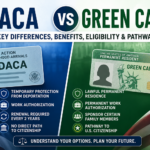
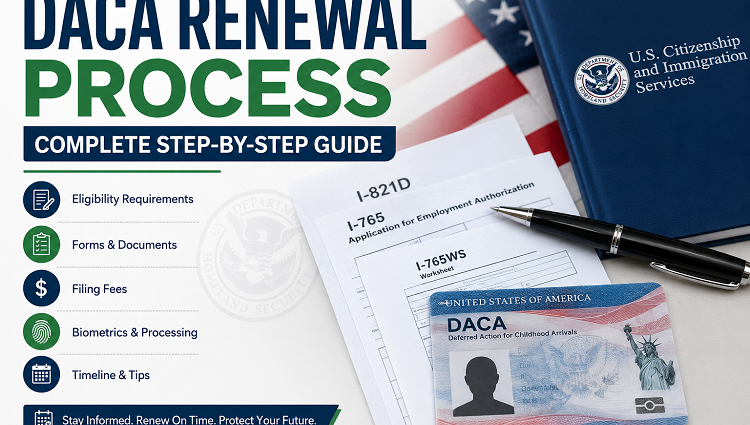
The Deferred Action for Childhood Arrivals program, commonly called DACA, remains one of the most important immigration protections available to undocumented immigrants who arrived in the United States as children. Since the program began in 2012, hundreds of thousands of Dreamers have relied on DACA for temporary protection from deportation and legal work authorization. For many recipients, DACA is connected directly to employment, education, healthcare access, financial stability, and family support.
Although DACA continues facing legal challenges in federal courts, current recipients are still allowed to renew their protections in 2026 through the U.S. Citizenship and Immigration Services (USCIS). Because of ongoing legal uncertainty and increasing processing delays, understanding the renewal process properly has become more important than ever.
Many applicants mistakenly believe DACA renewal is automatic, but USCIS carefully reviews every application. A small mistake, missing signature, wrong fee, or delayed filing can lead to processing problems or temporary loss of work authorization. That is why applicants should prepare early, stay organized, and understand every step before submitting their renewal request.
Quick Overview of the DACA Renewal Process
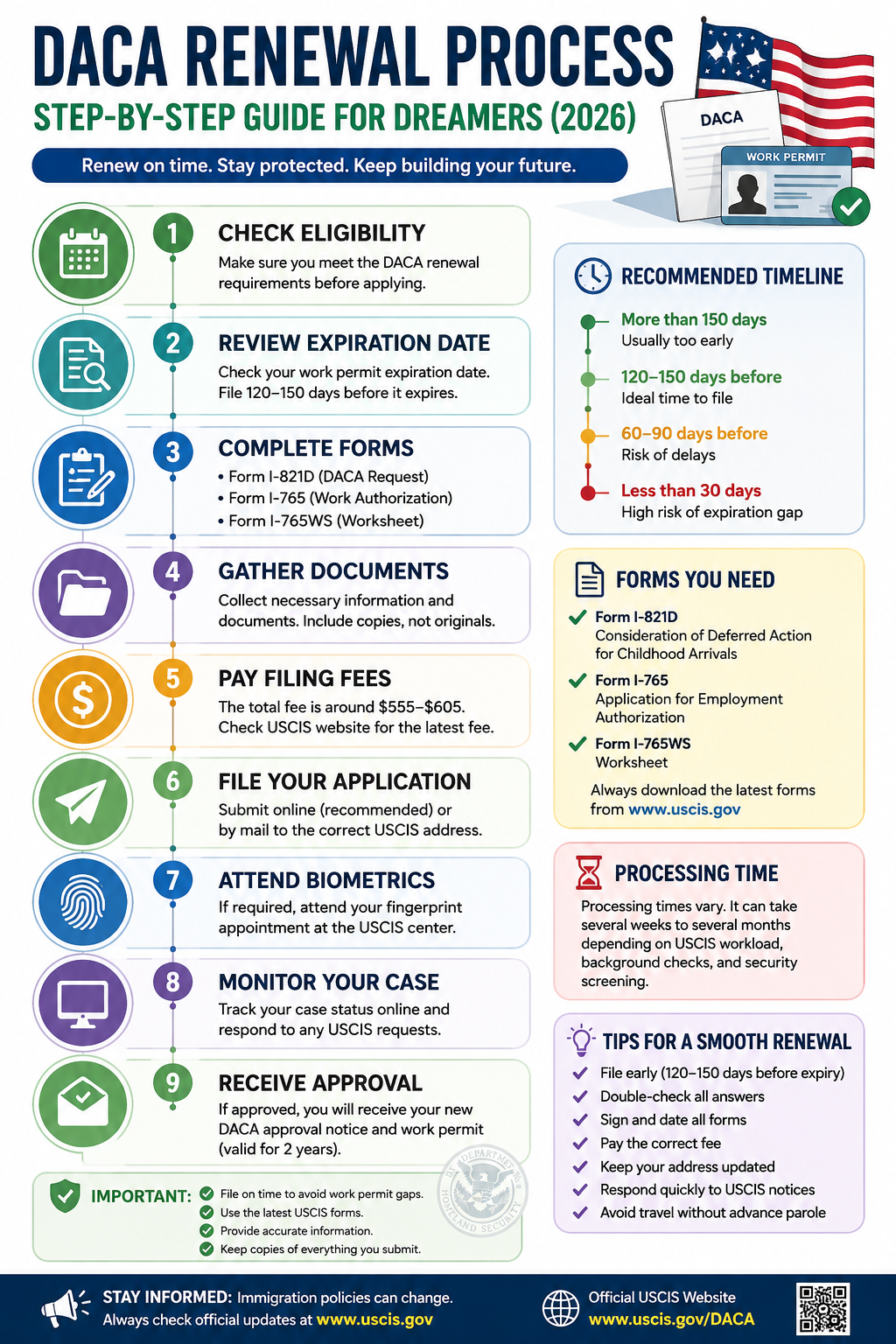
| Step | What You Need to Do |
|---|---|
| Check Eligibility | Confirm you qualify for DACA renewal |
| Review Expiration Date | Determine your ideal filing window |
| Complete USCIS Forms | Fill out Form I-821D, I-765, and I-765WS |
| Gather Supporting Documents | Prepare required information |
| Pay Filing Fees | Submit correct USCIS fees |
| File Application | Apply online or by mail |
| Attend Biometrics | Complete fingerprint appointment if required |
| Monitor Your Case | Track USCIS updates and notices |
| Receive Approval | Obtain renewed DACA and work permit |
Understanding the Purpose of DACA Renewal
DACA renewal allows existing recipients to extend their deferred action status and Employment Authorization Document (EAD) for another two years. Without renewal, DACA protections eventually expire, which can create serious personal and financial difficulties.
Unlike permanent residency or citizenship, DACA does not provide lawful immigration status. Instead, it offers temporary protection from deportation and permission to work legally in the United States. Because DACA protections are temporary, recipients must continue renewing their status regularly.
For many Dreamers, maintaining active DACA status affects almost every part of daily life. A valid work permit may be required for employment, professional licenses, banking, education opportunities, and even driver’s license renewals in some states.
If DACA expires before renewal approval arrives, recipients may temporarily lose legal work authorization. That is why renewing on time is extremely important.
Can You Still Renew DACA in 2026?
Yes. Current DACA recipients can still renew their protections in 2026. USCIS continues processing renewal requests despite ongoing court cases involving the program.
However, there is an important difference between DACA renewals and first-time applications. While renewal requests are still being processed, most initial applications from new applicants remain frozen because of federal court rulings.
This means:
- Existing DACA recipients can continue renewing
- Most first-time applicants cannot receive approval right now
- Legal uncertainty surrounding DACA still exists
Because court decisions can affect immigration policies quickly, many immigration advocates recommend filing renewals as early as possible within the recommended USCIS timeframe.
Official USCIS DACA information:
https://www.uscis.gov/DACA
Who Is Eligible for DACA Renewal?
USCIS reviews every renewal request individually. You may qualify for DACA renewal if you meet several important conditions.
Generally, you may renew DACA if:
- You previously received DACA approval
- Your DACA expired less than one year ago
- You remained continuously present in the United States
- You did not leave the U.S. without advance parole after August 15, 2012
- You have not committed serious crimes
- You do not pose a public safety or national security threat
Applicants with criminal history should be especially careful. Even offenses that seem minor under state law can create immigration complications. USCIS may review arrests, convictions, or pending charges during the renewal process.
If you have any criminal history, it is strongly recommended to consult an experienced immigration attorney before filing your renewal request.
Why Filing Early Is Extremely Important
One of the biggest mistakes DACA recipients make is waiting too long to renew.
USCIS recommends filing your DACA renewal between 120 and 150 days before your current DACA expires. Filing during this window helps reduce the risk of losing work authorization due to processing delays.
Many applicants assume USCIS will process renewals quickly, but timelines vary significantly. Some cases are approved within weeks, while others take several months because of:
- Background checks
- Biometrics delays
- USCIS backlogs
- Security screening
- Requests for evidence
Filing late can create serious consequences such as:
- Work permit expiration
- Temporary unemployment
- Driver’s license issues
- Financial instability
- Loss of workplace authorization
Many Dreamers support themselves and their families through jobs that depend on active DACA status. A delayed renewal can quickly create stress and uncertainty.
Recommended DACA Renewal Timeline
| Time Before Expiration | Recommendation |
|---|---|
| More than 150 days | Usually too early |
| 120–150 days | Best filing period |
| 60–90 days | Increased delay risk |
| Less than 30 days | High risk of work permit gap |
Forms Required for DACA Renewal
The DACA renewal process requires several USCIS forms. Using outdated forms or leaving information incomplete may lead to rejection or delays.
Form I-821D
Form I-821D is the main DACA renewal request form. It collects information about your identity, immigration history, residence, and background.
Official USCIS page:
https://www.uscis.gov/i-821d
When completing this form, pay close attention to:
- Name spelling
- Address history
- Alien Registration Number (A-Number)
- Travel history
- Criminal history disclosures
- Prior immigration interactions
Even small mistakes or inconsistencies may slow down processing.
Form I-765
Form I-765 requests renewal of your Employment Authorization Document.
Official USCIS page:
https://www.uscis.gov/i-765
This form is extremely important because your work permit allows legal employment in the United States.
Many employers require valid work authorization documentation to continue employment.
Form I-765WS
Form I-765WS explains your economic need for employment authorization.
Official worksheet PDF:
https://www.uscis.gov/sites/default/files/document/forms/i-765ws.pdf
Applicants often worry too much about this section, but USCIS generally expects a simple explanation describing why employment is necessary for:
- Housing
- Food
- Transportation
- Education
- Family expenses
- Medical costs
Clear and honest explanations are usually sufficient.
DACA Renewal Filing Fees in 2026
DACA renewal requires payment of USCIS filing fees. Fee amounts can change, so applicants should always verify current pricing before filing.
Estimated 2026 renewal costs include:
| Fee Type | Estimated Amount |
|---|---|
| Employment Authorization Fee | Included |
| Biometrics Fee | May apply |
| Total Estimated Cost | Around $555–$605 |
Official USCIS fee calculator:
https://www.uscis.gov/feecalculator
Incorrect payment amounts are one of the most common reasons applications get rejected.
DACA Renewal Process
Review Your Current DACA Documents
Start by locating all important immigration documents, including:
- Current Employment Authorization Document
- Previous USCIS approval notices
- Receipt notices
- Prior DACA applications
Carefully check your expiration date and calculate your recommended filing window.
Many applicants wait too long because they misunderstand USCIS timing recommendations.
Remember that processing times are unpredictable.
Decide Between Online or Paper Filing
USCIS allows many DACA recipients to renew online.
Online filing has become increasingly popular because it provides:
- Faster communication
- Easier case tracking
- Digital document uploads
- Immediate receipt notices
- Reduced mailing risks
USCIS online account portal:
https://myaccount.uscis.gov
Paper filing is still accepted for applicants who prefer mailing physical documents.
Both methods are valid, but online filing often feels more convenient for many applicants.
Complete Your Forms Carefully
Accuracy is one of the most important parts of the renewal process.
Before submitting:
- Double-check all answers
- Verify spelling and dates
- Confirm address history
- Review immigration history carefully
- Check all signatures
- Ensure forms are current versions
Common mistakes include:
- Missing signatures
- Wrong filing fees
- Outdated forms
- Incomplete sections
- Incorrect dates
Even small errors can delay your application.
Gather Supporting Documents
Most DACA renewal applicants do not need extensive supporting evidence unless USCIS specifically requests it.
However, additional documents may be needed if:
- Your name changed
- You traveled internationally
- You were arrested
- You entered removal proceedings
- Your personal information changed significantly
Always keep copies of everything you submit.
Do not mail original documents unless USCIS specifically requests originals.
Submit the Filing Fee
USCIS accepts multiple payment methods depending on how you file your application.
Common payment options include:
- Credit card
- Debit card
- Bank account transfer
- Money order
- Personal check
Incorrect payments can cause immediate rejection of your application.
Always verify the correct fee before submitting.
Submit Your Renewal Application
Once forms and payment are ready, submit your application either online or by mail.
If filing by mail:
- Use tracking services
- Organize documents carefully
- Keep mailing receipts
- Follow USCIS mailing instructions exactly
Many delays occur because applicants send forms to the wrong address or fail to organize documents properly.
Receive USCIS Receipt Notices
After USCIS accepts your application, you will receive receipt notices confirming your case is under review.
These notices include:
- Receipt numbers
- Filing dates
- Case tracking information
You can track your case here:
https://egov.uscis.gov/casestatus/landing.do
Keep all notices in a safe place.
Attend Biometrics Appointment
Some applicants receive biometrics reuse notices, while others are scheduled for fingerprinting appointments at USCIS Application Support Centers.
Biometrics appointments may include:
- Fingerprinting
- Photographs
- Signature collection
Missing a biometrics appointment can delay or negatively affect your renewal case.
Bring:
- Appointment notice
- Government-issued identification
- Required supporting documents
Wait for USCIS Processing
Waiting for USCIS review is often the most stressful stage of the renewal process.
Processing times vary depending on:
- Background checks
- Security screening
- USCIS workload
- Biometrics requirements
- Requests for evidence
Some applicants receive approvals quickly, while others wait several months.
Because DACA processing times are unpredictable, filing early remains extremely important.
Receive Approval and New Work Permit
If approved, USCIS will mail:
- DACA approval notice
- New Employment Authorization Document
Most approvals remain valid for two years.
Check your new documents carefully after receiving them. Verify:
- Name spelling
- Dates
- Category information
- Expiration date
If you notice mistakes, contact USCIS immediately.
Common DACA Renewal Mistakes to Avoid
Many DACA delays happen because of preventable mistakes.
Filing Too Late
Late filing is one of the most common causes of work authorization gaps.
Using Outdated USCIS Forms
Always download forms directly from USCIS before filing.
Forgetting Signatures
Unsigned forms are automatically rejected.
Incorrect Payment Amounts
Wrong fees may cause your application to be returned.
Criminal History Problems
Certain arrests or convictions may trigger additional review.
Ignoring USCIS Notices
Always respond quickly to USCIS requests or appointment notices.
Can You Work While Renewal Is Pending?
Unlike some immigration categories, DACA does not automatically extend work authorization while your renewal is pending.
If your work permit expires before approval:
- Your legal work authorization may end
- Employers may suspend employment
- Financial difficulties may occur
This is another reason why early filing is extremely important.
Traveling While DACA Renewal Is Pending
International travel during a pending DACA renewal can be risky.
Travel outside the United States generally requires approved advance parole. Leaving without authorization may negatively affect your DACA situation.
Always consult an immigration attorney before planning international travel.
What Happens If Your DACA Renewal Is Denied?
A denial may occur because of:
- Criminal convictions
- Immigration violations
- Fraud concerns
- Public safety issues
- Incomplete applications
If denied, seek legal guidance immediately.
An experienced immigration attorney may help evaluate:
- Refiling options
- Appeals
- Alternative immigration pathways
Current Legal Status of DACA
DACA continues facing legal challenges in federal courts. Despite this uncertainty, USCIS still processes renewal applications for current recipients.
Future court decisions could affect the program significantly, which is why Dreamers should continue monitoring official USCIS updates rather than relying only on social media rumors.
Official USCIS DACA page:
https://www.uscis.gov/DACA
Why DACA Renewal Matters So Much
For many Dreamers, DACA renewal is not simply paperwork. It affects:
- Employment opportunities
- Financial stability
- Education goals
- Healthcare access
- Family support
- Housing security
- Emotional well-being
Many recipients have built careers and futures around the opportunities DACA provides. Maintaining valid status helps create stability in an uncertain immigration environment.
Frequently Asked Questions
How early should I renew my DACA?
USCIS recommends filing between 120 and 150 days before expiration.
Can new applicants apply for DACA in 2026?
USCIS accepts initial applications, but most are not currently processed because of federal court rulings.
How long does DACA renewal take?
Processing times vary from several weeks to several months depending on background checks and USCIS workload.
Can I renew DACA online?
Yes. Many applicants can complete the renewal process online through USCIS.
What forms are required for renewal?
You need:
- Form I-821D
- Form I-765
- Form I-765WS
Can I renew if my DACA already expired?
Possibly. Applicants whose DACA expired less than one year ago may still qualify for renewal.
Will I receive a new work permit?
Yes. Approved renewals generally include a two-year Employment Authorization Document.
Can criminal charges affect renewal?
Yes. Certain arrests or convictions may create immigration complications or additional review.
Where can I check my USCIS case status?
You can track your case here:
https://egov.uscis.gov/casestatus/landing.do
Disclaimer
Program Clarity is an independent informational website and is not affiliated with any government agency. This article is for educational purposes only. Program rules and availability may change. Always verify details with official authorities.