

Deferred Action for Childhood Arrivals (DACA) is one of the most important immigration programs in modern American history. Since its creation in 2012, DACA has provided temporary relief to hundreds of thousands of undocumented immigrants who arrived in the United States as children. These individuals, often called Dreamers, have built lives in America through education, employment, community involvement, and family connections.
For many recipients, DACA represents more than immigration protection. It provides the ability to work legally, pursue higher education, obtain driver’s licenses, contribute to the economy, and live with less fear of deportation. At the same time, DACA remains a temporary program surrounded by political debates, legal battles, and uncertainty about its future.
This comprehensive guide explains everything you need to know about DACA, including its history, eligibility requirements, benefits, limitations, application process, renewals, legal challenges, educational opportunities, employment rights, and frequently asked questions.
Why DACA Was Created
Before DACA existed, millions of undocumented immigrants who arrived in the United States as children faced serious immigration challenges. Many of these young people had grown up in American schools, communities, and neighborhoods. They considered the United States their home even though they lacked legal immigration status.
For years, lawmakers attempted to pass the DREAM Act, a proposed law intended to provide legal protections for undocumented youth. However, Congress repeatedly failed to pass comprehensive immigration legislation.
As a result, the Obama administration introduced DACA through executive action in 2012. The program aimed to:
- Protect young undocumented immigrants from deportation
- Prioritize immigration enforcement resources
- Support students and workers contributing to society
- Provide temporary stability for immigrant families
- Allow recipients to work legally and pay taxes
DACA quickly became one of the most impactful immigration programs in the United States.
Who Are Dreamers?
The term “Dreamers” refers to undocumented immigrants who came to the United States as children. The name comes from the DREAM Act, which sought to create a path toward legal status for these individuals.
Many Dreamers:
- Arrived in the U.S. at very young ages
- Attended American schools
- Speak English fluently
- Built careers and families in the United States
- Have strong community ties
- Know little or nothing about their countries of birth
Dreamers often identify culturally as Americans even though they may not have legal immigration status.
History of DACA
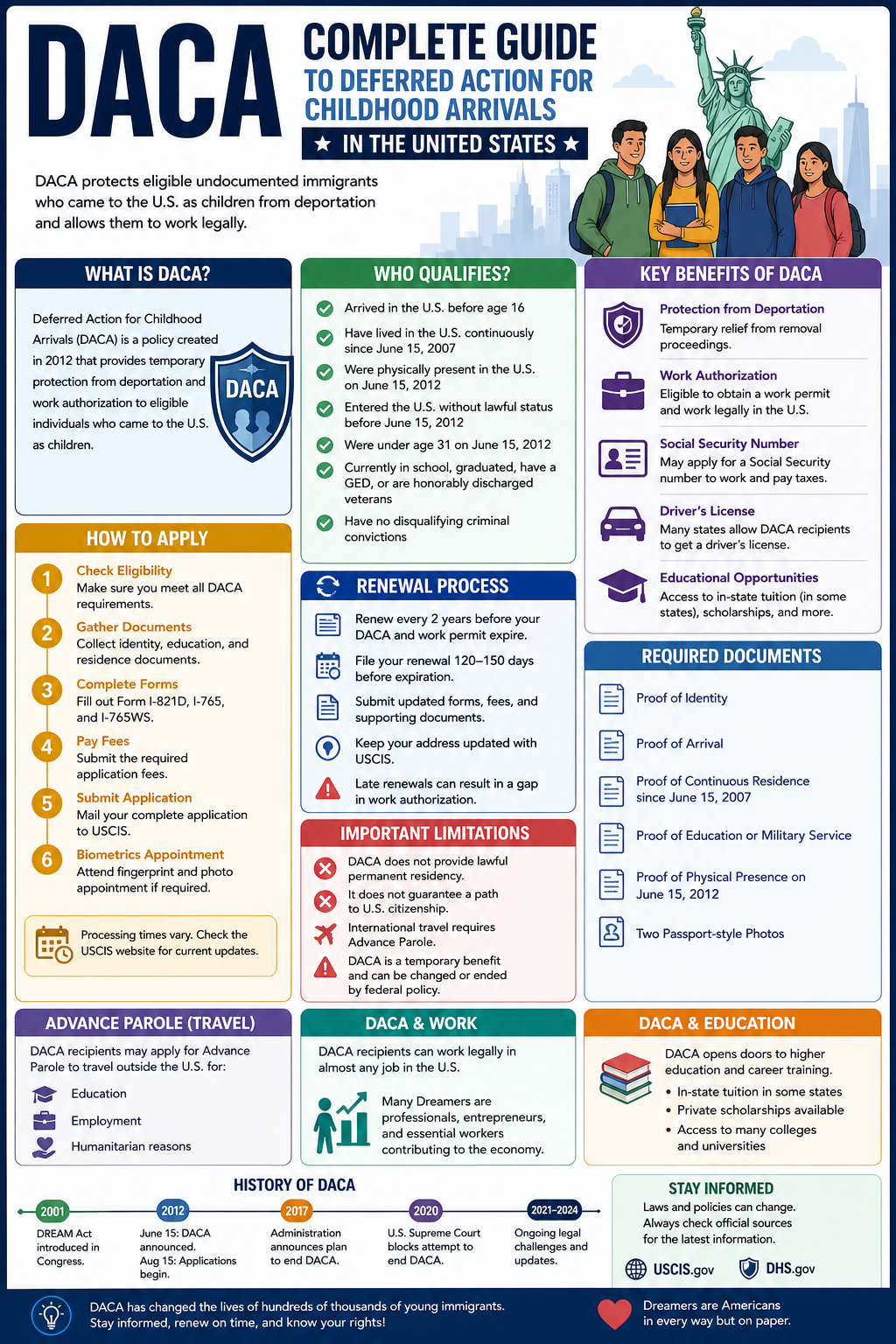
Understanding the history of DACA is important because the program’s legal and political journey directly affects recipients today.
The DREAM Act Before DACA
The DREAM Act was first introduced in Congress in 2001. The proposed legislation aimed to provide undocumented youth with opportunities for legal residency if they met educational or military service requirements.
Although the bill received support from many lawmakers and advocacy groups, it never became law.
As congressional efforts stalled, immigration advocates continued pressuring the federal government to provide temporary protections for undocumented youth.
DACA Launch in 2012
On June 15, 2012, President Barack Obama announced the Deferred Action for Childhood Arrivals program.
USCIS officially began accepting applications on August 15, 2012.
The announcement changed the lives of many undocumented immigrants who had spent years living in fear of deportation and limited employment opportunities.
Within the first few years, hundreds of thousands of young immigrants applied for protection under the program.
Attempts to End DACA
DACA has faced significant legal and political opposition since its creation.
In 2017, the Trump administration announced plans to terminate the program, arguing that it exceeded executive authority. This decision created widespread uncertainty among recipients and immigrant communities.
Multiple lawsuits followed, leading to years of court battles.
Supreme Court Decision in 2020
In 2020, the U.S. Supreme Court ruled that the Trump administration’s attempt to end DACA was procedurally improper. This decision temporarily protected the program from immediate termination.
However, the ruling did not permanently secure DACA’s future.
Continuing Legal Challenges
Federal courts have continued reviewing DACA’s legality. Some rulings have restricted the processing of new applications while allowing current recipients to renew their status.
Because litigation remains ongoing, DACA’s future depends heavily on future court decisions and possible congressional action.
For the latest legal updates, visit:
DACA Eligibility Requirements
DACA eligibility requirements are very specific. Applicants must meet multiple conditions established by the Department of Homeland Security.
Benefits of DACA
DACA provides several important benefits that can significantly improve recipients’ lives.
Protection From Deportation
One of the biggest advantages of DACA is temporary protection from deportation.
Deferred action means immigration authorities agree not to pursue removal proceedings against approved recipients during the protection period.
This protection provides emotional relief and greater life stability for many immigrant families.
However, it is important to remember that DACA does not guarantee permanent protection.
Legal Work Authorization
Approved recipients may apply for an Employment Authorization Document (EAD), commonly called a work permit.
This allows recipients to:
- Work legally in the United States
- Access better employment opportunities
- Build professional careers
- Earn higher wages
- Receive workplace protections
Legal employment authorization also helps recipients contribute to the economy through taxes and consumer spending.
Social Security Number
DACA recipients who receive work authorization may apply for a Social Security number.
A Social Security number helps with:
- Employment paperwork
- Tax filing
- Banking
- Credit history
- Housing applications
- Financial services
For many recipients, obtaining a Social Security number is an important step toward financial independence.
Driver’s Licenses and State IDs
Many U.S. states allow DACA recipients to apply for driver’s licenses or state identification cards.
Having legal identification improves daily life by helping recipients:
- Drive legally
- Open bank accounts
- Apply for jobs
- Access services
- Verify identity
Driver’s license rules vary depending on state laws.
Educational Opportunities
DACA has improved educational opportunities for many undocumented students.
Recipients may gain better access to:
- Colleges and universities
- Vocational schools
- Scholarship programs
- Career training programs
Many Dreamers pursue careers in healthcare, technology, education, engineering, business, and law.
Economic Contributions of DACA Recipients
DACA recipients play an important role in the U.S. economy.
Studies show recipients contribute billions of dollars annually through:
- Income taxes
- State taxes
- Consumer spending
- Entrepreneurship
- Workforce participation
Many DACA recipients also own businesses that create jobs and stimulate economic growth.
Limitations of DACA
Although DACA provides important protections, it also has major limitations.
No Path to Permanent Residency
DACA does not automatically lead to:
- Green cards
- Permanent resident status
- Citizenship
Recipients must pursue separate immigration pathways if eligible.
Temporary Nature of Protection
DACA protection is temporary.
Most approvals last two years and require renewal.
If the program changes or ends, recipients could lose their protections and work authorization.
Travel Restrictions
International travel for DACA recipients is restricted.
Recipients usually need Advance Parole approval before leaving the United States.
Traveling without authorization may create serious immigration consequences.
Ongoing Legal Uncertainty
One of the biggest concerns for recipients is uncertainty about the program’s future.
Court rulings, presidential administrations, and congressional decisions continue affecting DACA policies.
How to Apply for DACA
The DACA application process requires detailed paperwork and supporting evidence.
DACA Application Fees
USCIS charges filing fees for DACA applications and renewals.
Applicants should always verify current fees through official USCIS resources because amounts may change.
Fee details are available here:
DACA Renewal Process
Renewing DACA status on time is extremely important.
Employment Opportunities for DACA Recipients
DACA has helped many recipients build successful careers.
Recipients work in industries such as:
- Healthcare
- Information technology
- Construction
- Hospitality
- Education
- Finance
- Retail
- Engineering
Some recipients have become entrepreneurs and business owners.
DACA and Professional Licensing
Certain states permit DACA recipients to obtain professional licenses.
Possible licensed professions include:
- Nursing
- Law
- Teaching
- Real estate
- Pharmacy
- Engineering
State laws differ significantly, so applicants should research local requirements carefully.
DACA and Higher Education
Education remains one of the most important issues for Dreamers.
College Admissions
Many colleges and universities accept DACA students.
However, tuition rules vary across states.
Some states offer:
- In-state tuition
- State financial aid
- Scholarship access
Others may restrict educational benefits.
Scholarships for DACA Students
Although federal financial aid is generally unavailable to undocumented students, many private scholarships exist.
Helpful scholarship resources include:
Healthcare Access for DACA Recipients
Healthcare access varies depending on employment, state policies, and insurance programs.
Some recipients obtain insurance through:
- Employers
- State healthcare marketplaces
- Community health programs
Healthcare remains a major issue for many immigrant families.
Mental Health Challenges
Many Dreamers experience emotional stress related to immigration uncertainty.
Common concerns include:
- Fear of deportation
- Financial insecurity
- Family separation
- Employment instability
- Court rulings
Mental health organizations often provide specialized support for immigrant communities.
Helpful resources include:
DACA and Advance Parole
Advance Parole allows some DACA recipients to travel internationally for approved purposes.
Reasons for Advance Parole
Travel may be approved for:
- Educational programs
- Employment opportunities
- Humanitarian reasons
Examples include:
- Study abroad programs
- Work conferences
- Visiting sick relatives
Risks of International Travel
Traveling outside the United States always carries immigration risks.
Recipients should consult experienced immigration attorneys before traveling internationally.
DACA vs Green Card
DACA and Green Cards offer different immigration benefits in the United States. Understanding the key differences can help immigrants choose the right path for their future.
DACA vs U.S. Citizenship
Citizenship provides broader rights and protections than DACA.
U.S. citizens can:
- Vote in elections
- Hold U.S. passports
- Sponsor relatives
- Access federal jobs
- Remain permanently in the country
DACA recipients do not automatically receive these rights.
State Differences for DACA Recipients
State laws strongly affect the daily lives of DACA recipients.
Some states offer supportive policies, while others impose restrictions.
Supportive states may provide:
- In-state tuition
- Driver’s licenses
- Professional licensing
- Healthcare assistance
Restrictive states may limit these benefits.
Organizations That Help DACA Recipients
Many nonprofit organizations provide valuable support.
Helpful organizations include:
- United We Dream
- National Immigration Law Center
- American Immigration Lawyers Association
- Immigrants Rising
These groups may provide:
- Legal guidance
- Educational support
- Scholarship resources
- Immigration updates
- Community advocacy
Future of DACA
The future of DACA remains uncertain.
Possible outcomes may include:
- Congressional immigration reform
- Permanent legal protections
- Expansion of immigration pathways
- Court-ordered changes
- Program termination
Because immigration laws continue evolving, recipients should regularly monitor official government announcements.
Important Tips for DACA Recipients
Keep Important Records
Save copies of:
- USCIS notices
- Employment cards
- School documents
- Tax returns
- Legal records
Renew Early
Late renewals may create employment problems and legal complications.
Avoid Immigration Scams
Only seek help from licensed immigration attorneys or accredited representatives.
Fraudulent immigration services can create serious legal issues.
Stay Informed
Use trusted sources for immigration updates, including USCIS and reputable nonprofit organizations.
Frequently Asked Questions (FAQs)
What does DACA stand for?
DACA stands for Deferred Action for Childhood Arrivals.
Does DACA provide citizenship?
No. DACA does not provide citizenship or permanent residency.
Can DACA recipients work legally?
Yes. Approved recipients receive work authorization.
How long does DACA protection last?
Most approvals last two years before renewal is required.
Can DACA recipients travel internationally?
Some recipients may travel using approved Advance Parole authorization.
Is DACA still active?
Yes, but court rulings continue affecting how the program operates.
Can new applicants apply for DACA?
Court decisions continue affecting whether new applications are processed.
Can DACA recipients get green cards?
Some recipients may qualify through family sponsorship, employment, or marriage-based immigration pathways.
Are DACA recipients eligible for federal financial aid?
Federal financial aid is generally unavailable, but private scholarships may help.
What happens if DACA expires?
Recipients may lose work authorization and deportation protection.
Can DACA recipients own businesses?
Yes. Many DACA recipients successfully operate businesses and contribute to the economy.
Can DACA recipients join the military?
Military policies regarding DACA recipients have changed over time and may depend on federal regulations.
Disclaimer
Program Clarity is an independent informational website and is not affiliated with any government agency. This article is for educational purposes only. Program rules and availability may change. Always verify details with official authorities.