

Work-study jobs are one of the most practical and accessible ways for students to earn money while continuing their education without overwhelming their academic responsibilities. For many students, especially those facing financial challenges, work-study programs provide not just income but also valuable work experience, networking opportunities, and professional development.
How Work Study Jobs Actually Work
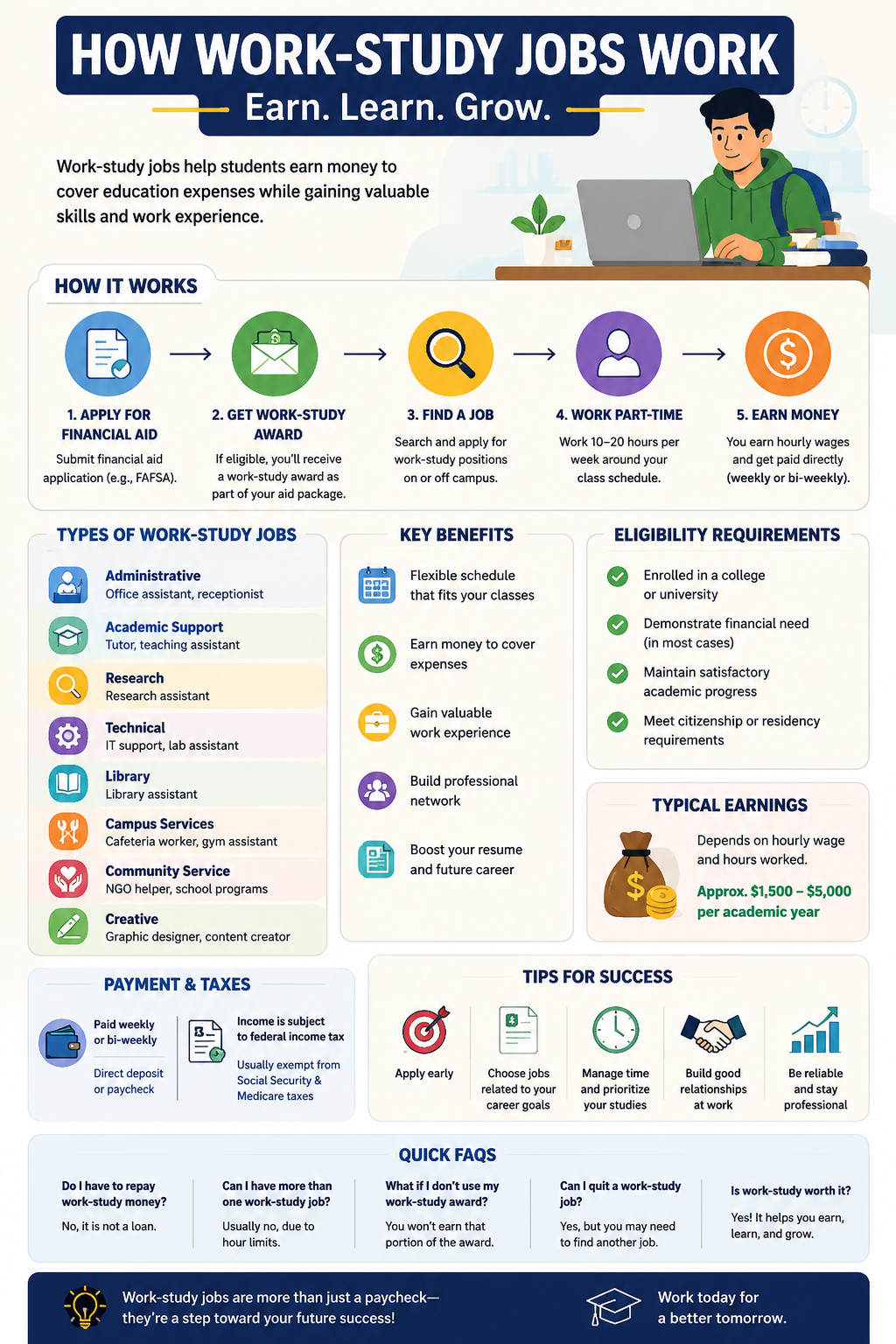
Understanding how work-study jobs function is essential before applying. The process typically begins when a student applies for financial aid through an official application system. In countries like the United States, this is done through the FAFSA (Free Application for Federal Student Aid). Based on the financial information provided, the institution determines whether the student qualifies for work-study assistance.
If eligible, the student receives a financial aid package that includes a specific work-study award amount. This amount represents the maximum money the student can earn through a work-study job during the academic year.
However, receiving a work-study award does not automatically assign a job. Students must actively search for available positions, submit applications, attend interviews, and secure employment just like they would for any regular job.
Once hired, students begin working part-time hours, usually between 10 and 20 hours per week. They are paid hourly, and their earnings are tracked until they reach the maximum award limit. Payments are typically made weekly or biweekly, either through direct deposit or paycheck.
Why Work Study Programs Exist
Work-study programs were created to make education more accessible and affordable for students from low- and middle-income backgrounds. The rising cost of education has made it difficult for many students to pay for tuition, books, accommodation, and daily expenses.
By offering part-time employment opportunities, work-study programs reduce reliance on student loans and allow students to contribute toward their own expenses. Additionally, these programs aim to encourage students to engage in meaningful work that complements their academic studies.
Another important purpose of work-study programs is to promote community involvement. Many work-study jobs are connected to public service, education, or nonprofit organizations, helping students develop a sense of social responsibility while earning money.
Types of Work Study Jobs Available
| Category | Example Jobs | Main Work |
|---|---|---|
| Administrative | Office Assistant | Filing, calls, basic office tasks |
| Academic Support | Tutor, Teaching Assistant | Help students, assist professors |
| Research | Research Assistant | Data collection, reports |
| Technical | IT Support | Fix systems, lab help |
| Library | Library Assistant | Manage books, student help |
| Campus Services | Cafeteria Worker | Customer service, facility support |
| Community Service | NGO Helper | Social work, outreach |
| Creative | Designer, Content Creator | Design, social media |
Work-study jobs come in a wide variety of roles depending on the institution, student skills, and available funding. One of the most common types of work-study jobs is administrative support, where students assist in offices by managing paperwork, answering phones, scheduling appointments, and performing data entry tasks.
Another popular category is academic support roles. In these jobs, students may work as tutors, teaching assistants, or research assistants. These positions are especially beneficial for students who want to gain experience in their field of study or plan to pursue academic careers.
Technical roles are also becoming increasingly common in work-study programs. Students with skills in information technology, programming, or digital media may find opportunities as IT support staff, lab assistants, or website managers.
In addition, many work-study programs offer community service positions. These jobs may involve working with schools, nonprofit organizations, or government agencies. Students might participate in mentoring programs, environmental projects, or social services, contributing positively to society.
Eligibility Criteria
Eligibility for work-study programs is typically based on financial need, academic status, and enrollment requirements. Students must be enrolled in a recognized college or university and must maintain satisfactory academic progress.
Financial need is one of the primary factors considered when awarding work-study. Institutions evaluate the student’s family income, assets, and overall financial situation to determine eligibility.
In some countries, citizenship or residency status may also affect eligibility. For example, certain government-funded work-study programs may only be available to domestic students, while international students may have limited options.
It is important to note that eligibility does not guarantee a job. Students must still apply and compete for available positions.
Application Process
The process of applying for a work-study job involves several steps. First, students must complete the required financial aid application. This step is crucial because it determines whether they qualify for work-study funding.
After receiving their financial aid package, students should carefully review it to see if work-study has been included. If it is, they can proceed to search for job openings through their institution’s career portal or financial aid office.
Next, students must prepare a professional resume and apply for positions that match their skills and interests. In many cases, they may also need to write a cover letter explaining why they are a good fit for the role.
Once applications are submitted, students may be invited for interviews. These interviews are similar to standard job interviews and may include questions about skills, availability, and work experience.
After being selected, students complete onboarding procedures and begin working according to their assigned schedule.
How Much Can You Earn from Work Study?
The amount a student can earn through work-study depends on several factors, including hourly wage, number of hours worked, and total award amount. Most work-study jobs pay at least the minimum wage, although some specialized roles may offer higher pay.
Students are typically limited to working part-time hours to ensure that their academic performance is not affected. This means that while work-study can help cover expenses, it may not be enough to pay for all educational costs.
The total earnings are capped by the work-study award, so once a student reaches that limit, they cannot earn additional funds through the program unless they secure a different job.
Benefits of Work Study Jobs
Work-study jobs offer numerous advantages beyond financial support. One of the biggest benefits is flexibility. Employers understand that students have academic commitments and usually allow flexible work schedules.
Another major benefit is skill development. Students gain practical experience that can enhance their resumes and prepare them for future careers. For example, a student working as a research assistant can develop analytical and problem-solving skills.
Networking is another important advantage. Working closely with professors, staff, and professionals can open doors to future job opportunities and recommendations.
Work-study jobs also help students develop time management skills. Balancing work and studies teaches discipline and responsibility, which are valuable life skills.
Challenges and Limitations
Despite the benefits, work-study jobs also have some limitations. One of the main challenges is limited earning potential. Since students can only work a certain number of hours, their income is restricted.
Another issue is job availability. Popular positions may be highly competitive, making it difficult for some students to secure employment.
Additionally, some work-study jobs may not align with a student’s career goals, limiting their professional growth.
Students must also be careful not to overcommit themselves. Balancing work and academics can be challenging, and poor time management can negatively impact grades.
Tips to Succeed in a Work Study Job
To make the most of a work-study job, students should start by applying early. Many positions fill quickly, so early applications increase the chances of securing a good role.
It is also important to choose jobs that align with career goals. This ensures that the experience gained is relevant and valuable for future opportunities.
Students should maintain professionalism at all times, just as they would in any workplace. This includes being punctual, completing tasks efficiently, and communicating effectively.
Building relationships with supervisors and colleagues can also be beneficial. Strong connections can lead to mentorship opportunities and career guidance.
Finally, students should carefully manage their time to ensure that work does not interfere with academic responsibilities.
Frequently Asked Questions (FAQs)
What is the main purpose of a work-study job?
The main purpose is to help students earn money to cover educational expenses while gaining work experience.
Do students need to repay work-study earnings?
No, work-study earnings are not loans and do not need to be repaid.
Can a student lose their work-study job?
Yes, students can lose their job if they fail to meet job requirements or academic standards.
Are work-study jobs available year-round?
Most jobs are available during the academic year, but some may continue during breaks.
Can international students apply for work-study?
It depends on the country and institution. Some programs are limited to domestic students.
Is work-study better than a regular part-time job?
It depends on the student’s needs. Work-study offers flexibility, while regular jobs may offer higher pay.
Reference Links
Disclaimer
Program Clarity is an independent informational website and is not affiliated with any government agency. This article is for educational purposes only. Program rules and availability may change. Always verify details with official authorities.